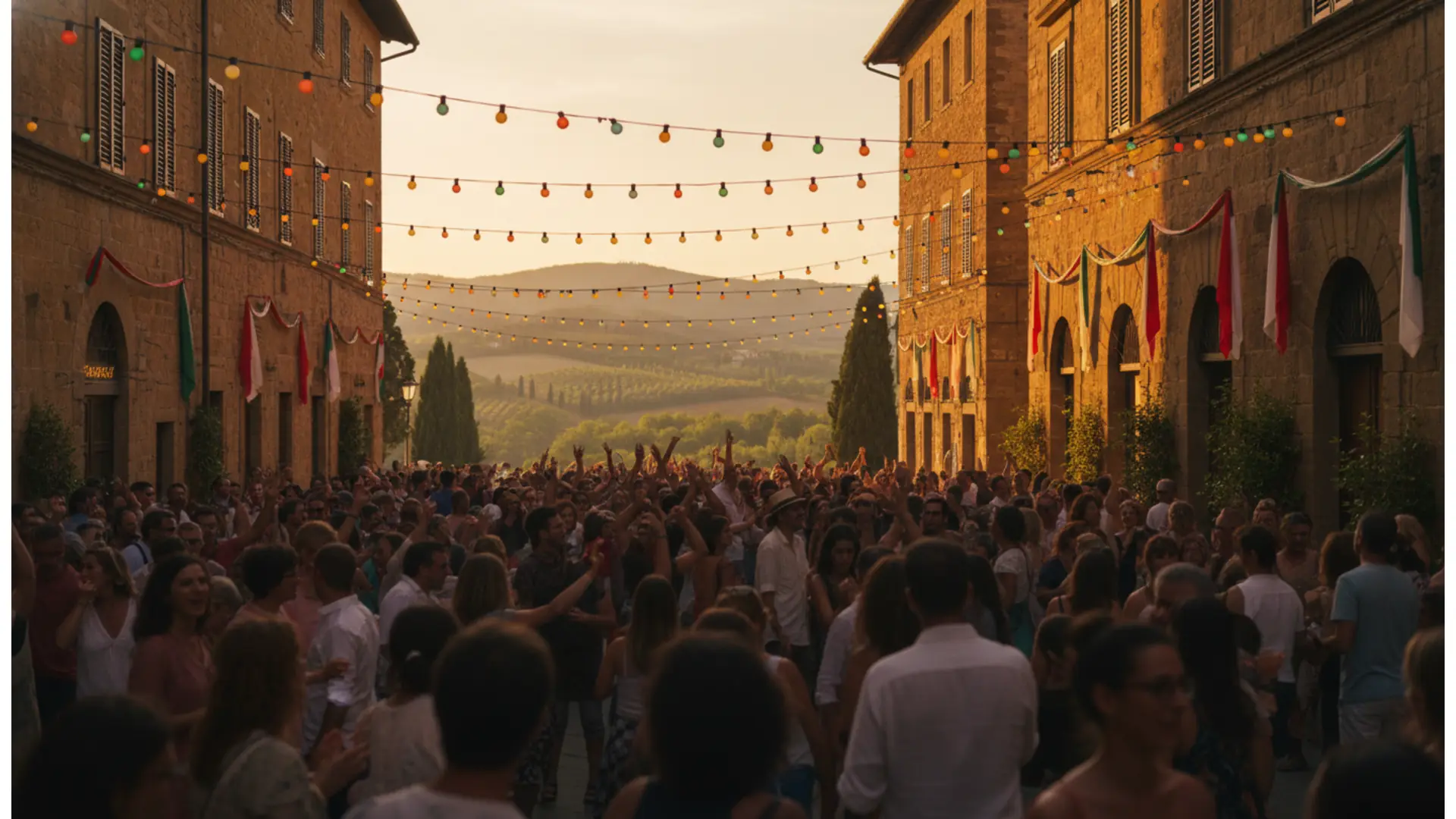
Bolivian Carnival in Rome
Andean dances parade between the Circus Maximus and the Baths of Caracalla
About Bolivian Carnival
A piece of the Andes in the heart of Rome
The Bolivian Carnival in Rome is the largest event organized by the Bolivian community in Italy and one of the most spectacular dates on the calendar of foreign community festivals in the Capital. Every year, in spring, the Municipality of Rome — in the Lazio Region — grants the parade one of its most famous settings: the axis connecting the Circus Maximus, Piazza di Porta Capena, Viale delle Terme di Caracalla, and Piazzale Numa Pompilio. For an entire day, the archaeological promenade becomes an open-air stage, invaded by embroidered costumes, masks, umbrellas, cowbells, and brass bands.
The dances of the Carnaval de Oruro
The repertoire of the Roman parade draws from the Carnaval de Oruro, the great festival of the Bolivian highlands that UNESCO has inscribed among the Masterpieces of the Oral and Intangible Heritage of Humanity. The fraternities parading along the Baths of Caracalla bring to Rome the same choreography passed down through generations:
- Diablada — the dance of the devils, with the famous horned masks and the symbolic duel between good and evil;
- Morenada — a slow and majestic step, heavy costumes, and matraca in hand, a memory of African slavery in the mines;
- Caporales — the most athletic and beloved by the youth, with jumps, boots, and rattles;
- Tinku — a warrior dance of Andean origin, with sharp, percussive rhythms;
- Afro-Bolivian Saya and Pujllay — the Afro-descendant roots and those of the valley farmers.
Who organizes and who parades
The event is curated by the Asociación Comunidad Boliviana Roma (ACB Roma), chaired by Fabiola Herrera, who has overseen the event continuously since 2012, together with the Federation of Bolivian Folkloric Groups in Italy and with the support of the Embassy of the Plurinational State of Bolivia in Italy and the Embassy to the Holy See. The parade features fraternities from all over the peninsula and beyond: Roman groups, delegations from Genoa, Bergamo, and other Italian cities, as well as international branches. Each edition has its folklore authorities — the Carnival Queen, the Princess, the Lady, and the Mister of Folklore — who lead the parade.
What atmosphere to expect
This is not a grandstand carnival: you walk along with the parade, stop where the band starts playing, and eat salteñas and other Andean specialties at the stalls accompanying the day. The audience is mixed — Bolivian families, curious Romans, tourists coming down from the Palatine Hill — and admission is completely free. The streets involved are progressively closed as participants pass, so it is advisable to arrive on foot or by public transport.
Why it is worth a visit
Bolivia is one of the most deeply rooted foreign communities in Rome, and this parade is its moment of greatest visibility: a festival of integration rather than a simple folkloric exhibition. Seeing the Diablada dance in front of the ruins of the Baths of Caracalla, with the red, yellow, and green colors of the Bolivian flag blending with the Roman travertine, is an image that alone is worth the morning. For those who have never been to South America, it is also the most direct way to understand what the Andean carnival really is: not a tourist parade, but a community ritual that here, thousands of kilometers from Oruro, continues to be celebrated with the same seriousness.
Bolivian Carnival — edition 2026
The Bolivian Bicentennial parades in Rome
The 2026 edition, the 14th, celebrated two hundred years of the Republic of Bolivia. The parade started from Piazza di Porta Capena, traveled along Viale delle Terme di Caracalla, and concluded at Piazzale Numa Pompilio, transforming the area between the Circus Maximus and the Baths of Caracalla into an open-air stage.
The event was curated by Fabiola Herrera, president of the Asociación Comunidad Boliviana Roma (ACB Roma), together with the Federation of Bolivian Folkloric Groups, with the participation of representatives from the Municipality of Rome (Mariano Angelucci) and the two Bolivian Embassies in Italy and to the Holy See.
Programme Bolivian Carnival 2026
Sunday, March 29, 2026 — from 9:00 AM to approx. 3:00 PM
Route: departure from Piazza di Porta Capena → Viale delle Terme di Caracalla → arrival and conclusion at Piazzale Numa Pompilio (Via del Circo Massimo).
Fraternities and groups in the parade
- Nuevo Amanecer — Tinku
- Fraternidad Señor de Mayo Transporte Pesado — Morenada
- Morenada Intercontinental
- Grupo Morenada Urkupiña
- Integración Esencia Ardiente — Caporales
- Munay Bolivia — Genoa
- Tinkus Tiataco USA — Rome branch
- Nueva Integración Bolivia — Bergamo
- Centro Cultural Encuentro Boliviano — Rome
- Chuquiago Roma — Afro-Bolivian Saya
- San Simón Sucre — Italy branch
- Federation of Bolivian Folkloric Groups
Dances represented
Diablada, Morenada, Caporales, Tinku, Afro-Bolivian Saya, Pujllay.
2026 Folklore Authorities
- Nicol Tintaya Fernández — Carnival Queen
- Keysel Ortiz Rojas — Princess
- Liz Cabezas Quino — Lady of Folklore
- Mario Gabriel Sanjinés Aima — Mister of Folklore
Highlights Bolivian Carnival 2026
- Edition of the Bolivian Bicentennial (1825-2025/2026), with a "100% Bolivian dances" program
- Diablada and Morenada parading in front of the Baths of Caracalla
- Twelve fraternities and folkloric groups, arriving from Rome, Genoa, Bergamo, and abroad
- Coronation and parade of folklore authorities: Queen, Princess, Lady, and Mister of Folklore
- Progressive road closures as the parade passes, with the archaeological promenade reserved for dancers
Prices Bolivian Carnival 2026
Practical information — Bolivian Carnival
How to get there
Metro B, Circo Massimo stop (a few steps from the starting point) or Colosseo. Numerous bus lines serve Viale Aventino and Piazza di Porta Capena. Driving is not recommended: as the parade passes, streets are progressively closed and traffic diversions are expected.
Admission and times
Free and open admission. The parade typically takes place on Sunday morning, starting around 9:00 AM and ending in the early afternoon.
Tips
Bring water and a hat if the day is sunny: the route is almost entirely exposed. The procession is slow, so you can follow it on foot from one end to the other. Excellent event for families with children. In the surrounding area, you can combine a visit to the Baths of Caracalla, the Circus Maximus, and the Orange Garden on the Aventine Hill.
Contacts
Information at the Embassy of Bolivia in Italy and the Asociación Comunidad Boliviana Roma — email: [email protected]
Festival-goer photos
No photos yet. Share yours!
Share your photos
5 photos max, 5 MB per photo (JPG, PNG, WebP)
Noticed an error or missing information?
Help us keep this listing up to date. Every proposal is verified by our team before publication.
Festival-goer reviews
No rating yet — be the first!
No comments yet. Be the first!
Were you there?
Share your experience with the community.
Published by Valentin Contard, festival listings writer. Reviewed, corrected and approved by Christophe Contard, editor-in-chief. .
Where does it take place — Bolivian Carnival
Circo Massimo — Viale delle Terme di Caracalla
Via del Circo Massimo, 00186 Roma