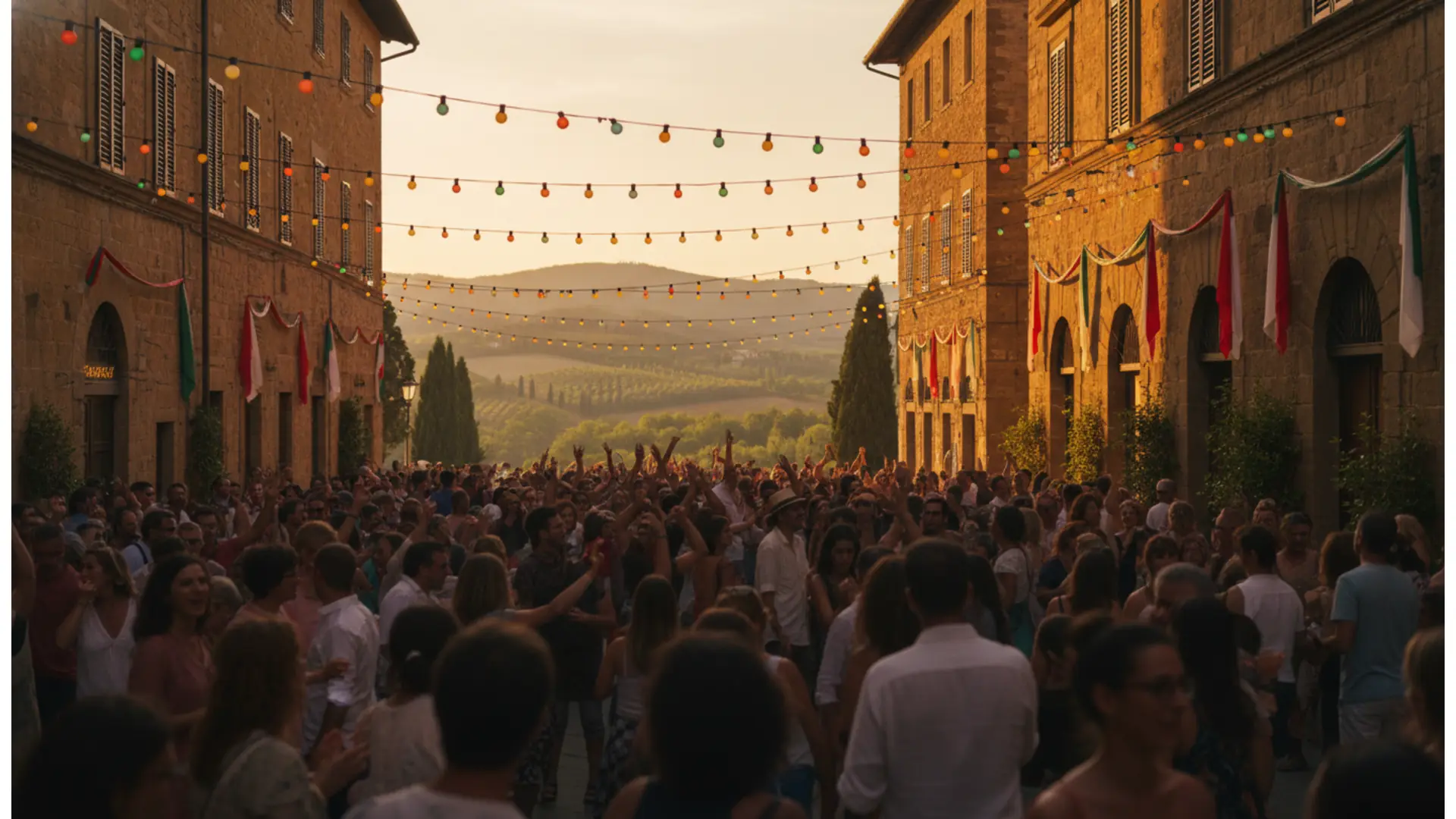
Agropoli Carnival
Papier-mâché floats, festive districts, and the Kajardin mask in the heart of the Cilento region
About Agropoli Carnival
A historic carnival in the heart of Cilento
In Agropoli, in the province of Salerno, the carnival is not just a few days of fun but the town's defining identity festival. The event is now listed among the historic carnivals of Italy and is recognized as Intangible Heritage of the Campania Region, inscribed in the register of traditional community practices. In 2026, the festival reached its 53rd edition, confirming its status as one of the most popular carnival events in the entire Cilento area and one of the longest-running in the province of Salerno.
The heart of the celebration is the parade of papier-mâché floats, which travels through the center of Agropoli and the scenic Lungomare San Marco, ending in Piazza Vittorio Veneto, where music, choreography, and award ceremonies take place. The organization is managed by the Il Carro association, which works for months in a warehouse provided by the municipal administration.
Kajardin, the mask born from a page of history
The official mask of the Agropoli Carnival is called Kajardin, a name derived from Kair el-Din, the feared corsair known as Barbarossa who haunted the Tyrrhenian coasts in the 16th century. His raids left a deep mark on the history of Agropoli, contributing to the town's decline. The carnival flips that memory: Kajardin, who originally kept his sword in its sheath, now appears with his blade drawn alongside masks, streamers, and confetti, becoming a symbol of joy and rebirth. It is a clear example of the liberating function of the carnival, which transforms fear into a collective celebration.
The floats and the challenge between districts
Every year, local papier-mâché masters build the floats representing the various districts and neighborhoods of the town: in the 2026 edition, there were seven, including Molo 2, Frascinelle, Viale Lombardia, Via Giotto, Piano delle Pere, Via Pio X, and Eredita (a hamlet of Ogliastro Cilento, a historic guest of the parade). The competition is real and heartfelt: a jury awards prizes for the best float and the best choreography, evaluating the originality of the theme, artistic quality, and the ability to engage the public.
Alongside the floats, there are costumed groups, bands, dance schools, and street performers who turn the streets into an open-air theater. It is a deeply popular festival, built from the ground up, where entire families from the district work together on the construction of the float and the choreography.
A program spread over several days
The calendar is not limited to parades. In recent years, the program has been enriched with side events: an exhibition dedicated to the history of the Agropoli carnival, the Miss Agropoli Carnival contest with a baby category, the comedy and singing evening of the Carnival Corrida in Piazza Vittorio Veneto, and workshops and entertainment for children. The awarding of the floats closes the event with a big party in the square.
Atmosphere and public
Those arriving in Agropoli during the carnival days find a city fully involved: decorated shop windows, children in masks from the morning, and thousands of visitors arriving from all over the Cilento and the Sele plain. The event has also received funding from the Ministry of Culture, a sign of the recognition of its cultural value beyond local borders.
Agropoli, gateway to the Cilento
Agropoli is one of the most popular locations on the Cilento coast, with its historic center perched on the promontory, the Angevin-Aragonese castle, and views over the Gulf of Salerno. The carnival is therefore also an opportunity to discover the village out of season, when the rhythm is that of the authentic residents, and to quickly reach the iconic sites of the Cilento, Vallo di Diano and Alburni National Park.
Agropoli Carnival — edition 2026
The 53rd edition, between rain and redemption
The 2026 Agropoli Carnival opened its program on Sunday, February 8 with the first scheduled events and an exhibition on the history of the event set up from February 12 at the Cultural Center. The first parade of the seven floats took place on Sunday, February 15, starting at 4 PM from Via Salvo D'Acquisto and arriving at Piazza Vittorio Veneto amidst dance performances, shows, and musical entertainment; on the morning of the same day, at 10 AM, the square hosted the Miss Agropoli Carnival and Miss Carnival Baby contests.
The second parade, scheduled for Tuesday, February 17 starting from Lungomare San Marco, was postponed due to a sudden worsening of the weather that damaged the papier-mâché structures and equipment, requiring days of repairs by the float builders of the Il Carro association.
The recovery on March 1
The grand finale was recovered on Sunday, March 1, 2026 at 3 PM, starting from the seafront and arriving at Piazza Vittorio Veneto via Viale Risorgimento, Via De Gasperi, Via Piave, and Viale Europa. The Carnival Corrida was rescheduled for Saturday, February 28 at 6 PM in Piazza Vittorio Veneto. The awards ceremony crowned the float Follie esistenziali, ahead of Dios from the Moio 2 district. Mayor Roberto Mutalipassi spoke of "a beautiful festival that brought thousands of people to our city who did not want to miss the show."
Programme Agropoli Carnival 2026
Sunday, February 8, 2026
- Official start of the 53rd edition with the first scheduled events
From Thursday, February 12, 2026
- Exhibition dedicated to the history of the Agropoli Carnival at the Cultural Center
Sunday, February 15, 2026
- 10 AM – Piazza Vittorio Veneto: Miss Agropoli Carnival and Miss Carnival Baby contests, with awards for the top three
- 4 PM – First parade of the seven floats: departure from Via Salvo D'Acquisto, arrival at Piazza Vittorio Veneto with dance performances, shows, and musical entertainment
Monday, February 16, 2026
- 6 PM – Piazza Vittorio Veneto: Carnival Corrida (later postponed due to bad weather)
Tuesday, February 17, 2026 (Shrove Tuesday)
- Second float parade starting from Lungomare San Marco: postponed due to bad weather and damage to the floats
Saturday, February 28, 2026
- 6 PM – Piazza Vittorio Veneto: Agropoli Corrida, rescheduled talent evening
Sunday, March 1, 2026
- 3 PM – Second float parade recovered: departure from the seafront, route along Viale Risorgimento, Via De Gasperi, Via Piave, and Viale Europa, arrival at Piazza Vittorio Veneto
- Following: awards ceremony for the floats and closing party in the square. Winning float: Follie esistenziali; second place Dios (Moio 2 district)
Highlights Agropoli Carnival 2026
- Seven papier-mâché floats created by local masters for the city's districts (Molo 2, Frascinelle, Viale Lombardia, Via Giotto, Piano delle Pere, Via Pio X, Eredita)
- The town mask Kajardin, inspired by the corsair Kair el-Din
- The two major parades along the Lungomare San Marco arriving at Piazza Vittorio Veneto
- Prizes for the best float and best choreography
- Miss Agropoli Carnival and Carnival Corrida
- Event recognized as Intangible Heritage of Campania and supported by the Ministry of Culture
Prices Agropoli Carnival 2026
Practical information — Agropoli Carnival
How to get there
By train: The Agropoli-Castellabate station is served by the Salerno–Reggio Calabria Tyrrhenian line; from the station, the center can be reached by a short bus ride or taxi. By car: From the A2 Autostrada del Mediterraneo, take the Battipaglia exit and continue along the SS18 towards Agropoli. By plane: The reference airport is Naples-Capodichino, about an hour and a half away by road.
Tickets and costs
The parades of the floats and the events in Piazza Vittorio Veneto are free of charge.
Practical tips
- On parade days, traffic in the center is diverted and parking lots fill up quickly: it is advisable to arrive at least an hour early and leave the car in the peripheral areas.
- The route is almost entirely flat along the seafront, also suitable for families with strollers.
- The dates of the carnival change every year according to the liturgical calendar: check the updated program on the channels of the Municipality of Agropoli and the Il Carro association before leaving.
- February on the Cilento coast can be windy: layered clothing is the best choice for following the outdoor parade.
Where to stay
Agropoli offers hotels, bed and breakfasts, and vacation homes open even in the low season, with significantly lower rates than in summer; alternatively, you can stay in Castellabate, Paestum, or Vallo della Lucania.
Festival-goer photos
No photos yet. Share yours!
Share your photos
5 photos max, 5 MB per photo (JPG, PNG, WebP)
Noticed an error or missing information?
Help us keep this listing up to date. Every proposal is verified by our team before publication.
Festival-goer reviews
No rating yet — be the first!
No comments yet. Be the first!
Were you there?
Share your experience with the community.
Published by Valentin Contard, festival listings writer. Reviewed, corrected and approved by Christophe Contard, editor-in-chief. .
Where does it take place — Agropoli Carnival
Centro cittadino e Lungomare San Marco
Piazza Vittorio Veneto, 84043 Agropoli