Virgen de Chapi Festival (Peruvian Community)
The Peruvian devotion from Arequipa that parades through the streets of Rome every May 1st
About Virgen de Chapi Rome
A piece of Peru in the heart of Rome
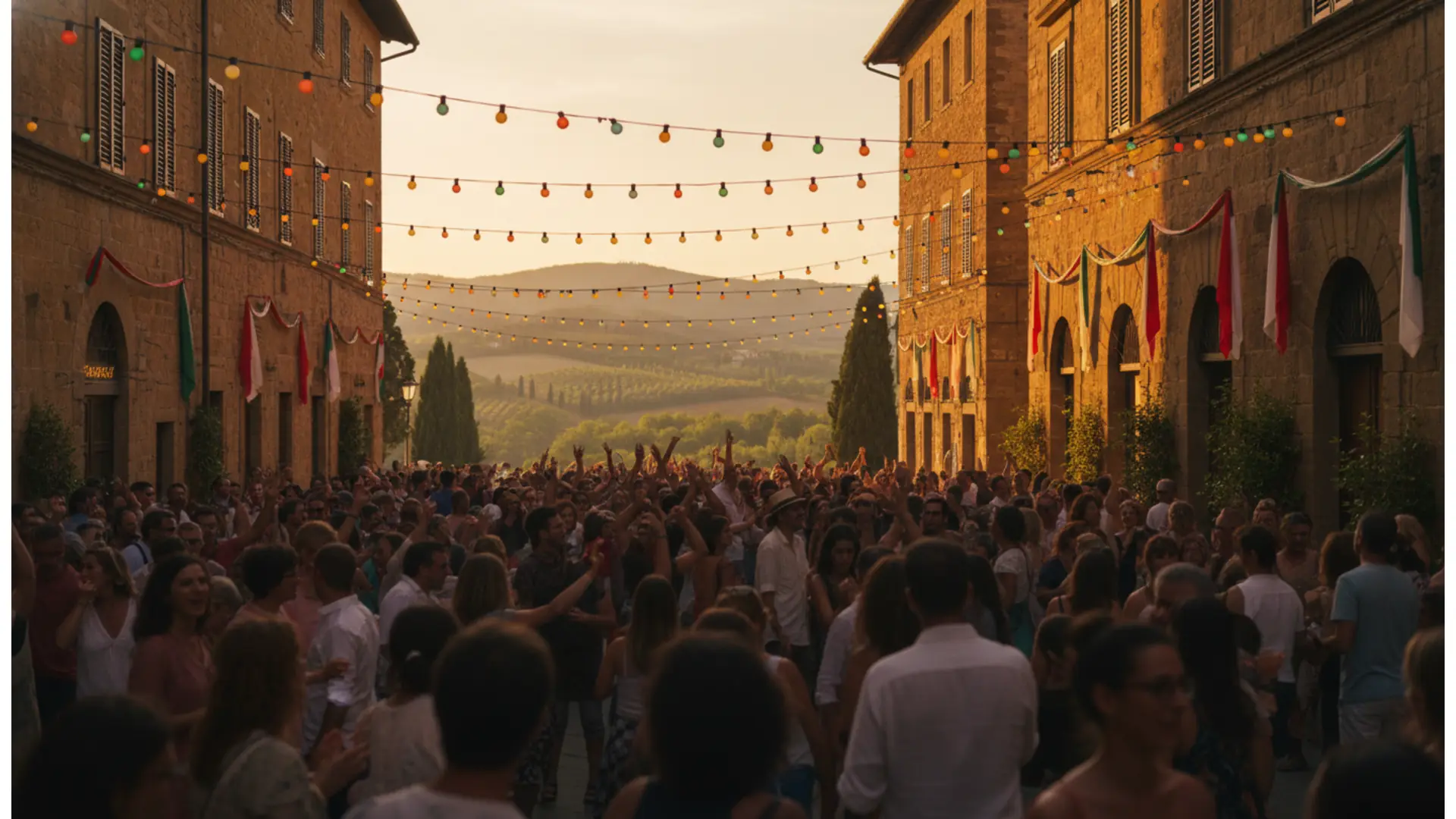
Every year on May 1st, the Trastevere district fills with colors, songs, and prayers in Spanish: it is the Virgen de Chapi Festival, the most heartfelt event for the Peruvian community living in Rome and the wider Lazio region. The devotion, which originated in the Chapi desert in the Polobaya district near Arequipa, is recreated in the capital with a procession winding through the neighborhood streets—historically gathering in Piazza San Cosimato—and concluding with a religious service inside the church.
History: an image that arrived in a suitcase
The Roman devotion to the Virgen de Chapi has a simple and moving history. The image was brought to Italy in a suitcase by the sister of Sofía Neyra, a Peruvian woman living in Rome who suffered from homesickness. From that private gesture, a collective devotion was born: the Asociación Virgen de Chapi de Arequipa en Roma formed around the image, composed primarily of Arequipa natives who have emigrated to Italy, organizing masses, vigils, and processions for Peruvians across the peninsula for twenty years.
How the day unfolds
The festival consists of two complementary parts. The first is the procession: the image of the Madonna, carried on the shoulders of devotees in traditional dress, travels through the streets of Trastevere accompanied by bands, Marian hymns, and the steps of the marinera—the elegant and swirling Peruvian courtship dance, which here becomes a tribute to the "Mamita." The second part is the Eucharistic celebration, a more intimate moment inside the church featuring readings and songs in Spanish.
- Procession of the image through the streets of the Trastevere district
- Traditional Peruvian dances, particularly the marinera
- Holy Mass for the Peruvian community in Spanish
- Social gathering featuring Peruvian gastronomy
The bond with Polobaya and Arequipa
The date is no coincidence: in Peru, between April 29th and May 2nd, tens of thousands of pilgrims trek for kilometers across the desert to reach the Chapi sanctuary. Those living far away cannot join that journey, so they recreate it here: the Roman festival is, in effect, a symbolic pilgrimage that unites two very distant cities, Arequipa and Rome. For many families, it is also the time of year when children born in Italy connect with the language, music, and flavors of their parents.
Twenty years and the Pope's greeting
In 2026, the celebration took on special significance: the association celebrated twenty years since the image arrived in Rome, and devotees gathered in St. Peter's Square, where Pope Leo XIV greeted the community publicly from his study window during the Regina Caeli prayer, thanking them for their service. This recognition brought international visibility to a festival previously known mostly within the neighborhood.
Why it's worth attending
In the Municipality of Rome, capital of the Lazio Region, dozens of devotions brought by migrant communities coexist, but few are as visible and welcoming as this one. The Virgen de Chapi Festival is not a folkloric show staged for tourists: it is a genuine, free, and open popular liturgy that offers a close-up look at Andean religiosity and the vitality of the largest Peruvian community in Europe. Anyone passing through Trastevere on May 1st finds themselves immersed, without warning, in an authentic fragment of Latin America.
Virgen de Chapi Rome — edition 2026
Twenty years of devotion
2026 was a special year for the Peruvian community of Rome: it marked the twentieth anniversary of the arrival of the Virgen de Chapi image in the capital, brought to Italy in a suitcase by the sister of Sofía Neyra and having become over the years the center of a true association of faithful, mostly originating from Arequipa.
The May 1st festival
As every year, the procession and the community mass took place on May 1st, with the image carried on the shoulders of devotees, accompanied by music and traditional Peruvian dances. There was no shortage of social moments featuring national gastronomy, which in Rome turn the religious festival into a gathering place for hundreds of families.
The greeting of Pope Leo XIV
The most anticipated moment arrived on Sunday, May 3rd: gathered in St. Peter's Square, the devotees saw Pope Leo XIV address them from his study window with words of gratitude — "to the Peruvians who in Rome form the Association of the Virgen de Chapi of Arequipa, thank you for your service" —, blessing the image before the crowd. A recognition that gave international resonance to the anniversary.
Programme Virgen de Chapi Rome 2026
Friday, May 1, 2026
- Procession of the Virgen de Chapi image through the streets of the Trastevere district, traditionally starting from Piazza San Cosimato
- Musical accompaniment and traditional Peruvian dances (marinera)
- Holy Mass for the Peruvian community
- Social gathering with Peruvian gastronomy
Sunday, May 3, 2026
- Gathering of devotees in St. Peter's Square, Vatican City
- Regina Caeli prayer and greeting from Pope Leo XIV to the Asociación Virgen de Chapi de Arequipa en Roma, with a blessing of the image for its twentieth anniversary in Rome
Precise times have not been publicly released by the organizers.
Highlights Virgen de Chapi Rome 2026
- Twentieth anniversary of the image's arrival in Rome
- Greeting and blessing from Pope Leo XIV in St. Peter's Square
- Procession through the streets of Trastevere with Peruvian dances and songs
- Community mass in Spanish
Prices Virgen de Chapi Rome 2026
Practical information — Virgen de Chapi Rome
Where and when
The procession takes place on May 1st in the Trastevere district of Rome, with the traditional meeting point at Piazza San Cosimato; the mass is celebrated afterward in the church. Times may vary from year to year: it is advisable to check with the Peruvian community or the parish in the days leading up to the event.
How to get there
Trastevere is easily reached on foot from the historic center by crossing Ponte Sisto or Ponte Garibaldi. By tram, line 8 connects Piazza Venezia to Viale Trastevere; the Roma Trastevere train station is also useful. The neighborhood is a restricted traffic zone and is particularly crowded on May 1st: it is best to avoid driving.
Tips
- Free admission to both the procession and the mass.
- This is a religious celebration: respectful behavior is requested, especially inside the church.
- On May 1st, many shops and offices are closed for the national Labor Day holiday; however, bars and restaurants in Trastevere remain open.
Festival-goer photos
No photos yet. Share yours!
Share your photos
5 photos max, 5 MB per photo (JPG, PNG, WebP)
Noticed an error or missing information?
Help us keep this listing up to date. Every proposal is verified by our team before publication.
Festival-goer reviews
No rating yet — be the first!
No comments yet. Be the first!
Were you there?
Share your experience with the community.
Published by Valentin Contard, festival listings writer. Reviewed, corrected and approved by Christophe Contard, editor-in-chief. .
Where does it take place — Virgen de Chapi Rome
Rione Trastevere (Piazza San Cosimato) e Città del Vaticano