The Campanaccio of San Mauro Forte
The ancestral rite of cowbells in honor of Saint Anthony Abbot
About The Campanaccio
The village that rings
There is a moment, in mid-January, when San Mauro Forte ceases to be a quiet village in the Matera hills and becomes a single, deafening instrument. These are the days of the Campanaccio, one of the most powerful and identity-defining popular rites in Basilicata: teams of bell-ringers, men and women of all ages, cross the streets of the historic center making large cattle bells and ancient cupa cupa (a terracotta pot covered with goat skin) resound. The sound is deafening, hypnotic, and spreads for hours from one alley to another, invading every corner of the village.
A rite between Saint Anthony Abbot and the Great Mother
Today the festival is dedicated to Saint Anthony Abbot, protector of animals and the farming world, celebrated on January 17th. But the roots of the rite go much deeper, into ancient agro-pastoral societies and fertility and propitiation cults linked to the land. The din of the cowbells had and still has an apotropaic value: it was used to drive away the "Darkness", evil, and the winter that was ending, and to ensure the fertility of the fields and the abundance of harvests. For this reason, scholars see in it the echo of pre-Christian vegetation rites, in which noise itself was a purifying force.
San Mauro Forte and its history
The town has origins linked to the Norman colonization of the 11th century; the adjective "Forte" was added in 1861 in memory of the strenuous resistance put up by the population against brigand bands. The Campanaccio has been the heart of San Mauro's identity for decades, so much so that the Region of Basilicata and the Ministry of Culture have recognized the importance of this tradition, including it among the great popular rites of the Lucanian calendar.
The atmosphere
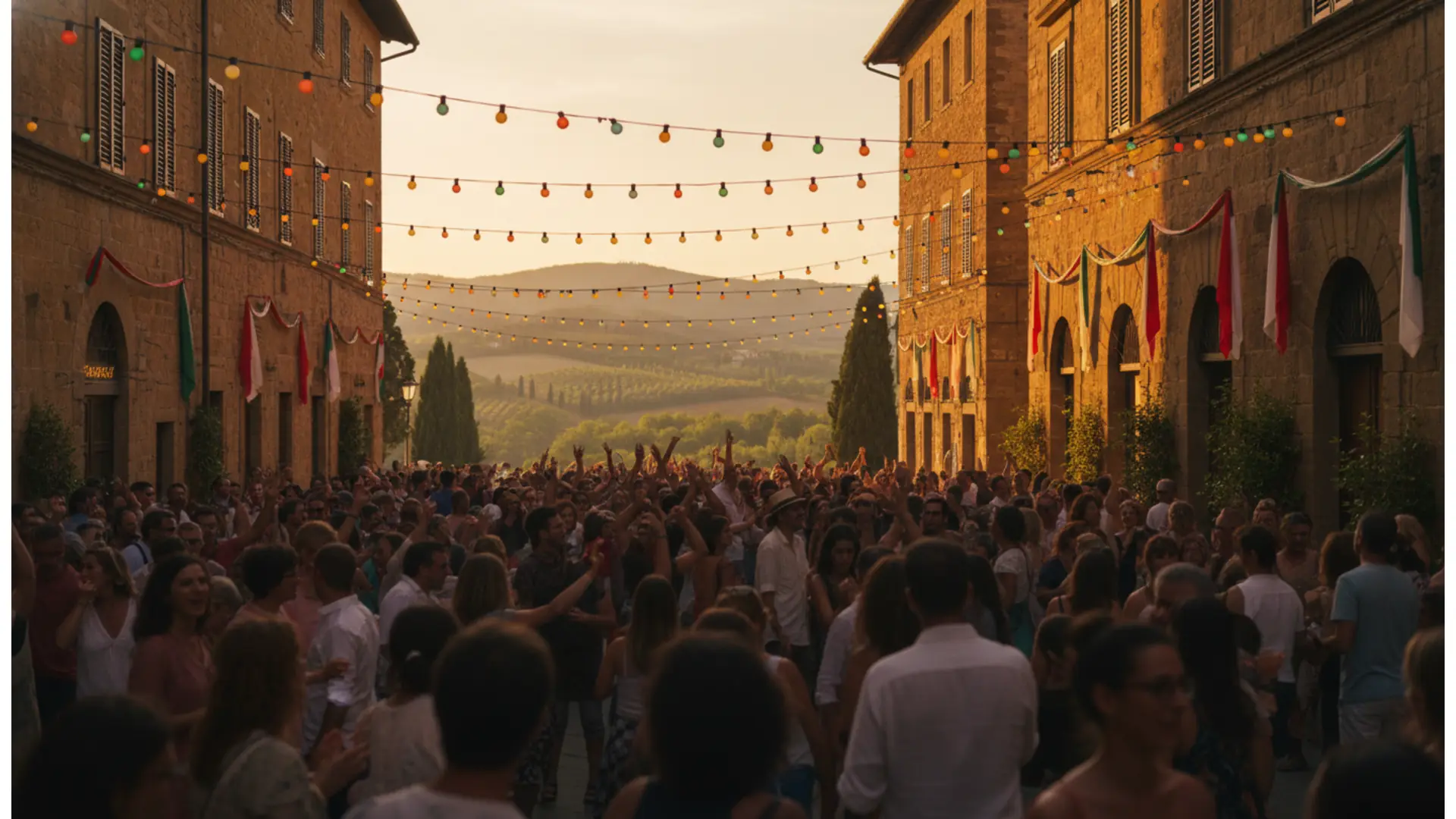
What strikes you most is the involvement: the Campanaccio is not a spectacle to be watched, it is a rite to be participated in. Visitors from outside almost always end up picking up a cowbell and joining the teams, letting themselves be carried away by the collective rhythm. Between one parade and another, the historic center comes alive with food and wine stands, light installations, exhibitions, and concerts, in a program that each year intertwines peasant memory and contemporary art.
The Campanaccio — edition 2026
Il Campanaccio 2026 unfolds over a week of events combining rites, music, art, and gastronomy. The traditional rite of the bell-ringers culminates on Friday, January 16, and Saturday, January 17, with parades through the village streets and the procession of Saint Anthony Abbot. The historic center is transformed with the new "Piazza dell'Arte" (Art Square), light art installations, and food and wine stands. All events are free admission.
Programme The Campanaccio 2026
Sunday, January 11
- 6:30 PM – Palazzo Arcieri: inauguration of the exhibition "Retrospective of CarovanArt Lucania's cultural activities"
Thursday, January 15
- 5:30 PM – Mother Church: solemn mass in honor of Saint Mauro Abbot
- 6:30 PM – Municipal Hall: "The Strike of 1940" with Ulderico Pesce
Friday, January 16
- 10:30 AM – Village streets: "Il Campanaccio dei bambini" (The Children's Campanaccio), school parade
- 4:30 PM – Church of San Rocco: procession of Saint Anthony Abbot
- 5:00 PM – Church of San Rocco: gathering of bell-ringer teams
- 5:30 PM – Village streets: parade of independent bell-ringers
- 6:00 PM – Piazza Caduti per la Patria: inauguration of the Piazza dell'Arte, artisan blacksmith demonstration, "LaLuz Visuals" light art installation (Budapest), and "EXTINCTION" exhibition by Max Papeschi
- 10:00 PM – Piazza Caduti: DJ set "Ashes to Ashes" with secret guest
Saturday, January 17 – Main Day
- 4:30 PM – Village streets: artistic installations
- 5:30 PM – Squares and streets: opening of food and wine stands
- 6:00 PM – Piazza Caduti: artisan demonstration and light art
- 8:30 PM – Piazza Caduti: gathering of the teams
- 9:00 PM – Piazza Monastero: award ceremony for the teams
- 9:30 PM – Piazza Monastero: concert by Enzo Avitabile and i Bottari
Sunday, January 18
- 6:00 PM – Municipality: 15th edition of the Premio Torre Normanna (Norman Tower Award)
Highlights The Campanaccio 2026
Prices The Campanaccio 2026
Practical information — The Campanaccio
How to get there: San Mauro Forte is located in the hilly hinterland of the province of Matera; by car, it can be reached from the SS407 Basentana with the exit for Salandra/San Mauro Forte.
Admission: all events are free admission.
Accommodation: the village offers B&Bs and farm stays; many visitors choose Matera or nearby towns as a base.
Festival-goer photos
No photos yet. Share yours!
Share your photos
5 photos max, 5 MB per photo (JPG, PNG, WebP)
Noticed an error or missing information?
Help us keep this listing up to date. Every proposal is verified by our team before publication.
Festival-goer reviews
No rating yet — be the first!
No comments yet. Be the first!
Were you there?
Share your experience with the community.
Published by Valentin Contard, festival listings writer. Reviewed, corrected and approved by Christophe Contard, editor-in-chief. .
Where does it take place — The Campanaccio
Centro storico di San Mauro Forte