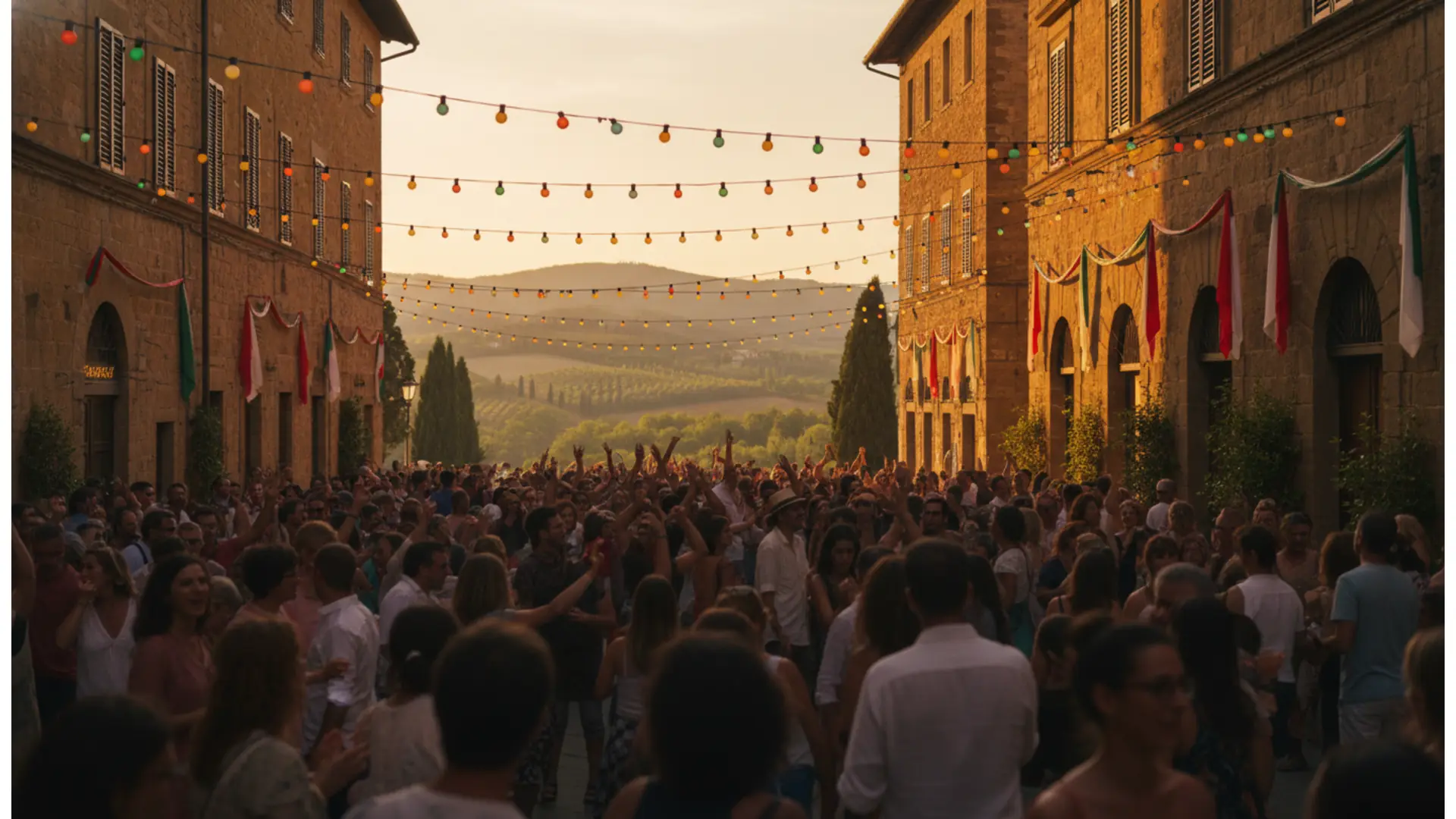
Solemn Celebrations in Honor of Saint Anthony of Padua and Saint Vitus the Martyr (with the Procession of the Panelle)
Three days of devotion, fairs, and music in the heart of Irpinia, featuring the historic Procession of the Panelle
About Saint Anthony and Saint Vitus Festival
Three days of devotion in the heart of Irpinia
From June 13th to 15th, the municipality of Vallata—a mountain village nestled at 870 meters above sea level in the province of Avellino, Campania—unites for its Solemn Celebrations in honor of Saint Anthony of Padua and Saint Vitus the Martyr. It is one of the most cherished traditions in the local calendar: three days blending religious rites and secular festivities, including processions, a fair, live music, and evening performances around the chapel of Saint Vitus.
The festival stems from the merging of two distinct devotions. The cult of Saint Anthony of Padua is ancient in Vallata, though he never had his own church; a chapel was dedicated to him inside the Mother Church. Until 1995, the secular celebrations for Saint Anthony took place in Piazza Tiglio. Since then, the committee has combined June 13th, the eve of Saint Vitus, and June 15th into a single three-day event centered around the chapel of Saint Vitus.
The Procession of the Panelle: a ritual of identity
On June 14th, the eve of the feast, the Procession of the Panelle takes place—the moment that best defines the community's identity. The panelle are small, homemade unleavened breads placed in baskets decorated with roses and broom flowers. It is primarily children and teenagers who carry them through the village streets to the chapel of Saint Vitus.
Once at the chapel, the breads are blessed and distributed to the residents. A portion is traditionally set aside for animals, as Saint Vitus is invoked as their protector. The blessing is accompanied by the custom of the three laps around the chapel performed by the faithful, a ritual gesture that local scholars link to ancient folk religiosity, possibly predating the Christianization of these lands.
June 15th: the procession with the statue of Saint Vitus
June 15th, the day of the martyrdom, marks the climax of the festival. In the afternoon, the statue of Saint Vitus the Martyr is carried in a procession through the streets, accompanied by a brass band and the entire community, including those who have returned from abroad specifically for the occasion. The evening concludes with a final concert and traditional secular festivities.
The history of the chapel of Saint Vitus
The cult surrounding the chapel has been documented for centuries: a fair dating back to 1537 suggests the presence of a small sacred building on the site. Inscriptions reveal the church's growth over time—1777 at the base of the high altar, 1793 for the side altars, 1816 on a window, and restorations in 1874 and 1927. The 18th century was the period of greatest expansion for the cult, which is when the name "Vito" became common in local records. Recently, Professor Lucia Arminio and her students enriched the chapel with three frescoes: the Dead Christ, the Transfiguration, and the martyrdom of Saint Vitus.
The secular festival: fair, band, and concerts
Alongside the religious events, there is a rich secular program organized by the Saint Anthony and Saint Vitus Martyr Festival Committee, active in its current form since 1988. The organization relies on volunteers and door-to-door fundraising, with significant historical contributions from the Vallatese diaspora, particularly in the United States.
- Fair opening on June 14th, with stalls lining the town center streets
- Brass band accompanying the processions and performing in the square
- Evening shows and concerts featuring Italian pop music guests
- Fireworks and a lottery draw to close the festivities
Vallata, a village in the Irpinia highlands
Vallata is located in the Apennines, between the Ufita Valley and the Daunia Mountains, bordering Bisaccia, Carife, Guardia Lombardi, Scampitella, and Trevico. It is a town of just under three thousand inhabitants, known in the local Irpinian dialect as Vaddàta, and belongs to the Diocese of Ariano Irpino-Lacedonia. The official patron saint of the town is Saint Bartholomew, celebrated on August 24th, but the June festival remains the one that draws the largest crowds and best reflects the popular religiosity of this part of Campania.
Why it's worth the trip
Visitors arriving in Vallata in mid-June will find a festival untouched by mass tourism: the panelle are still kneaded at home, and the three laps around the chapel are performed in silence. Add to this the crisp air at 870 meters, authentic Irpinian cuisine, and a historic center beautifully illuminated for the occasion.
Saint Anthony and Saint Vitus Festival — edition 2026
The 2026 edition in Vallata
From June 13th to 15th, 2026, the historic center of Vallata hosted the customary sequence of religious celebrations and secular events organized by the Saint Anthony and Saint Vitus Martyr Festival Committee. On June 13th, the feast of Saint Anthony of Padua, the triduum concluded with the afternoon procession of the Saint's statue, followed by live music in the evening.
June 14th, the eve of the feast, saw the opening of the fair and the Procession of the Panelle: the small unleavened breads, carried by children in baskets adorned with roses and broom flowers, were blessed at the chapel of Saint Vitus and then distributed to the community.
On June 15th, the day of the martyrdom, the statue of Saint Vitus the Martyr traveled through the village streets in the most attended procession of the year, documented by local photographers. The final evening brought the community together for a concert and the closing events of the secular festival.
Programme Saint Anthony and Saint Vitus Festival 2026
Saturday, June 13th, 2026 — Saint Anthony of Padua
- Religious celebrations and conclusion of the triduum in honor of Saint Anthony of Padua
- Afternoon: procession with the statue of Saint Anthony of Padua through the town center
- Evening: live music in the festival area
Sunday, June 14th, 2026 — Eve of Saint Vitus
- Morning: opening of the traditional fair along the village streets
- Afternoon: Procession of the Panelle, with children carrying small unleavened breads in baskets adorned with roses and broom flowers to the chapel of Saint Vitus
- Blessing of the panelle and distribution to the residents; the three ritual laps around the chapel
- Evening entertainment in the square
Monday, June 15th, 2026 — Saint Vitus the Martyr
- Morning: liturgical celebrations on the day of the martyrdom of Saint Vitus
- Afternoon: solemn procession with the statue of Saint Vitus the Martyr through the streets of Vallata, accompanied by a brass band
- Evening: closing concert, fireworks display, and lottery draw
Exact times of celebrations and names of musical guests are announced annually by the Saint Anthony and Saint Vitus Martyr Festival Committee via their official channels.
Highlights Saint Anthony and Saint Vitus Festival 2026
- Procession of the Panelle on June 14th: small unleavened breads carried by children in baskets adorned with roses and broom flowers to the chapel of Saint Vitus
- Blessing of the breads and distribution to the residents, with a portion reserved for animals, of which Saint Vitus is the protector
- The three ritual laps around the chapel performed by the faithful
- The procession on June 15th with the statue of Saint Vitus the Martyr, accompanied by a brass band
- The fair on June 14th along the streets of the historic center
- Evening concert, fireworks, and lottery draw to close the event
Prices Saint Anthony and Saint Vitus Festival 2026
Practical information — Saint Anthony and Saint Vitus Festival
Getting there
By car: Vallata can be reached via the A16 Naples-Canosa motorway, exiting at Grottaminarda or Lacedonia, then continuing along the SS 91 and the provincial roads of the Irpinia highlands. From Avellino, the journey takes about an hour.
By train: the most convenient stations are on the line to Foggia; from there, you must continue by bus or taxi, as the rail service does not directly serve the village.
By plane: Naples Capodichino Airport is approximately two hours away by road.
Times and locations
Processions mainly take place in the afternoon, starting from the town churches and ending at the chapel of Saint Vitus on Via San Vito. Evening shows are held in the festival area near Corso Kennedy.
Costs
Participation in the processions, the fair, and the open-air performances in the square is free.
Tips
- Vallata is at 870 meters: even in June, evenings can be cool, so bring a light jacket.
- The historic center has narrow, sloping streets: comfortable shoes are recommended.
- For exact schedules, it is best to check the channels of the Saint Vitus Committee before departure.
- There are few accommodation options in the village: consider farmhouses (agriturismi) in the Irpinia highlands or staying in Ariano Irpino.
Festival-goer photos
No photos yet. Share yours!
Share your photos
5 photos max, 5 MB per photo (JPG, PNG, WebP)
Noticed an error or missing information?
Help us keep this listing up to date. Every proposal is verified by our team before publication.
Festival-goer reviews
No rating yet — be the first!
No comments yet. Be the first!
Were you there?
Share your experience with the community.
Published by Valentin Contard, festival listings writer. Reviewed, corrected and approved by Christophe Contard, editor-in-chief. .
Where does it take place — Saint Anthony and Saint Vitus Festival
Cappella di San Vito e centro storico di Vallata
Via San Vito, 83059 Vallata