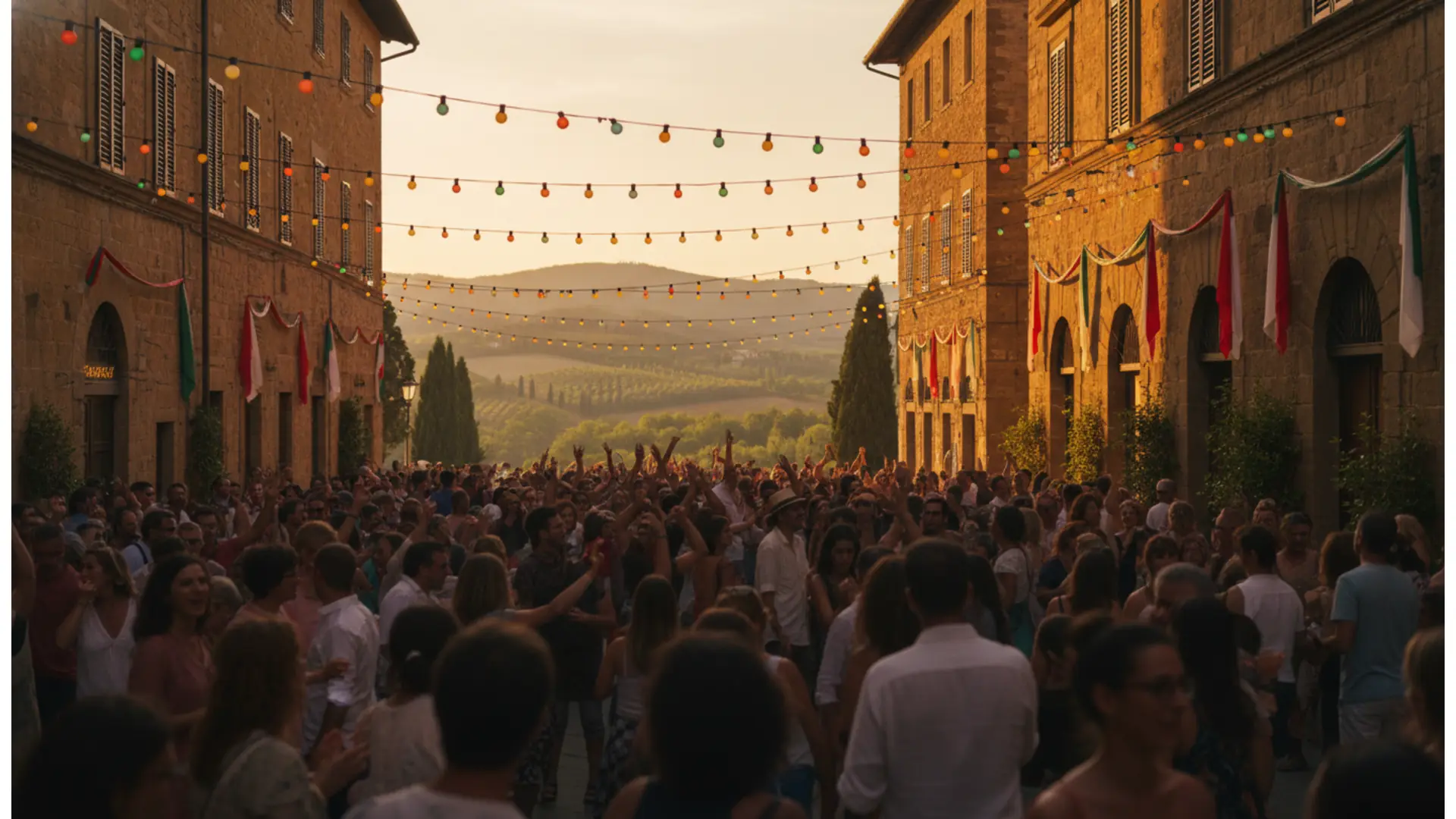
San Giuseppe 'a Spiga Festival
The spring festival of the patron saint of the fields, blending faith and popular tradition in Augusta
About San Giuseppe 'a Spiga
A festival rooted in the land and faith
The San Giuseppe 'a Spiga Festival is one of the most beloved celebrations in Augusta, in the province of Syracuse, Sicily. The name "'a spiga" (the wheat ear) reveals its origin: born as a propitiatory festival linked to the agricultural world, it was dedicated to the abundance of the harvest and the fertility of the fields. Saint Joseph, carpenter and guardian of the Holy Family, thus became the protector of the farmers of Augusta. In 1735, he was proclaimed co-patron of the city, securing a central place in local popular devotion.
The third Sunday after Easter
Unlike the traditional Saint Joseph's Day on March 19th, in Augusta the feast is celebrated on the third Sunday after Easter, in the heart of spring, when the wheat ripens in the local fields. This timing reinforces the bond with the agricultural symbolism of the wheat ear and makes the festival a highly anticipated event for the entire community.
The procession and the baroque float
The highlight is the procession of the statue. On the afternoon of the main day, the wooden statue of the Saint is lowered from its niche using an ancient pulley system and placed on the traditional baroque float, which travels through the main streets of the historic center amidst firecrackers, church bells, and the accompaniment of a brass band. The procession reaches Piazza Duomo, where folkloric tributes take place, before returning to the Church of San Giuseppe.
Between liturgy, culture, and spectacle
The festivities include the triduum, Eucharistic adoration, solemn liturgy, and the evocative Eucharistic procession. There are also cultural events, such as conferences on the history of the devotion, and the presentation of the "Silver Lily" Award, given to an individual, family, or institution that has distinguished itself in promoting the cult of the Saint. In the evening, a fireworks display in Piazza San Domenico illuminates the sky over Augusta. The celebrations continue with the octave, which accompanies the community in the following days.
An identity heritage of Augusta
Promoted by the Confraternity of San Giuseppe together with the parish and supported by local institutions, the festival is much more than a religious event: it is an identity heritage that tells the story of the ancient relationship between Augusta, its land, and its faith. For those visiting eastern Sicily in the spring, it is an opportunity to experience an authentic and deeply participatory popular tradition firsthand.
San Giuseppe 'a Spiga — edition 2026
The 2026 edition of the San Giuseppe 'a Spiga Festival was held between late April and early May, according to the usual calendar linked to the third Sunday after Easter. The days of April 29-30 and May 2 featured the exposition of the Blessed Sacrament, Eucharistic adoration, and evening Holy Mass. Sunday, May 3, the octave of the feast, saw the traditional "S. Giuseppe" mini-volley trophy in the morning and, in the afternoon, Eucharistic adoration, solemn liturgy, and the procession along Via Garibaldi, Via Epicarmo, Via Alabo, and Via Principe Umberto, with the Saint's float accompanied by the community of Augusta.
Programme San Giuseppe 'a Spiga 2026
April 29-30 and May 2
- 17:30 — Exposition of the Blessed Sacrament and Eucharistic Adoration
- 18:30 — Holy Mass
Sunday, May 3 — Octave of the Feast
- 09:00 — "S. Giuseppe" Mini-volley Trophy (26th edition)
- 17:30 — Eucharistic Adoration
- 18:30 — Solemn Eucharistic Liturgy
- 19:00 — Eucharistic Procession along Via Garibaldi, Via Epicarmo, Via Alabo, and Via Principe Umberto
On the main day, the wooden statue of the Saint is lowered from its niche and carried in procession on the baroque float through the historic center, with firecrackers, church bells, and a brass band. The festival culminated with a fireworks display in Piazza San Domenico.
Highlights San Giuseppe 'a Spiga 2026
Prices San Giuseppe 'a Spiga 2026
Practical information — San Giuseppe 'a Spiga
Where
The celebrations take place at the Church of San Giuseppe and along the streets of the historic center of Augusta (SR), with the procession reaching Piazza Duomo and the fireworks display in Piazza San Domenico.
How to get there
By car: A18 Catania-Siracusa motorway, exit Augusta. By train: Augusta station on the Catania-Siracusa line. The nearest airport is Catania-Fontanarossa, about 40 km away.
Admission
Participation in religious celebrations, the procession, and the fireworks display is free and open to everyone.
Festival-goer photos
No photos yet. Share yours!
Share your photos
5 photos max, 5 MB per photo (JPG, PNG, WebP)
Noticed an error or missing information?
Help us keep this listing up to date. Every proposal is verified by our team before publication.
Festival-goer reviews
No rating yet — be the first!
No comments yet. Be the first!
Were you there?
Share your experience with the community.
Published by Valentin Contard, festival listings writer. Reviewed, corrected and approved by Christophe Contard, editor-in-chief. .
Where does it take place — San Giuseppe 'a Spiga
Chiesa di San Giuseppe