Saint Mary Magdalene Feast
The patron saint of Atrani celebrated with processions through narrow alleys and fireworks over the sea
About Saint Mary Magdalene Atrani
The patron saint of the smallest village on the Coast
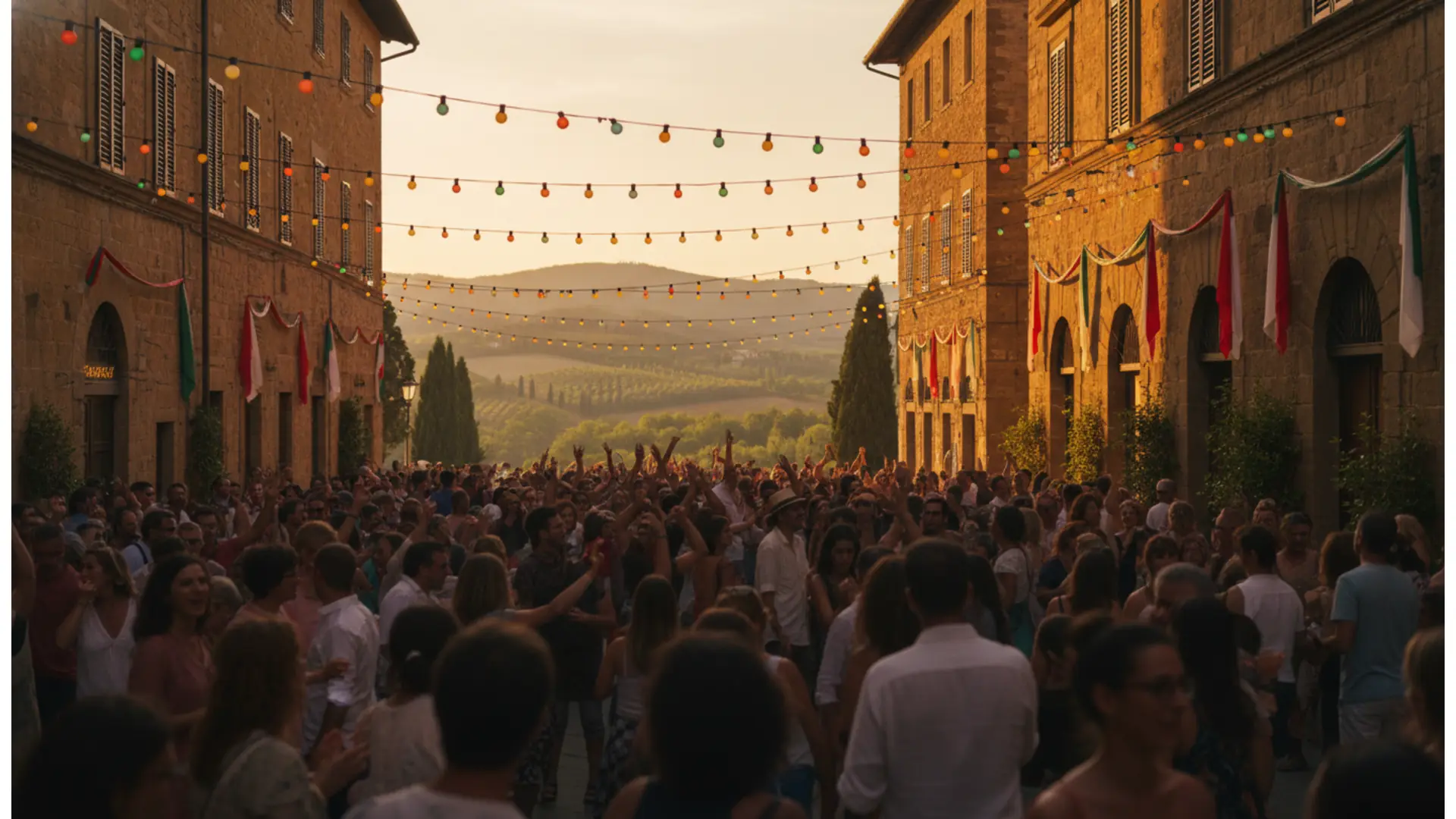
Every July 22nd, Atrani, one of the smallest municipalities in Italy by area, celebrates Saint Mary Magdalene, the patron saint and symbol of the town's identity. Nestled between the sea and the rocky cliffs of the Amalfi Coast, in the province of Salerno (Campania), the village transforms for a few days into a single open-air theater: fairy lights run along the alleys, the stairways fill with people, and the main square becomes the beating heart of the community.
A devotion rooted in the Middle Ages
The Atrani tradition links the cult of the Magdalene to 1274, when the inhabitants attributed the liberation of the village from a Saracen occupation to her intercession. The Collegiate Church of Saint Mary Magdalene was built on the site of the occupied fortress and still dominates Atrani today with its majolica-tiled dome and bell tower overlooking the sea. The statue carried in procession is the work of local 18th-century artisans and depicts the penitent Magdalene.
The Alzata della Pettolella
The true beginning of the festival is marked not by a concert or a speech, but by an ancient gesture. Exactly one week before July 22nd, the citizens gather for the Alzata della Pettolella: an ancient banner bearing the Saint's effigy is hoisted to the top of the Collegiate's bell tower. The term derives from archaic Neapolitan and refers to a small piece of cloth. When the pettolella waves above the rooftops, all of Atrani knows that the festivities are near, and the week of spiritual and material preparation begins.
The days of the festival
The religious and civil program is organized by the Parish of Saint Mary Magdalene, with the patronage of the Municipality of Atrani and the support of the Campania Region. Celebrations open in mid-July with the novena, the Holy Rosary, and daily masses in the Collegiate Church, culminating on July 21st and 22nd.
- Eve, July 21st: arrival and parade of the grand brass band through the town streets, solemn exposition and enthronement of the statue, solemn Vespers, celebration presided over by the Archbishop of Amalfi-Cava de' Tirreni, and traditional concert in the square.
- Feast Day, July 22nd: holy masses from the early morning hours, tribute to the fallen accompanied by the brass band, afternoon pontifical mass, evening procession, musical performance in Piazza Umberto I, and fireworks.
The procession through the alleys and the beach
The most heartfelt moment is the procession on the evening of July 22nd. The statue leaves the Collegiate Church and travels through the narrow alleys, covered passages, and stairways of the village, accompanied by confraternities, the brass band, and hundreds of faithful, before reaching the beach. It is a short route in terms of distance but very slow: in Atrani, the procession is a capillary traversal of a town that can only be explored on foot.
Fireworks over the sea
To close the festival, late at night, comes the fireworks display, considered one of the most beautiful on the Amalfi Coast. The fireworks are launched over the sea, and the lights reflect on the water, illuminating the facade of the Collegiate Church and the entire amphitheater of houses surrounding the square. This is why, that night, the beach and the panoramic road above Atrani fill with visitors arriving from Amalfi, Ravello, and Minori.
Sarchiapone, the festival dish
The patronal feast also has its own flavor. Sarchiapone is the typical Atrani dish linked to the days of the Magdalene: a local long squash, hollowed out, stuffed, and cooked in tomato sauce. It is prepared in the village homes and shared with family, confirming that here the festival is primarily a domestic and community affair, much more than just a tourist event.
Atrani, the village and the Coast
Atrani has just over eight hundred inhabitants and develops around Piazza Umberto I, a tiny square surrounded by arches that, during the festivities, becomes a stage, concert hall, and meeting place. The village is part of the UNESCO Amalfi Coast site and is just a few minutes' walk from Amalfi: a proximity that makes the festival easily accessible without having compromised its deeply local character.
Saint Mary Magdalene Atrani — edition 2026
In 2026, the religious and civil program was once again organized by the Parish of Saint Mary Magdalene with the patronage of the Municipality of Atrani and the support of the Campania Region. The initiatives began on July 12th with the novena, the Holy Rosary, and daily Eucharistic celebrations, while the Alzata della Pettolella on the Collegiate's bell tower officially kicked off the festivities one week before the Saint's day.
In the days leading up to the festival, citizens mobilized to clean and prepare the village, a now-traditional gesture that accompanies the eve. The climax arrived with the exposition of the statue of the penitent Magdalene, moved from its niche to the high altar amidst singing and the sound of bells, and with the procession on July 22nd through the narrow alleys and the beach. To close the edition, the customary fireworks display over the sea in front of the Collegiate's facade.
Programme Saint Mary Magdalene Atrani 2026
From mid-July
Novena of preparation, Holy Rosary, and daily Eucharistic celebrations in the Collegiate Church of Saint Mary Magdalene, starting July 12th.
One week before July 22nd
Alzata della Pettolella: the ancient banner with the Saint's effigy is hoisted to the top of the Collegiate's bell tower, signaling the start of the festivities.
Tuesday, July 21st — Eve
- Arrival of the Gran Concerto Bandistico Città di Fisciano and parade through the village streets
- Solemn exposition of the statue of Saint Mary Magdalene
- Solemn Vespers and celebration presided over by Archbishop Mons. Orazio Soricelli
- Traditional brass band concert in the square
Wednesday, July 22nd — Patron Saint's Feast
- Holy masses from early morning in the Collegiate Church
- Solemn masses and pontifical mass
- Procession of the venerated statue through the village alleys and along the beach, with confraternities and brass band
- Brass band concert and evening musical show in Piazza Umberto I
- Fireworks display over the sea to close the festivities
Highlights Saint Mary Magdalene Atrani 2026
- Alzata della Pettolella on the Collegiate's bell tower, one week before the feast
- Solemn exposition and enthronement of the 18th-century statue of the penitent Magdalene
- Procession on July 22nd through the alleys, stairways, and beach of Atrani
- Gran Concerto Bandistico Città di Fisciano
- Celebration presided over by Archbishop Mons. Orazio Soricelli
- Fireworks display over the sea, among the most appreciated on the Amalfi Coast
Prices Saint Mary Magdalene Atrani 2026
Practical information — Saint Mary Magdalene Atrani
How to get there
Atrani can be reached via the SS163 Amalfitana road. Parking is very limited: it is best to leave your vehicle in Amalfi or in the garages along the main road and continue on foot, about ten minutes from the center of Amalfi. By bus, SITA Sud lines connect Amalfi with Salerno, Sorrento, and Ravello, with a stop on the main road near Atrani. By sea, in the summer months, companies like Travelmar provide connections to the port of Amalfi. The nearest airport is Salerno-Costa d'Amalfi, followed by Naples Capodichino.
Admission and costs
All religious and civil events, including brass band concerts, the musical show in the square, and the fireworks, are free and held outdoors.
Practical tips
- The village is almost entirely pedestrian and consists of stairways and covered passages: comfortable shoes are essential.
- For the fireworks, it is best to position yourself on the beach or along the main road with a view of the village, arriving well in advance.
- On the evenings of July 21st and 22nd, traffic on the SS163 is very heavy: it is better to travel by bus or by sea.
- Accommodation in Atrani is limited; Amalfi, Minori, and Maiori offer more alternatives just a few minutes away.
- During the procession, you will pass through places of worship: respectful attire is required.
Festival-goer photos
No photos yet. Share yours!
Share your photos
5 photos max, 5 MB per photo (JPG, PNG, WebP)
Noticed an error or missing information?
Help us keep this listing up to date. Every proposal is verified by our team before publication.
Festival-goer reviews
No rating yet — be the first!
No comments yet. Be the first!
Were you there?
Share your experience with the community.
Published by Valentin Contard, festival listings writer. Reviewed, corrected and approved by Christophe Contard, editor-in-chief. .
Where does it take place — Saint Mary Magdalene Atrani
Collegiata di Santa Maria Maddalena e Piazza Umberto I
Piazza Umberto I, 84010 Atrani