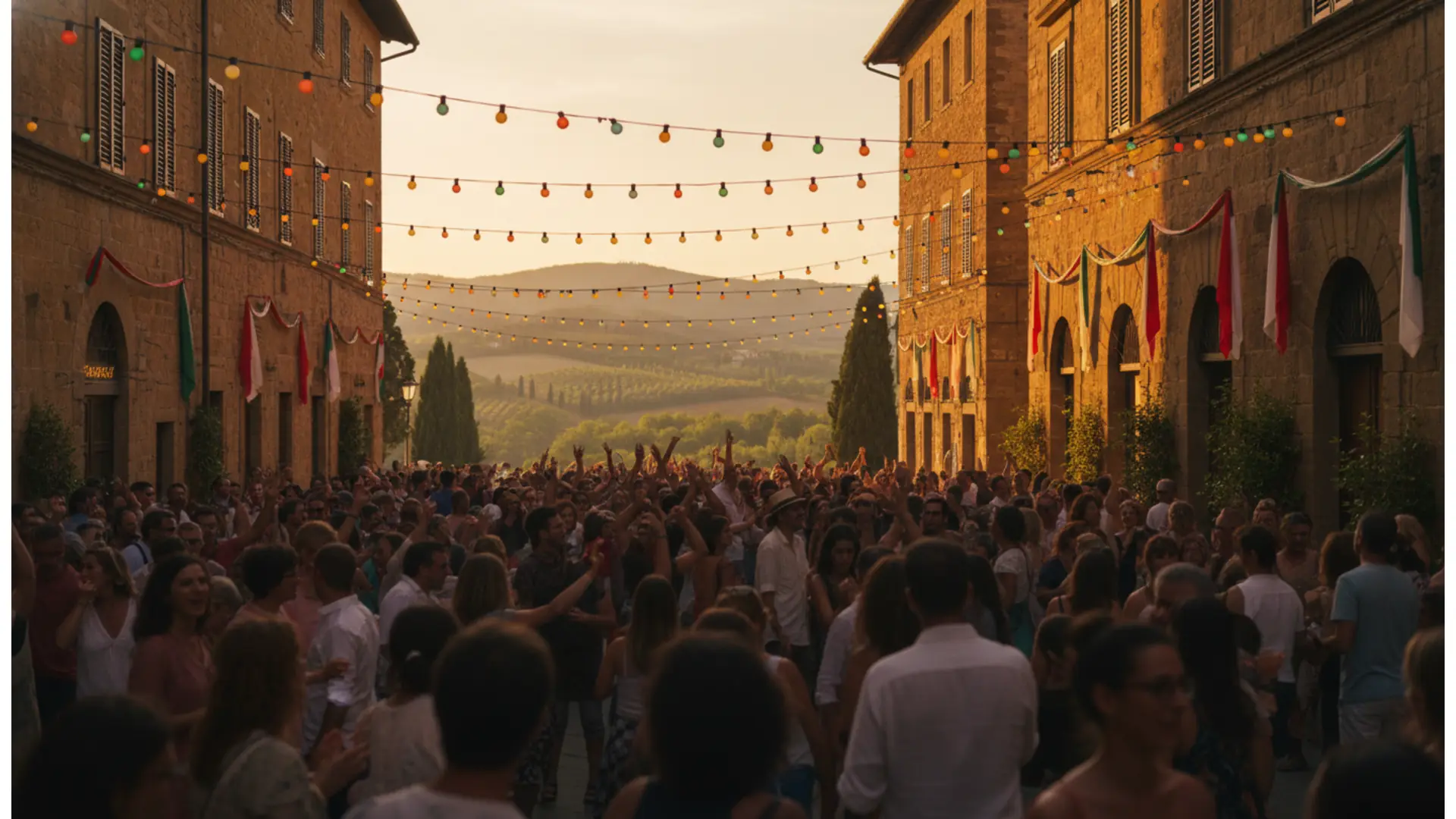
Saint Julian Patronal Feast
The patronal feast of Gozzano, on Lake Orta
About Saint Julian
A festival that tells the story of Gozzano's origins
The Saint Julian Patronal Feast is the most cherished event of the year for Gozzano, a charming town in the Province of Novara, Piedmont, nestled on the southern shores of Lake Orta (the Cusio). The patron saint is no ordinary figure: according to tradition, Julian and his brother Julius, originally from the Greek island of Aegina, arrived on the shores of the lake at the end of the 4th century to evangelize the upper Novara area, building a large number of churches. Legend has it that the ninety-ninth was built right in Gozzano, where Julian stopped and died, while Julius reached the famous island that still bears his name today.
A place close to the heart: the Basilica of Saint Julian
The focal point of the feast is the Basilica of Saint Julian, which dominates the town from atop a hill. Built on the ruins of an ancient church, flanked by an imposing 11th-century Romanesque bell tower and rebuilt in the 12th century in imitation of the ancient Cathedral of Novara, it houses the saint's relics under the presbytery, preserved in a silver and crystal urn. It is here that the solemn mass, the central moment of the day, takes place on the feast day.
A community celebration
The Patronal Feast is much more than a religious anniversary: it is an occasion where the entire community comes together. The solemn celebration is usually attended by civil authorities, including the President of the Province of Novara and numerous mayors from the towns of the Cusio lakeshore, testifying to the deep bond that unites the territory around the figure of Saint Julian. Patronal feasts, as has been noted, represent a precious cultural and civil heritage, in which local communities recognize themselves and strengthen their sense of belonging.
A bridge to Aegina
In recent years, the feast has also become an opportunity to promote the twinning with Aegina, the Greek island that is the land of origin of Saint Julian and Saint Julius. An ideal bond that crosses time and borders, enriching the anniversary with meaning and uniting the millennial history of the Cusio with the Mediterranean roots of the two saintly brothers.
Tradition and ancient roots
The cult of Saint Julian in Gozzano has deep roots in ancient times: as early as the 10th century, a diploma granted the village the right to hold a weekly market and an annual fair linked to the translation of the saint. Even today, the feast keeps this heritage alive, confirming itself as one of the most important moments of identity for Gozzano and the entire Lake Orta area.
Saint Julian — edition 2026
The 2026 Saint Julian Patronal Feast was held in Gozzano on Thursday, January 8. The heart of the day was the solemn mass celebrated in the Basilica of Saint Julian and presided over by the Bishop of Novara, Monsignor Franco Giulio Brambilla.
The celebration was attended by local civil authorities, including the President of the Province of Novara Marco Caccia, Vice President Andrea Crivelli, and numerous mayors of the towns on the Cusio lakeshore. The 2026 edition also renewed the value of the twinning with Aegina, the Greek island that is the land of origin of Saint Julian and his brother Saint Julius.
Programme Saint Julian 2026
Thursday, January 8, 2026
- Solemn mass in the Basilica of Saint Julian, presided over by the Bishop of Novara, Monsignor Franco Giulio Brambilla, with the participation of civil authorities (President and Vice President of the Province of Novara, mayors of the Cusio lakeshore).
The festival maintained its predominantly religious and community character, with the liturgical celebration as the central moment and the renewal of the ideal bond with Aegina.
Highlights Saint Julian 2026
Prices Saint Julian 2026
Practical information — Saint Julian
How to get there
Gozzano is located in the Province of Novara, on the southern shore of Lake Orta. By car, it can be reached via the A26 motorway (Borgomanero or Gravellona Toce exit). By train, the Gozzano station is served by the Novara–Domodossola line.
Where it takes place
The heart of the celebrations is the Basilica of Saint Julian, which dominates the town from above. Religious services are free to attend.
Tips
The feast is held in the middle of winter: warm clothing is recommended. It is an ideal opportunity to combine the visit with discovering Lake Orta and the Island of Saint Julius.
Festival-goer photos
No photos yet. Share yours!
Share your photos
5 photos max, 5 MB per photo (JPG, PNG, WebP)
Noticed an error or missing information?
Help us keep this listing up to date. Every proposal is verified by our team before publication.
Festival-goer reviews
No rating yet — be the first!
No comments yet. Be the first!
Were you there?
Share your experience with the community.
Published by Valentin Contard, festival listings writer. Reviewed, corrected and approved by Christophe Contard, editor-in-chief. .
Where does it take place — Saint Julian
Basilica di San Giuliano