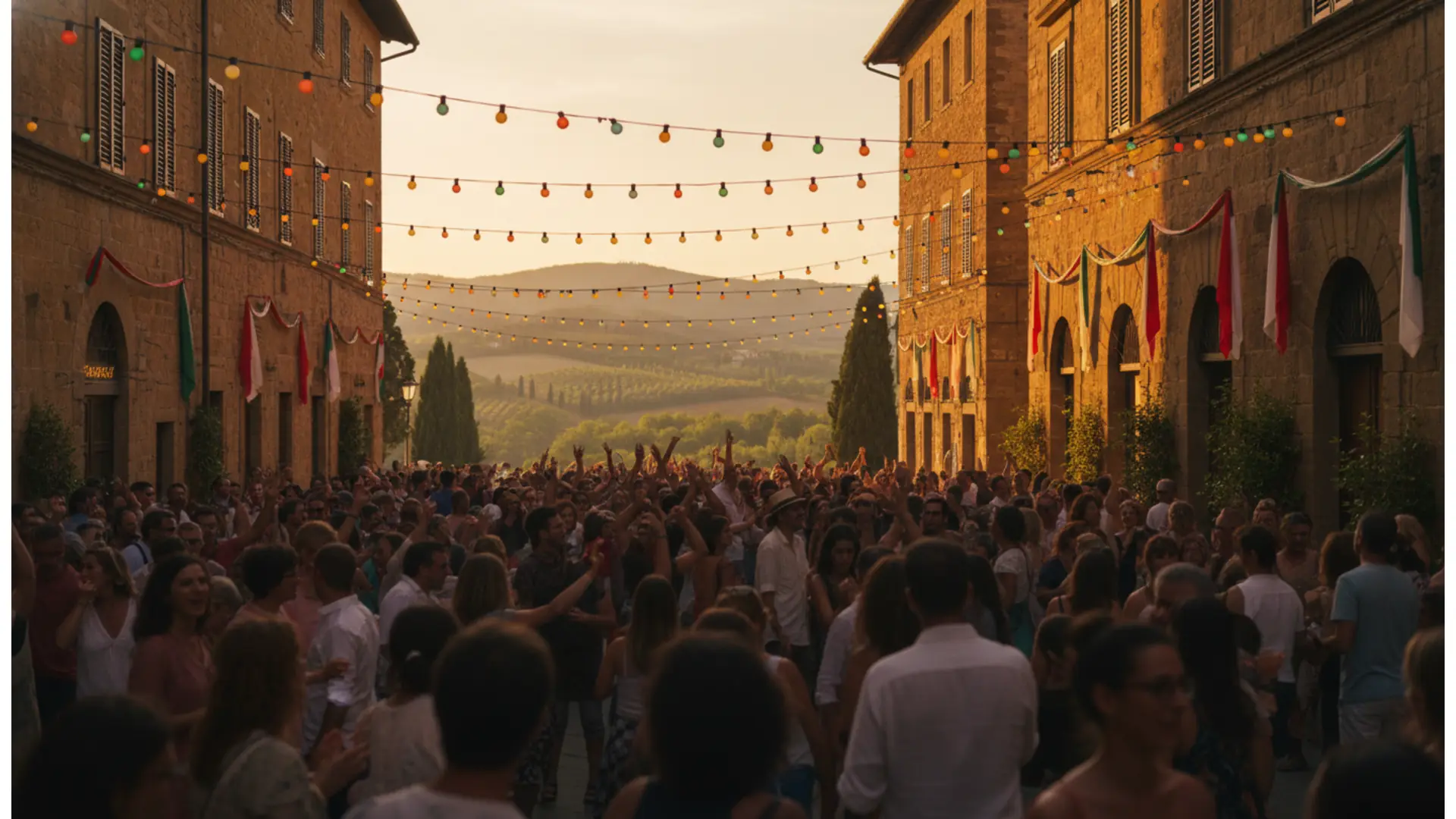
Saint Blaise Festival (Patron Saint)
Solemn ceremony, blessing of the throats, and the traditional 'festaroli' procession through the village of Sacrofano
About Saint Blaise Sacrofano
February 3rd, the Patron Saint's Day
On February 3rd, Sacrofano comes to a standstill to honor Saint Blaise, the Armenian bishop of Sebaste martyred on this very day in 316 and venerated throughout Italy as the protector of the throat. In this village nestled on the slopes of Monte Musino, in the heart of the Veio Park, the patron saint's feast is more than just a date on the calendar: it is a moment when the community reconnects with its identity through religious celebrations, processions through the historic center, and customs passed down through generations. The Municipality of Sacrofano, which promotes the day alongside the parish, closes municipal offices for the occasion and invites all citizens to participate.
The tradition of the 'festaroli'
The heart of the Sacrofano festival is the procession of the 'festaroli', one of the most unique customs in the Lazio region. The 'festaroli' are the citizens who turn fifty in the current year: their age group is responsible for accompanying the saint and animating the festivities, dressed in dark clothing with red accessories and carrying the characteristic wooden staff decorated with green leaves. At the end of the annual cycle, the image of Saint Blaise is handed over to the next class, who will organize the festival the following year: a passing of the torch that strengthens bonds between peers and keeps the town's collective memory alive.
The blessing of the throats
In the church dedicated to the saint, the most anticipated ritual takes place: the blessing of the throats. Two small crossed candles are placed against the necks of the faithful as a symbol of divine protection invoked against throat ailments, according to the tradition linked to the miracle of the child saved from a fish bone. This is followed by a parade of the marching band, which winds through the streets and squares of the historic center until the end of the festivities, while local confraternities take part in the solemn procession.
The Church of Saint Blaise
The setting for the festival is the Church of Saint Blaise, built in the second half of the 15th century under the papacy of Sixtus IV and completed in the early 18th century. Perched on a tuff spur outside the walls of the medieval village, it houses a three-nave basilica layout, a gilded coffered ceiling, and canvases depicting the miracle, glory, and martyrdom of the patron saint: a small treasure chest of art that is well worth a visit.
Sacrofano, a golden stone village near Rome
Sacrofano—the ancient sacro fanum, or 'sacred enclosure'—is a medieval village made of warm golden stone in the Metropolitan City of Rome Capital, in the Lazio region, about twenty kilometers from the center of the capital. The Saint Blaise festival is the ideal opportunity to discover its narrow alleys, the Porta Romana, and the Romanesque bell tower of Saint John the Baptist, symbols of a territory that blends the Roman countryside with protected nature.
Two festivals for the patron saints
The solemn ceremony in February is the liturgical feast of the patron saint, distinct from the major summer festivities of the Patron Saints Blaise and Geminianus, which are held at the end of June with concerts, parades, and fireworks. Those who love authentic traditions will find the most intimate and religious face of Sacrofano in this winter ritual.
Saint Blaise Sacrofano — edition 2026
The 2026 Edition
The Municipality of Sacrofano invited all citizens to the solemn ceremony on Tuesday, February 3, 2026, from 11:45 AM to 6:00 PM. The program followed the ritual passed down for generations: the traditional procession of the 'festaroli' through the town streets — the class of fifty-year-olds of the year, wearing dark suits, red accessories, and staffs decorated with green leaves — followed by the solemn ceremony in honor of the patron saint.
In the Church of Saint Blaise, the blessing of the throats with the two crossed candles was renewed, while the marching band accompanied the day by crossing the streets and squares of the historic center. For the occasion, municipal offices and the library remained closed, a sign of how deeply felt the anniversary is by the entire community. Participation was free and open to all.
Programme Saint Blaise Sacrofano 2026
Highlights Saint Blaise Sacrofano 2026
Prices Saint Blaise Sacrofano 2026
Practical information — Saint Blaise Sacrofano
Getting there
Sacrofano is located about 25 km north of Rome, between the Via Flaminia and the Via Cassia. By car: take the Prima Porta exit from the Rome-Viterbo road or the GRA Flaminia exit, then follow signs for Sacrofano. By public transport: Cotral bus from Rome Saxa Rubra (line to Sacrofano). Parking is available near the historic center.
Admission
Participation in the ceremony and the procession is free and open to everyone.
Contacts
Municipality of Sacrofano — Largo Biagio Placidi 1, 00060 Sacrofano (RM). Tel. +39 06 90117001, email [email protected].
Festival-goer photos
No photos yet. Share yours!
Share your photos
5 photos max, 5 MB per photo (JPG, PNG, WebP)
Noticed an error or missing information?
Help us keep this listing up to date. Every proposal is verified by our team before publication.
Festival-goer reviews
No rating yet — be the first!
No comments yet. Be the first!
Were you there?
Share your experience with the community.
Published by Valentin Contard, festival listings writer. Reviewed, corrected and approved by Christophe Contard, editor-in-chief. .
Where does it take place — Saint Blaise Sacrofano
Chiesa di San Biagio e vie del centro storico
Largo Biagio Placidi, 1, 00060 Sacrofano