Saint Biagio Patronal Festival
The Monti Ausoni village celebrates its patron saint with a novena, a procession of the silver bust, and fireworks.
About Saint Biagio Festival
A festival that gives the town its name
In Monte San Biagio, a village in the Monti Ausoni overlooking Lake Fondi in the province of Latina, the patron saint is more than just a devotion: it is the very identity of the municipality, which takes its name from the saint. This is why the patronal festivities in honor of Saint Biagio, bishop and martyr, are the most anticipated event of the year, drawing faithful and visitors from across lower Lazio and the entire Archdiocese of Gaeta.
When it takes place
The calendar is extensive: it begins in late January with the opening of the novena and continues until the octave in early February. The heart of the festival remains February 3rd, the day of the liturgical solemnity of Saint Biagio, but popular participation is spread throughout the entire period, with daily celebrations and evening community moments.
The ritual of the throat blessing
Saint Biagio is invoked throughout Italy as the protector of the throat: tradition links him to the miracle of a child saved from a fish bone. In Monte San Biagio, the ritual of anointing the throat with crossed candles is the most characteristic gesture of the festival, along with the blessing of bread and oil, which are distributed to the faithful and kept in homes throughout the year. The eve coincides with the Presentation of the Lord, Candlemas, and the blessing of the candles is accompanied by the blessing of children.
The procession of the silver bust
The most evocative moment is the procession: the silver bust of the saint, exposed for the veneration of the faithful since the opening of the novena, is carried on shoulders through the streets of the historic center, accompanied by a brass band and a pageant that winds through the steep alleys of the medieval village. The solemn Eucharistic concelebration on February 3rd is traditionally presided over by the Archbishop of Gaeta.
The secular side: music, lights, and fireworks
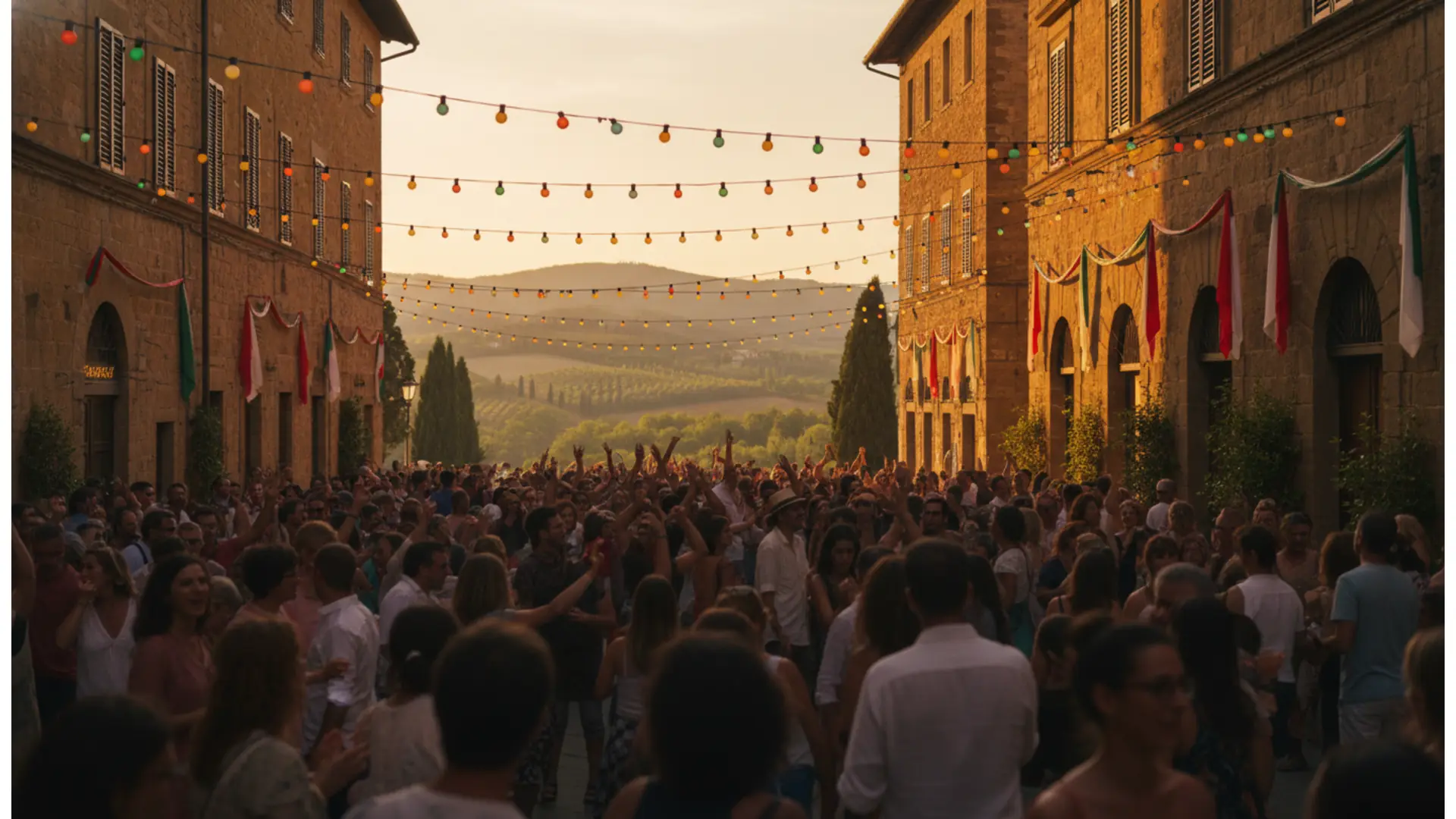
Alongside the liturgical program, there is a secular one, organized by local associations: concerts and musical evenings in the square, illuminations adorning the center's facades, market stalls, traditional sweets, and the fireworks display that closes the day of the solemnity. It is the occasion when emigrants return to the village and families gather around the table.
The setting: Monte San Biagio and its land
The village is also famous for the salsiccia di Monte San Biagio (Monte San Biagio sausage), a local gastronomic specialty, and for its strategic position between the Monti Ausoni and Lake Fondi Natural Park and the Tyrrhenian coast of Terracina and Sperlonga. Those who arrive for the festival find a double reason to visit: the ritual of a community celebrating its roots and a territory that, even in the middle of winter, offers some of the most authentic landscapes, villages, and flavors of southern Lazio.
Why it is worth attending
- A patronal festival that remains deeply popular, neither touristy nor staged for an external audience.
- The throat ritual and the blessing of bread and oil, among the most deep-rooted Italian traditions.
- The procession through the alleys of the historic center, with the band and the participation of the entire village.
- Free access to all religious and secular events.
Saint Biagio Festival — edition 2026
The 2026 patronal festivities
From January 24th to February 8th, 2026, Monte San Biagio experienced two weeks of celebrations in honor of its patron saint. The opening, on Sunday, January 24th, combined holy mass, the blessing of children, and the exposition of the silver bust of Saint Biagio for the veneration of the faithful, starting the novena preached by Father Massimiliano Scarlato OFM.
The solemnity of February 3rd
The central day featured morning Eucharistic celebrations and, at 11:00 AM, the solemn concelebration presided over by the Archbishop of Gaeta, Monsignor Luigi Vari. In the afternoon, the saint's statue was carried in procession through the streets of the historic center. In the evening, after the religious celebrations, the square hosted a concert by the Pino Daniele tribute band, Area Medina, and the fireworks display.
The octave
The following week closed with a new solemn celebration and the second procession of the bust, accompanied by the Emilio Montano brass band, before the final mass on February 8th.
Programme Saint Biagio Festival 2026
Saturday, January 24th
- Opening holy mass with the blessing of children
- Exposition of the silver bust of Saint Biagio and start of the novena, preached by Father Massimiliano Scarlato OFM
January 25th to February 2nd - Novena
- Daily Eucharistic celebrations with preaching and veneration of the bust
- February 2nd, Presentation of the Lord: blessing of candles; in the evening, blessing of Saint Biagio's bread and oil and anointing of the throat
Tuesday, February 3rd - Solemnity of Saint Biagio
- 8:00 AM and 9:00 AM: Eucharistic celebrations
- 11:00 AM: Solemn Eucharistic concelebration presided over by the Archbishop of Gaeta, Monsignor Luigi Vari
- From 4:30 PM to 6:30 PM: Procession with the saint's statue through the village streets
- In the evening: Concert by Area Medina, a Pino Daniele tribute band, and fireworks display
Sunday, February 7th - Octave
- 11:00 AM: Solemn Eucharistic celebration
- Following: Procession of the silver bust accompanied by the Emilio Montano brass band
Sunday, February 8th
- Solemn Eucharistic celebration closing the festivities
Highlights Saint Biagio Festival 2026
- Solemn concelebration on February 3rd presided over by the Archbishop of Gaeta, Monsignor Luigi Vari
- Afternoon procession of the saint's statue through the historic center
- Blessing of candles, bread, and oil, and the throat anointing ritual
- Concert by Area Medina, a Pino Daniele tribute band, and evening fireworks
- Octave procession with the Emilio Montano brass band
- Free shuttles from the train station parking lot to Piazzale Padre Pio on January 24th and February 2nd, 3rd, and 8th
Prices Saint Biagio Festival 2026
Practical information — Saint Biagio Festival
How to get there
By car: take the Frosinone exit on the A1 motorway and then the highway towards Terracina, or the SS7 Appia road from Terracina or Fondi. By train: the Monte San Biagio-Terracina station is on the Rome-Naples line via Formia, a few kilometers from the center; on the main days of the festival, the municipality usually provides free shuttle buses between the station parking lot and the square at the entrance to the historic center.
Costs
Participation in all religious celebrations and secular events is free.
Tips
The historic center is uphill with narrow alleys: comfortable shoes and heavy winter clothing are recommended, especially for the evening procession. On February 2nd and 3rd, it is advisable to arrive early, as the village gets very crowded. For accommodation, the widest choice is in Fondi, Terracina, and Sperlonga, all less than twenty kilometers away.
Festival-goer photos
No photos yet. Share yours!
Share your photos
5 photos max, 5 MB per photo (JPG, PNG, WebP)
Noticed an error or missing information?
Help us keep this listing up to date. Every proposal is verified by our team before publication.
Festival-goer reviews
No rating yet — be the first!
No comments yet. Be the first!
Were you there?
Share your experience with the community.
Published by Valentin Contard, festival listings writer. Reviewed, corrected and approved by Christophe Contard, editor-in-chief. .
Where does it take place — Saint Biagio Festival
Centro storico e Chiesa parrocchiale di San Giovanni Battista