Reading Festival
The widespread literary festival of Rome's Municipio II
About Reading Festival
A book festival that steps out of bookstores
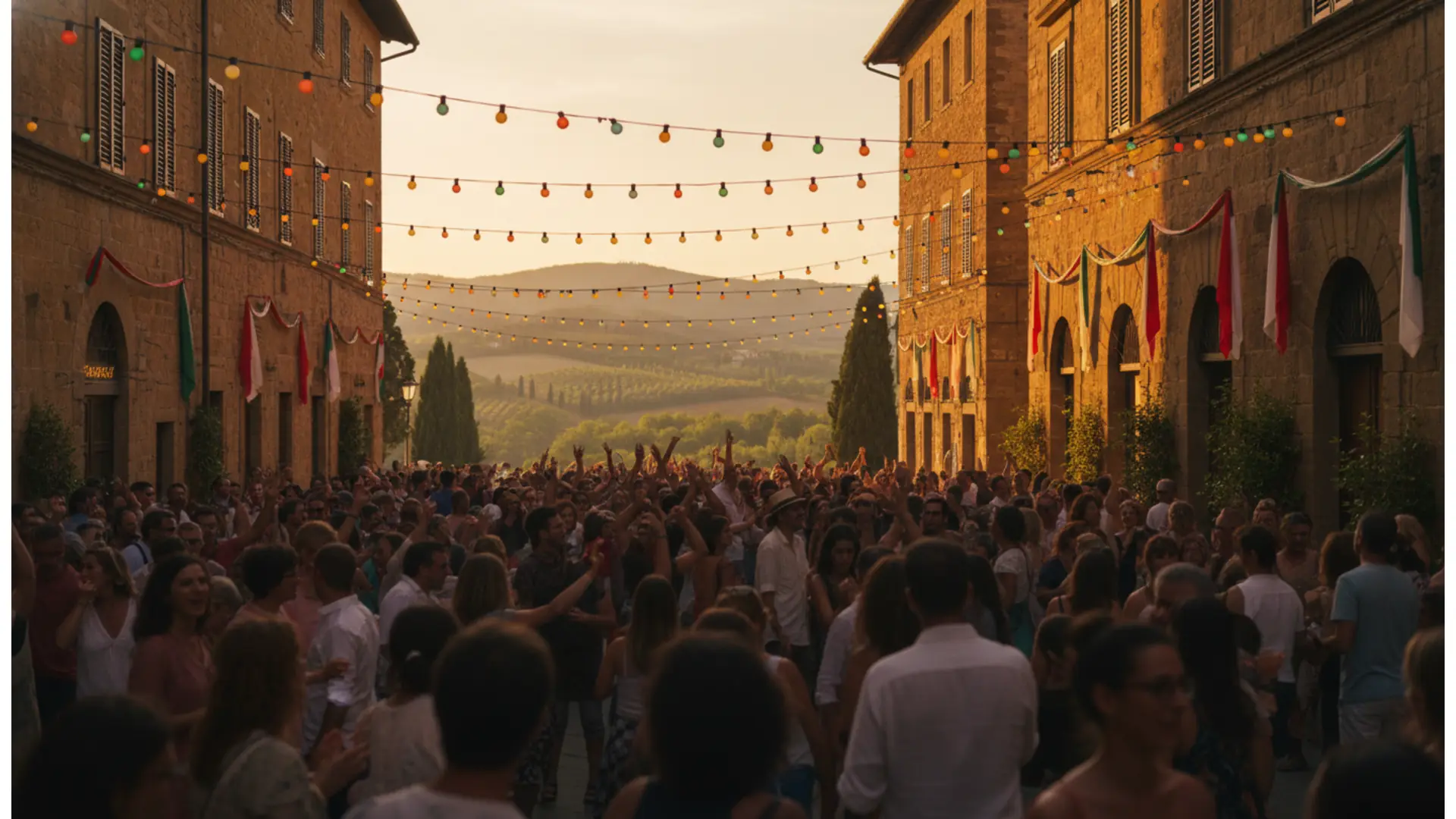
The Reading Festival is a widespread literary event that brings the Municipio II of Rome Capital to life every spring, in the northern heart of the city: the Salario, Trieste, Nomentano, Parioli, Flaminio, and Tiburtino II districts. Organized by the association Il Talento di Roma APS, chaired by Chiara Mazza, in collaboration with the Municipality's Department of Culture, the event stands out for a specific choice: not to concentrate events in a single space, but to scatter them across dozens of ordinary locations—market stalls, residential courtyards, cafes, and parks—so that books can meet those who aren't actively looking for them.
Born from the experience of the Municipality II's "Maggio dei Libri" (May of Books), the Festival is now a three-year project spanning about three months, from April to the end of June, with a schedule that has exceeded 140 events, all with free admission.
A theme that changes every year
Each edition revolves around a guiding theme that directs editorial choices and meetings. This common thread is not just a decorative pretext: it runs through the reviews, inspires performances, and determines the invited guests, giving coherence to a program that might otherwise risk being scattered. Alongside literature, there is room for historical and political non-fiction, contemporary poetry, scientific popularization, and children's literature.
The sections that make up the program
- Books among the stalls — meetings with authors in the historic local markets of the Municipality (Trieste, Nomentano, Italia, Parioli, Flaminio II) on weekends: the most characteristic formula of the Festival, bringing writers among fruit crates.
- Independent beyond borders — poetry readings, meetings on independent publishing, and scientific conversations in public spaces and literary cafes.
- From the borders of the present — a cycle dedicated to history, current events, and politics, featuring essayists and journalists.
- Theatrical incursions — stage adaptations of literary texts in the courtyards of the Tiburtino II district, between late spring and the end of June.
- Fogli(e) in Fiera — the fair for small and medium-sized independent Roman publishers, with stands, presentations, and meetings with publishers and authors.
- Independent Salon — presentations by independent publishers that close the festival at the end of June.
The locations
The schedule crosses independent bookstores like Tra le Righe, Libraccio, Koob, and Shell Libreria Bistrot, but also prominent institutions: the National Etruscan Museum of Villa Giulia, the Gardens of Villa Massimo, Parco Nemorense, the Austrian Cultural Forum, and the Accademia di Romania. There are also guided tours of the area's architectural jewels—the Coppedè District, with its fairy-tale facades, and the Olympic Village—which weave literary storytelling with urban discovery.
Why it's worth it
In a city like Rome, where cultural offerings tend to concentrate in the historic center and large venues, the Reading Festival chooses the neighborhood scale. It is an initiative that works as well for residents of the Lazio region as it does for the visitor curious to see a Rome different from that of the Forums: the Rome of early 20th-century local markets, the Art Nouveau buildings of Piazza Mincio, and the courtyards where stages are set up in summer. The free nature of all events and the variety of the audience—families, students, avid and occasional readers—complete the picture of an event deeply rooted in its territory.
Reading Festival — edition 2026
"Words beyond all borders"
The 2026 edition of the Reading Festival chose a highly topical theme—the border, understood as a geographical, political, and linguistic limit—and addressed it starting from a classic: the Iliad, re-read as a story of conflict but also of the encounter between worlds. The festival, included in the national calendar of "Maggio dei Libri" (April 23 - May 31), opened on April 14 at 6:30 PM at Caffè Etablino in Piazza Perin del Vaga and closed on June 30.
The six sections
The program was divided into thematic sections: Independent beyond borders (poetry, science, and independent publishing), Books among the stalls (meetings with authors in the local markets of Trieste, Nomentano, Italia, Parioli, and Flaminio II), The right words for work in neighborhood bookstores, From the borders of the present (history, current events, and politics), Through Gramsci's streets — an urban literary path proposed in May — and Theatrical incursions, with stage adaptations in the courtyards of Tiburtino II between the second half of May and June 30.
Special events
The National Etruscan Museum of Villa Giulia hosted a day of presentations on May 23 and a theatrical performance dedicated to the Iliad with live music. Guided tours on May 9, 16, and 23 took participants to discover the Coppedè District, Villa Giulia, and the Olympic Village. In June, the baton passed to independent publishing with Fogli(e) in Fiera, the small and medium-sized Roman publishing fair hosted at the Gardens of Villa Massimo, followed by the Independent Salon from June 22 to 30 in Piazza Perin del Vaga. Two closing evening performances: "Islands and New Islands" on June 7 and "Life is right in any case" on June 21.
The guests
Voices that enlivened the 2026 program included Dacia Maraini, Gianni Cuperlo, the Italian-Albanian poet Gëzim Hajdari, critic Piero Dorfles, and neuroscientist Giorgio Vallortigara. All events were free of charge.
Programme Reading Festival 2026
2026 Program Structure (April 1 - June 30)
- April 14, 6:30 PM — Inauguration at Caffè Etablino, Piazza Perin del Vaga; start of the three monthly reading groups.
- April — Fiction, poetry, and non-fiction presentations; "poetic incursions" with contemporary poets.
- April-June, weekends — "Books among the stalls": meetings with authors in the Trieste, Nomentano, Italia, Parioli, and Flaminio II markets.
- May 9, 16, 23 — Guided tours of the Coppedè District, Villa Giulia, and the Olympic Village.
- May 23 — Day at the National Etruscan Museum of Villa Giulia: presentations and theatrical performance on the Iliad with live music.
- May — "Through Gramsci's streets", urban literary path; reading groups and workshops.
- Mid-May to June 30 — "Theatrical incursions" in the courtyards of Tiburtino II.
- June 7 — Performance "Islands and New Islands".
- June 18-21 — "Fogli(e) in Fiera", small and medium independent publishing fair at the Gardens of Villa Massimo.
- June 21 — Performance "Life is right in any case".
- June 22-30 — "Independent Salon": presentations by independent publishers in Piazza Perin del Vaga.
Highlights Reading Festival 2026
- Over 140 free events in three months, all in Municipio II.
- Theme "Words beyond all borders," with Homer's Iliad as the guiding work.
- Guests such as Dacia Maraini, Gëzim Hajdari, Piero Dorfles, Gianni Cuperlo, and Giorgio Vallortigara.
- "Books among the stalls": writers in historic local markets, the festival's most original formula.
- Fogli(e) in Fiera, the Roman independent publishing fair, at the Gardens of Villa Massimo.
- Theatrical performances in the courtyards of Tiburtino II and closing evenings in Piazza Perin del Vaga.
Prices Reading Festival 2026
Practical information — Reading Festival
How to get there
Municipio II is served by Metro B (Policlinico, Castro Pretorio, Bologna stations) and Metro A (Flaminio, Lepanto). Numerous surface lines and trams 3 and 19 connect the Trieste, Nomentano, and Parioli districts. From Roma Termini station, almost all venues can be reached in 15-25 minutes by public transport. For those arriving by plane, the fastest connection from Fiumicino and Ciampino airports is via Termini.
Admission and reservations
All events are free. For some events with limited capacity (guided tours, courtyard performances, museum meetings), reservations may be required: it is recommended to check the festival's social media channels or write to [email protected].
Tips
Events in local markets generally take place in the morning on weekends: it's a great opportunity to combine grocery shopping with a literary encounter. Courtyard performances and outdoor evenings are held late in the evening from May onwards—bring a light jacket. The full program, updated weekly, is published on the Il Talento di Roma website and on the dedicated WhatsApp channel.
Festival-goer photos
No photos yet. Share yours!
Share your photos
5 photos max, 5 MB per photo (JPG, PNG, WebP)
Noticed an error or missing information?
Help us keep this listing up to date. Every proposal is verified by our team before publication.
Festival-goer reviews
No rating yet — be the first!
No comments yet. Be the first!
Were you there?
Share your experience with the community.
Published by Valentin Contard, festival listings writer. Reviewed, corrected and approved by Christophe Contard, editor-in-chief. .