Patronal Feast of the Madonna del Rosario
The Angel and the burning of the bell tower in the Cilento village of Gioi
Edition 2026 not confirmed to date
This edition has not been confirmed by the organiser to date. We recommend checking before going.
About Madonna del Rosario in Gioi
A devotion spanning centuries
In the municipality of Gioi, a village of just over a thousand inhabitants perched at an altitude of 684 meters in the heart of Cilento, in the province of Salerno (Campania), the Patronal Feast of the Madonna del Rosario is the event that has marked the beginning of autumn for centuries. The cult of the Virgin of the Rosary in Gioi dates back to the 13th century; in 1637, the Madonna was proclaimed the universal patron of the State of Gioi, and on October 1, 1645, she was officially recognized as the patron, protector, and advocate of the land of Gioi and its hamlets. Since then, the festivities have been held every year on the first Sunday of October, with the vigil on the preceding Saturday.
The heart of the festival: the Angel and the burning of the bell tower
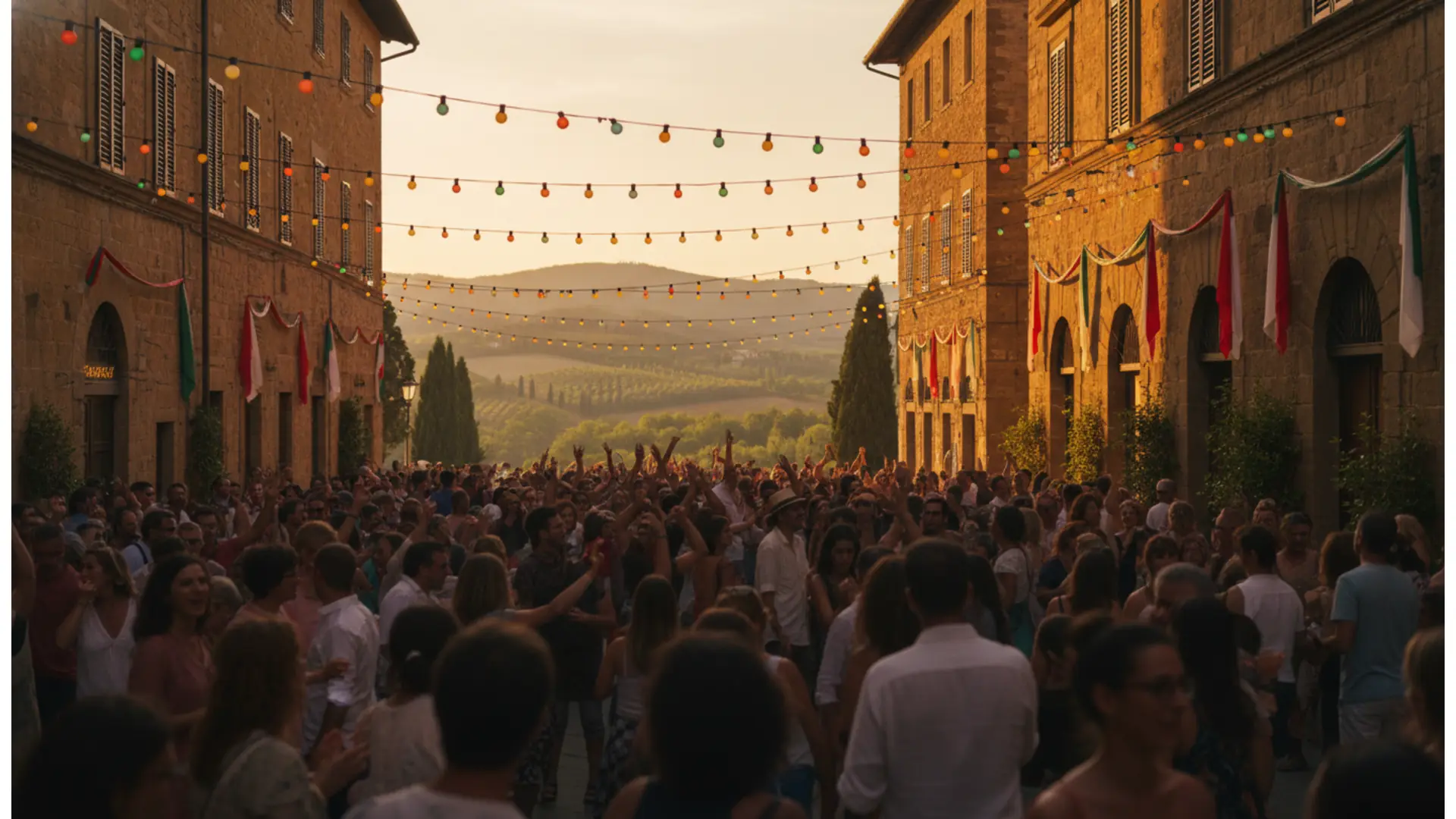
Those who arrive in Gioi during these days do so primarily for two moments, both taking place in the central Piazza Andrea Maio, and both involving traditions passed down from generation to generation.
- The Angel manifestation — at the end of the evening procession, as the statue of the Madonna enters the square amidst torches, a young girl dressed as an angel is lifted toward the image of the Virgin and recites a prayer at her feet. It is the most emotional and widely attended moment, commonly remembered as the "Flight of the Angel".
- The burning of the bell tower — immediately afterward, a pyrotechnic simulation engulfs the bell tower of the mother church in fire. The show, managed in recent years by the Antonio Lieto firm from Mugnano del Cardinale, is the recognizable hallmark of the Gioi festival and attracts audiences from all over the interior of Cilento.
The religious rite
The liturgical aspect remains the core of the event. The Saturday vigil is dedicated to the enthronement of the statue, carried in procession from its niche to the throne set up for the festival, followed in the evening by a candlelight procession and Eucharistic blessing. On Sunday morning, a Solemn Mass is celebrated, followed by the recitation of the supplication to the Blessed Virgin of the Rosary; in the late afternoon, the procession winds through the streets of the historic center with the image of the Madonna. In recent years, the main celebration has been broadcast live on television and via streaming, allowing Gioi emigrants scattered throughout Italy and abroad to follow the town's festival.
Music and the finale
As in many patronal feasts in the South, the band is an integral part of the civil ritual. In Gioi, the day traditionally ends with a symphonic concert by the Grande Banda del Cilento, which takes over the square after the fireworks and extends the festivities late into the night. Recent editions have also featured concerts and musical performances on the evening of the vigil.
Gioi, a Cittaslow village of Cilento
The festival is also the best opportunity to discover Gioi, which is part of the international Cittaslow network and preserves a medieval urban layout made of alleys, arches, and stairways, with traces of 15th-century fortifications. The town is located within the Cilento, Vallo di Diano and Alburni National Park, a recognized UNESCO World Heritage site, a short distance from Vallo della Lucania and the hilly hamlets of the area, including Cardile. Local gastronomy naturally accompanies the festive days with products of the Cilento Mediterranean diet: extra virgin olive oil, legumes, wood-fired bread, and the famous soppressata of Cilento.
Why it is worth the trip
This is not a large event with a stage and ticket office, but an authentic community festival where the square fills with residents and families who have returned to the village for the occasion. Those seeking the Italy of living popular traditions, far from mass tourism circuits, will find in Gioi one of the most evocative celebrations of the Cilento autumn.
Madonna del Rosario in Gioi — edition 2026
An edition yet to be announced
In Gioi, in the interior of Cilento in the province of Salerno, the feast of the Madonna del Rosario traditionally falls on the first Sunday of October. For the 2026 edition, however, no official program has been published yet: the Municipality's website and parish channels do not report dates or organizational details.
Those planning a visit can refer to the traditional structure of the festival — Saturday vigil with the enthronement of the statue and candlelight procession, Sunday with Solemn Mass, supplication, evening procession, Angel manifestation in Piazza Andrea Maio, burning of the bell tower, and concluding band concert — keeping in mind that times and contents are defined each year by the organizing committee. For confirmation, it is advisable to contact the Municipality of Gioi directly or follow the local Cilento press in the weeks leading up to the event.
Highlights Madonna del Rosario in Gioi 2026
Prices Madonna del Rosario in Gioi 2026
Practical information — Madonna del Rosario in Gioi
How to get there
By car: take the Vallo della Lucania exit on the SS18 (Cilentana), then provincial roads toward Gioi, about 15 km away. From Salerno, the journey is about 100 km. By train: Vallo della Lucania-Castelnuovo station on the Salerno-Reggio Calabria line, then bus or taxi. Nearest airport: Salerno-Costa d'Amalfi; alternatively, Naples-Capodichino.
Where it takes place
The celebrations are concentrated in the mother church and in Piazza Andrea Maio, in the historic center of Gioi (84056, province of Salerno). The village is pedestrianized during the festival days: it is advisable to leave the car in the parking lots at the entrance to the village and walk up.
Tips
- Gioi is at an altitude of 684 meters: in early October, evenings can be cool, so a jacket is recommended.
- To get a good view of the Angel manifestation and the burning of the bell tower, it is advisable to arrive in the square well before the end of the procession.
- Accommodation in the village is limited: there are farmhouses and B&Bs in the neighboring towns and on the Cilento coast.
- For updated dates and programs, you can contact the Municipality of Gioi at +39 0974 991026.
Festival-goer photos
No photos yet. Share yours!
Share your photos
5 photos max, 5 MB per photo (JPG, PNG, WebP)
Noticed an error or missing information?
Help us keep this listing up to date. Every proposal is verified by our team before publication.
Festival-goer reviews
No rating yet — be the first!
No comments yet. Be the first!
Were you there?
Share your experience with the community.
Published by Valentin Contard, festival listings writer. Reviewed, corrected and approved by Christophe Contard, editor-in-chief. .
Where does it take place — Madonna del Rosario in Gioi
Piazza Andrea Maio e centro storico di Gioi
Piazza Andrea Maio, 84056 Gioi