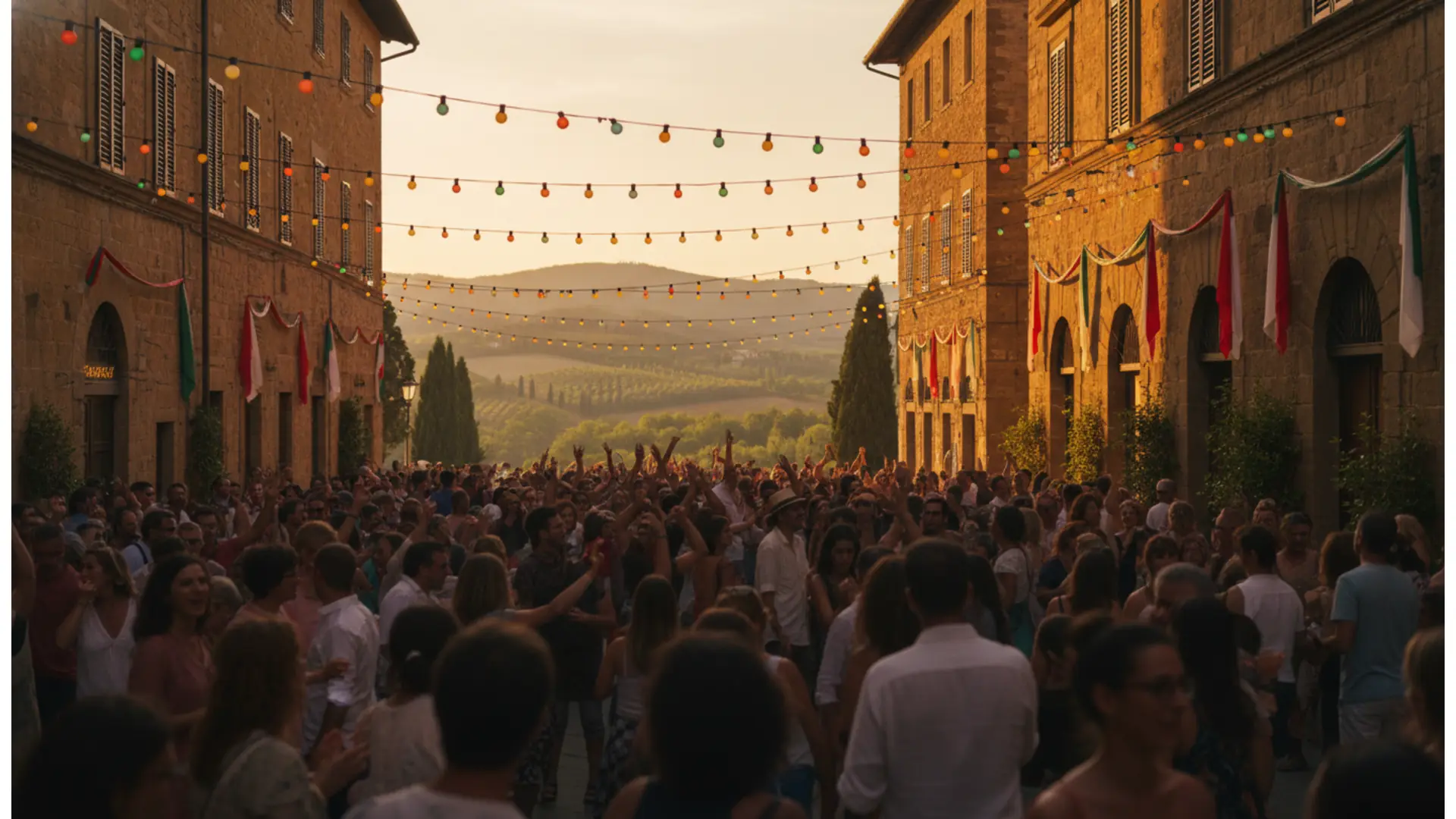
Patronal Feast of Saint Peter of Verona
The patron saint of Roccasecca celebrated every April 29th with processions, flowers, and Ciociaria devotion
About Saint Peter of Verona
A popular festival in the heart of Ciociaria
April 29th is a date everyone in Roccasecca knows by heart: it is the day of Saint Peter of Verona, the town's patron saint, remembered in the liturgical calendar as Peter of Verona, a Dominican preacher killed in 1252 and canonized just a year later. In this village in the province of Frosinone, in southern Lazio, the anniversary is not just a religious appointment: it is the moment when the entire community recognizes itself, returns to the streets of the historic center, and renews a rite handed down from generation to generation.
The procession and the canestrelli
The heart of the day is the procession, which moves from the church of Santa Margherita and winds through the town streets. The patron's statue is carried on the shoulders of devotees in a slow path marked by prayers and the sound of the band. Along the way, the effigy is accompanied by flowers and the traditional canestrelli, the votive compositions offered by the faithful: an ancient gesture, deeply rooted in the rural culture of Ciociaria, which transforms the pageant into a trail of colors and scents.
As the statue passes, windows open, balconies are adorned with drapes, and families step out onto their doorsteps. It is a moment of great participation, where even those who have emigrated far away try to return to the village: for many locals, the patronal feast remains the defining identity event of the year.
Roccasecca, the town of Saint Thomas
The festival takes place in a location with much to tell. Roccasecca, an original Volscian settlement, was donated in 991 to the Abbey of Montecassino, which had the fortress built on Mount Asprano: the castle ruins still dominate the Liri Valley today and offer a panorama that is worth the visit alone. The village is especially famous for being the birthplace of Saint Thomas Aquinas, the great theologian and Doctor of the Church, to whom the first church in the world dedicated to the Dominican saint is attributed.
This is no minor detail: both the patron Saint Peter of Verona and the fellow citizen Saint Thomas belong to the Dominican Order, and their two statues overlook the facade of the parish church together, as if to sanction a spiritual bond that spans the centuries. Those arriving for the festival can therefore combine devotion with a walk among the churches of the center, from the church of the Santissima Annunziata, with its 15th-century sculpted elements and a canvas attributed to Cavalier d'Arpino, to the aforementioned Santa Margherita, guardian of valuable paintings.
Flavors and conviviality
Like every patronal feast in southern Lazio, the Roccasecca April 29th celebration also has its convivial side. Street vendors' stalls enliven the center's streets with sweets, nougat, and toys, while in homes and trattorias, traditional local dishes are rediscovered: tagliolini with beans, hearty and rustic, and tesechelle and tozzi, hard biscuits created to be dipped in wine. These are simple flavors that tell the agricultural history of this part of Ciociaria better than any guidebook.
Why visit
The Patronal Feast of Saint Peter of Verona is not a massive, spectacular event, and that is precisely its value: it is an authentic festival, scaled to the village, where tradition is not staged for tourists but truly lived. For those visiting Ciociaria in spring, April 29th is the ideal opportunity to discover Roccasecca on its most heartfelt day, between the morning procession, the Liri Valley landscape, and the cordiality of a community that gladly welcomes those arriving from outside.
Saint Peter of Verona — edition 2026
2026 Edition
The 2026 edition of the Patronal Feast of Saint Peter of Verona took place on Wednesday, April 29, 2026, in Roccasecca, in the province of Frosinone. As per tradition, the anniversary fell on the saint's liturgical day, without any calendar changes.
The day was marked by religious celebrations in the parish church and the procession with the patron's statue carried on the shoulders of devotees along the village streets, accompanied by flowers and 'canestrelli' offered by the faithful. Stalls and the usual festive atmosphere enlivened the historic center throughout the day.
Programme Saint Peter of Verona 2026
Highlights Saint Peter of Verona 2026
Prices Saint Peter of Verona 2026
Practical information — Saint Peter of Verona
How to get there
Roccasecca is served by the Roccasecca railway station on the Rome-Cassino-Naples line, with frequent regional connections; from the station, located in the valley, you can reach the historic center in a few minutes by car or local connections. By car, take the exit at the Pontecorvo-Castrocielo toll booth on the A1 Rome-Naples motorway, then continue on the provincial road network.
Hours and costs
The festival is celebrated on April 29th, the liturgical day of Saint Peter of Verona. Access to the celebrations and the procession is free. The detailed program of services and events is released by the parish and the Municipality in the days preceding the event.
Information
Municipality of Roccasecca, tel. +39 0776 569001. For updates, it is advisable to consult the official municipal channels and parish notices.
Tips
The streets of the historic center are narrow and steep: comfortable shoes are recommended, as is parking in the areas at the foot of the village. It is worth extending the visit to the castle ruins on Mount Asprano and the church dedicated to Saint Thomas Aquinas.
Festival-goer photos
No photos yet. Share yours!
Share your photos
5 photos max, 5 MB per photo (JPG, PNG, WebP)
Noticed an error or missing information?
Help us keep this listing up to date. Every proposal is verified by our team before publication.
Festival-goer reviews
No rating yet — be the first!
No comments yet. Be the first!
Were you there?
Share your experience with the community.
Published by Valentin Contard, festival listings writer. Reviewed, corrected and approved by Christophe Contard, editor-in-chief. .
Where does it take place — Saint Peter of Verona
Centro storico e chiesa di Santa Margherita