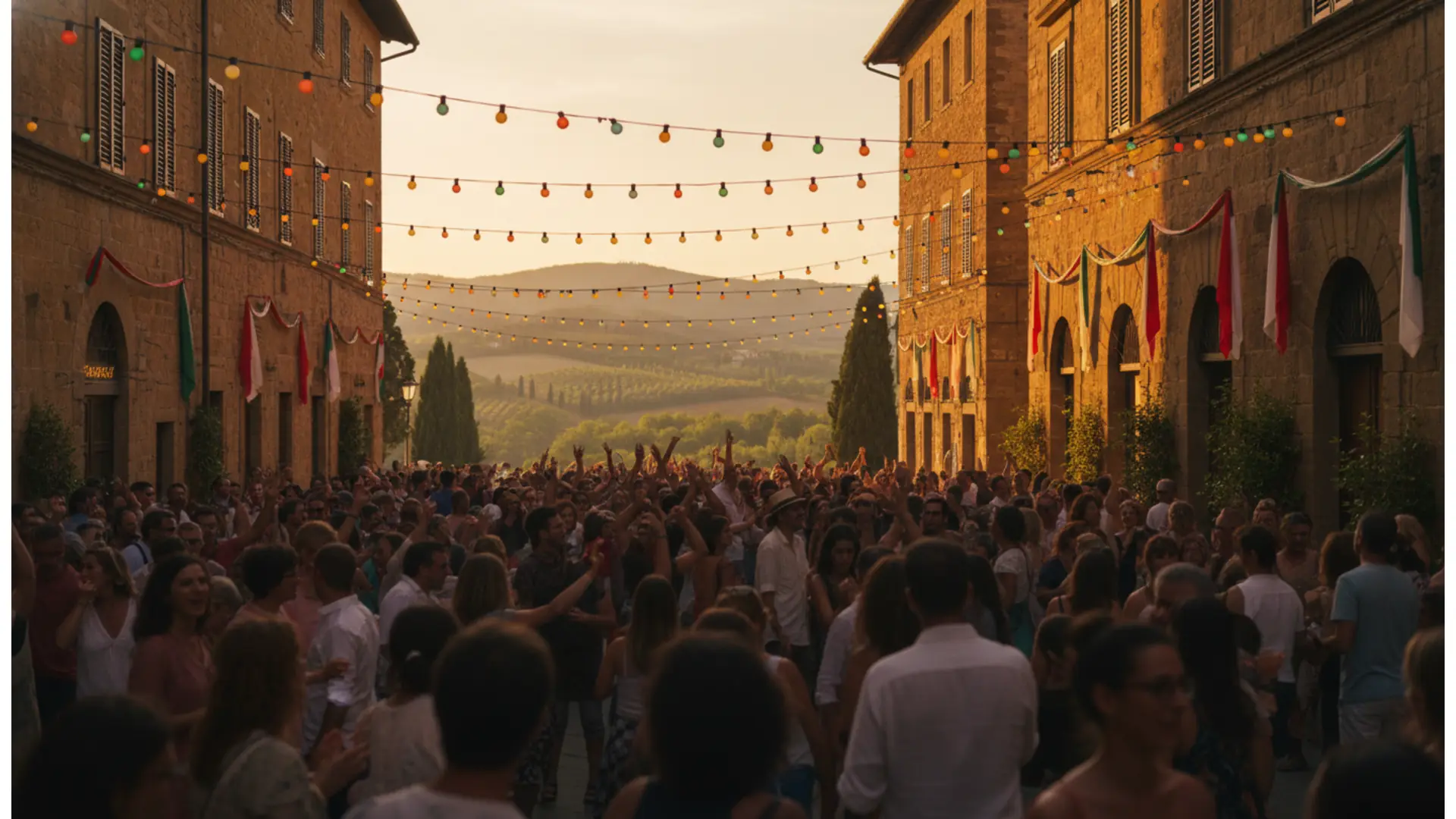
Patronal Feast of Saint Maurus the Martyr
On July 11th, the two ancient hamlets of San Mauro Cilento celebrate their patron saint
About Feast of Saint Maurus
A festival that unites two hamlets
San Mauro Cilento is not just a single village: it is the result of the meeting of two ancient cores, Casalsottano and Casalsoprano, nestled on hills that slope gently toward the Tyrrhenian Sea, within the Cilento, Vallo di Diano and Alburni National Park. Casalsoprano preserves the memory of districts that were once autonomous—Serra, Sorrentini, and Ratto—before merging into the current municipality. For centuries, the two hamlets led distinct administrative and social lives, but one thing has always kept them together: a single parish and a single patron, Saint Maurus the Martyr, who gave his name to the entire municipal territory.
This is why July 11th, the day of the recurrence, is not just a neighborhood feast but a celebration for everyone. It is the moment when the San Mauro community, historically shaped by emigration to the Americas, comes together in full: those who stayed, those who returned for the summer, and those arriving from neighboring towns in central Cilento.
Saint Maurus the Martyr, patron of the locals
Devotion to the martyr has been documented for centuries and revolves around the Mother Church, a 13th-century building that houses valuable works, including a 15th-century wooden choir and a holy water stoup dated 1577. The cult is experienced with a sober and profound intensity, typical of the Cilento hinterland villages: the festival is not a spectacle, but first and foremost an act of belonging.
The «sanmaurieddi» and the patron's statues
The most characteristic element of the processional pageant are the so-called «sanmaurieddi»: two half-bust statuettes, reliquary busts depicting Saint Maurus the Abbot and Saint Maurus the Martyr, which in popular nomenclature have taken on this affectionate name and which lead the way for the main statue.
The history of these sacred images is itself a piece of local history. The oldest statue, from the late 17th century, left the church for the last time in 1930: since then, it remained in its niche until its recent restoration. In the 1930s, thanks largely to remittances from San Mauro emigrants, a new statue of Saint Maurus the Martyr was commissioned exclusively for the procession. This is the one that still travels the streets of the town today.
The religious program of July 11th
The summer festivities open with the traditional novena, celebrated daily until the eve of the feast. On the day of the recurrence, the religious program includes morning Holy Masses, the solemn celebration with the kissing of the relic, and, in the late afternoon, Mass in Piazza San Nicola followed by the procession.
- Novena in the days leading up to the feast, until July 10th
- Holy Masses in the morning, with the solemn celebration and the kissing of the relic
- Evening Mass in Piazza San Nicola, the civic and religious heart of the event
- Procession with the «sanmaurieddi» and the patron's statue along the main streets of the two hamlets
Once, the procession only moved in the immediate vicinity of the parish church; today, it winds through the main streets of Casalsottano and Casalsoprano, symbolically touching the entire town.
San Mauro Cilento, a village between olive groves and the sea
The Municipality of San Mauro Cilento, in the province of Salerno and the Campania Region, has just under a thousand inhabitants and is located at an altitude of about 560 meters, with the coastal hamlet of Mezzatorre overlooking the Tyrrhenian Sea. The surrounding hills are covered with centuries-old olive groves from which a highly prized extra virgin olive oil is produced throughout the Cilento area: those who come up for the festival almost always find the opportunity to taste the local oil and the dishes of Cilento cuisine, which is simple and linked to the Mediterranean diet.
Why it is worth attending
Those looking for a massive festival with thousands of people will not find it here. However, those who want to understand how a patronal feast is still experienced today in the deep Cilento—with the novena, the bells, the busts carried on shoulders, and families taking to the streets at sunset—will find in San Mauro Cilento one of the most authentic and least touristy testimonies in the province of Salerno. It is also an excellent opportunity to combine a visit to the Mother Church and the alleys of the two hamlets with a day at the beach in Mezzatorre.
Feast of Saint Maurus — edition 2026
The 2026 patronal feast
In 2026, the recurrence fell on the fixed day of July 11th, which was a Saturday this year, a condition that encouraged the participation of those returning to the village for the summer. Preparation began with the novena, celebrated every day until July 10th, a time when the San Mauro community prepares spiritually for the feast.
On the day of the recurrence, the religious program followed the traditional pattern: Holy Masses in the morning, solemn celebration with the kissing of the relic of Saint Maurus, and, in the evening, Mass in Piazza San Nicola followed by the procession. The pageant, opened by the two reliquary busts of Saint Maurus the Abbot and Saint Maurus the Martyr, traveled the main streets of the two ancient hamlets, following an itinerary that has expanded over time beyond the perimeter of the parish church.
As every year, the feast represented much more than a devotional appointment for San Mauro Cilento: it is the day when the entire municipality, in the heart of the Cilento region in the province of Salerno, rediscovers its collective identity.
Programme Feast of Saint Maurus 2026
Before the feast
- Novena: celebrated every day until the eve, July 10th
Saturday, July 11, 2026 — Day of the recurrence
- 9:00 AM — Holy Mass
- 11:00 AM — Solemn Holy Mass in honor of Saint Maurus the Martyr, followed by the kissing of the relic
- 7:00 PM — Holy Mass in Piazza San Nicola
- Following — Procession with the «sanmaurieddi» (the reliquary busts of Saint Maurus the Abbot and Saint Maurus the Martyr) and the processional statue of the patron, along the main streets of Casalsottano and Casalsoprano
The times listed correspond to the traditional schedule of the recurrence; they may undergo slight annual variations indicated by parish notices.
Highlights Feast of Saint Maurus 2026
- The procession with the «sanmaurieddi», the two reliquary busts of Saint Maurus the Abbot and Saint Maurus the Martyr
- The processional statue commissioned in the 1930s thanks to the offerings of San Mauro emigrants
- The evening outdoor Mass in Piazza San Nicola
- The kissing of the relic after the solemn morning celebration
- The passage of the pageant through the alleys of the two ancient hamlets, Casalsottano and Casalsoprano
Prices Feast of Saint Maurus 2026
Practical information — Feast of Saint Maurus
How to get there
By car: Take the Vallo della Lucania / Battipaglia exit on the A2 «Autostrada del Mediterraneo», then follow the SS18 and provincial roads toward Pollica – San Mauro Cilento. It is about 90 km from Salerno.
By train: Vallo della Lucania-Castelnuovo or Agropoli-Castellabate station on the Tyrrhenian line, then take a bus or taxi to the village.
Where it takes place
The celebrations are concentrated in the Mother Church and Piazza San Nicola; the procession crosses the main streets of Casalsottano and Casalsoprano.
Costs
Free and open participation: this is a religious and community festival, with no entrance fee.
Tips
The village is on a hill, with narrow and steep alleys: wear comfortable shoes and park at the entrance of the town. On the same day, you can reach the marina of Mezzatorre in a few minutes. As this is a religious celebration, modest attire is appropriate in church and during the procession. For final schedules, it is advisable to check parish notices in the days leading up to the event.
Festival-goer photos
No photos yet. Share yours!
Share your photos
5 photos max, 5 MB per photo (JPG, PNG, WebP)
Noticed an error or missing information?
Help us keep this listing up to date. Every proposal is verified by our team before publication.
Festival-goer reviews
No rating yet — be the first!
No comments yet. Be the first!
Were you there?
Share your experience with the community.
Published by Valentin Contard, festival listings writer. Reviewed, corrected and approved by Christophe Contard, editor-in-chief. .
Where does it take place — Feast of Saint Maurus
Piazza San Nicola e vie dei casali di Casalsottano e Casalsoprano