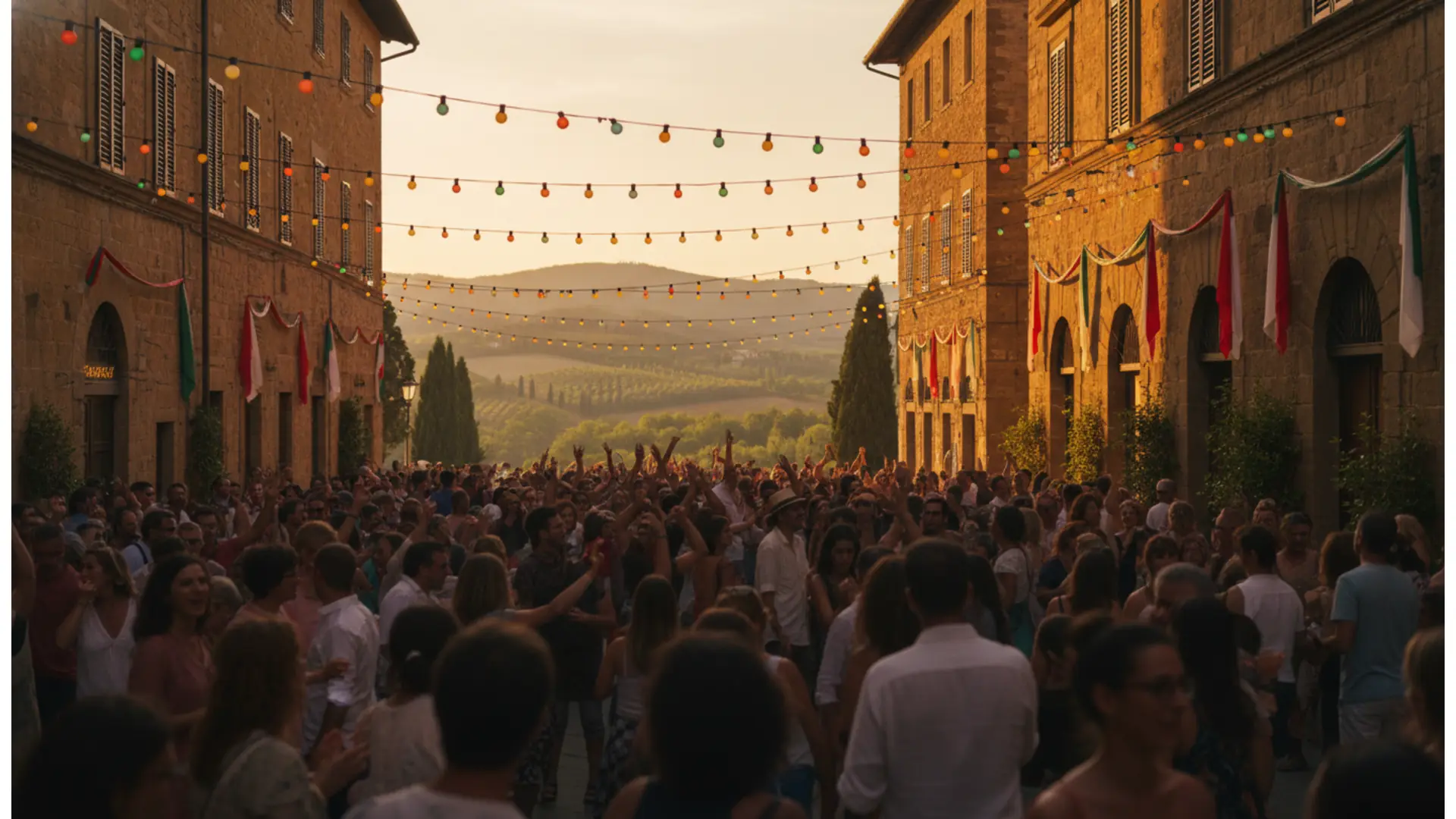
Patronal Feast of Saint Mary Magdalene
The patron saint of Castelnuovo Cilento celebrated with a novena, solemn mass, and a procession through the ancient village
About Saint Mary Magdalene
The devotional heart of Castelnuovo Cilento
In the calendar of the municipality of Castelnuovo Cilento, in the province of Salerno, there is no event more deeply felt than the Patronal Feast of Saint Mary Magdalene. Every July 22nd, the village pauses to honor its protector with a liturgy that has spanned centuries without losing any of its intensity. It is a village festival in the most authentic sense: no grand stages or spectacle, just an entire community finding itself in its own ritual gestures.
The novena: nine days of preparation
Everything begins on July 13th with the traditional novena dedicated to the saint. These are days of prayer and anticipation that gradually prepare the village for the main event: the small church in the historic center fills with the faithful, and the houses are imbued with that suspended atmosphere that precedes major celebrations. The novena is not merely a prelude, but an integral part of the feast, the time when the community reconnects and prepares itself.
July 22nd: solemn mass and procession
On the day of the liturgical memorial of Saint Mary Magdalene, devotion literally fills the streets of the village. In the morning, a solemn holy mass is celebrated, widely attended by the faithful from the town and its surrounding hamlets. In the late afternoon, the procession takes place, winding through the streets of the historic center accompanied by the entire community before returning to the church. It is the moment when the village reveals itself for what it is: a single organism, made of generations passing down the same rite.
An ancient symmetry: January 22nd and July 22nd
The peculiarity of Castelnuovo Cilento is that the patron saint is celebrated twice a year: on July 22nd, the liturgical day, and on January 22nd, a votive feast. The origin of this second recurrence dates back to the first half of the 18th century, when a long drought prompted the inhabitants to organize penitential processions with Saint Mary Magdalene and Saint Catald. The pleas were repeated throughout the winter until, on January 22nd, a massive thunderstorm surprised the faithful and lifted their spirits, putting an end to the water shortage.
The two dates, exactly six months apart, are not coincidental: they follow the grain cycle, from sowing to harvesting, and link faith to the rhythm of the land. It is an interpretation that speaks volumes about the rural identity of the inland Cilento and explains why this devotion has remained so vibrant.
The village and its church
The church dedicated to Saint Mary Magdalene is located in the heart of the historic center, naturally nestled among the ancient houses of the village. Castelnuovo Cilento stands at about 280 meters above sea level, in a dominant position over the Alento valley, and includes the hamlets of Velina and Pantana. The ancient core, gathered around the castle, preserves its medieval layout of narrow alleys, arches, and sudden open spaces that become the natural stage for the procession on feast days.
What to expect
- An authentic rite: the festival is not built for tourism, and that is precisely its value.
- Cilento hospitality: the village gladly opens its doors to visitors.
- An ideal base: Castelnuovo Cilento is just minutes from Vallo della Lucania and a short distance from the beaches of Ascea and Casal Velino, in the heart of the Cilento National Park.
- Free participation: all celebrations are open and free of charge.
An intangible heritage of Campania
Festivals like this form the backbone of the intangible heritage of Campania, and particularly of the Cilento region, where every village guards its own saint, its own songs, and its own customs. Participating in the feast of Saint Mary Magdalene in Castelnuovo Cilento means entering, even if only for a day, into the long-standing time of a community that continues to tell its story through devotion.
Saint Mary Magdalene — edition 2026
The 2026 festival in Castelnuovo Cilento
As per tradition, the patronal feast occupied a large part of the month of July in the municipality of Castelnuovo Cilento, in the province of Salerno. On July 13th, the novena began—nine days of prayer in the small church of the historic center that prepared the village for the main event.
On July 22nd, devotion filled the streets of the village: in the morning, the solemn holy mass, widely attended by the faithful from the town and its hamlets, and in the late afternoon, the procession, which wound through the alleys of the ancient core accompanied by the gathered community. An edition faithful to the established form of the festival, without spectacular superstructures, where the value lies entirely in the continuity of the rite.
The recurrence is part of the village's double devotional calendar, which also celebrates Saint Mary Magdalene on January 22nd, in memory of the end of a long drought in the first half of the 18th century.
Programme Saint Mary Magdalene 2026
- July 13, 2026 — start of the novena in honor of Saint Mary Magdalene: nine days of prayer in the church of the historic center, with the participation of the faithful from the town and its hamlets.
- July 22, 2026, morning — solemn holy mass on the day of the patron saint's liturgical memorial.
- July 22, 2026, late afternoon — procession along the streets of the historic center, with the final return to the church.
Exact times of the celebrations are announced by the parish in the days leading up to the festival.
Highlights Saint Mary Magdalene 2026
- The novena starting July 13th in the small church of the historic center
- The solemn holy mass on the morning of July 22nd
- The late-afternoon procession through the alleys of the ancient village
- A devotion documented since the 18th century and celebrated twice a year, on January 22nd and July 22nd
Prices Saint Mary Magdalene 2026
Practical information — Saint Mary Magdalene
How to get there
By car: from the SS18 Cilentana road, take the exit for Vallo della Lucania and follow signs for Castelnuovo Cilento; the historic center can be reached in a few minutes from the hamlet of Velina. By train: the Vallo della Lucania-Castelnuovo station, on the Naples-Reggio Calabria line, is a few kilometers from the village. By plane: Salerno-Costa d'Amalfi Airport.
Times and costs
Novena starting from July 13th; solemn mass on the morning of July 22nd and procession in the late afternoon. Participation in all celebrations is free. Exact times are announced by the parish in the days leading up to the festival.
Practical tips
The historic center is compact, pedestrianized, and hilly: it is best to leave your car in the parking areas near the village and continue on foot. For accommodation, the widest range of options is in Vallo della Lucania and on the coast between Ascea and Casal Velino. In July, temperatures are high: water and comfortable shoes are essential for following the procession.
Festival-goer photos
No photos yet. Share yours!
Share your photos
5 photos max, 5 MB per photo (JPG, PNG, WebP)
Noticed an error or missing information?
Help us keep this listing up to date. Every proposal is verified by our team before publication.
Festival-goer reviews
No rating yet — be the first!
No comments yet. Be the first!
Were you there?
Share your experience with the community.
Published by Valentin Contard, festival listings writer. Reviewed, corrected and approved by Christophe Contard, editor-in-chief. .
Where does it take place — Saint Mary Magdalene
Chiesa di Santa Maria Maddalena e centro storico