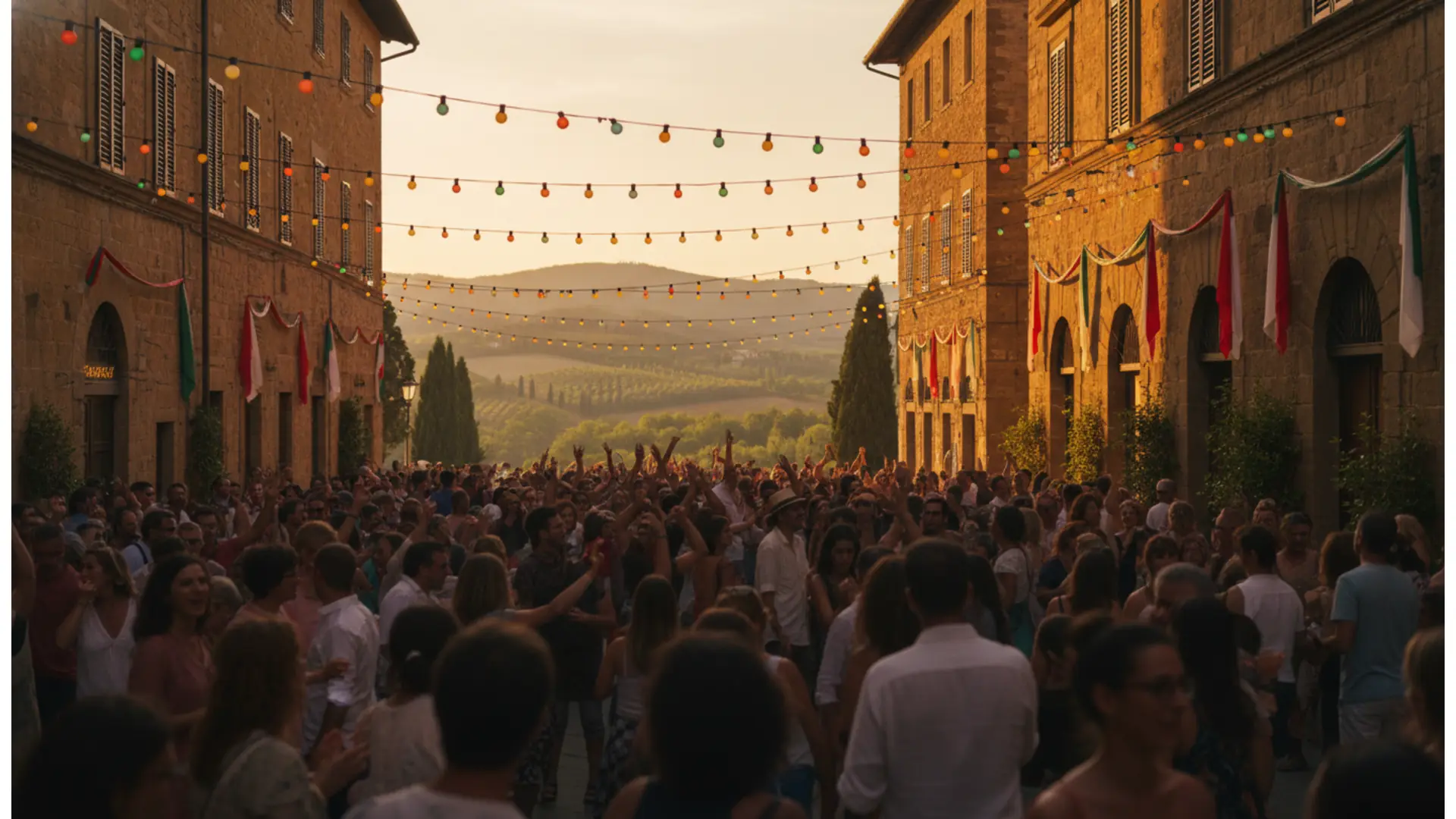
Paestum Ancient Theatre Festival
Student actors take the stage among the Doric temples of Paestum
About Paestum Ancient Theatre Festival
Classical theatre comes to life among the temples of Paestum
The Paestum Ancient Theatre Festival is an annual spring event that turns the archaeological site of Paestum, in the municipality of Capaccio Paestum (Province of Salerno, Campania), into a magnificent open-air stage. This is not a festival for professional companies; the heart of the event lies in the student actors from Italian and European high schools, who perform classical theatre productions they have prepared throughout the academic year. Watching an ancient tragedy or comedy performed by young people among the columns of the Temple of Hera is an unforgettable experience.
An educational project by the Accademia Magna Graecia
The festival is promoted by the Accademia Magna Graecia, a theatre training and production centre founded in Paestum and specialised in classical theatre, in collaboration with Teatrinedito AMG. The artistic direction is led by Sarah Falanga, an actress and director who founded the Academy after training with masters such as Andrea Camilleri and Vittorio Gassman. The initiative is supported by a long-standing partnership with the Superintendency of the Archaeological Parks of Paestum and Velia, active since 2009, which allows the performances to take place within the monumental site itself.
A "fair competition" between schools
The format is a friendly competition: classes selected by a panel of experts present their own staging, which is then evaluated by a jury. At stake are not only artistic accolades but also ten three-year scholarships offered by the Accademia Magna Graecia to attend its Drama School for free, established in memory of the artist Manuela Prezio.
- Participation open to high schools (licei) and, as of 2025, technical and vocational institutes
- Performances based on the classical repertoire and great Italian drama
- Nearly continuous daily activities, with about twelve hours of programming per day
- Free registration for participating schools, which only cover their own food and accommodation
Beyond performances: masterclasses, study, and exchange
Alongside the performances, the programme includes masterclasses and workshops led by theatre professionals, study meetings with critics and journalists, book presentations, and guided tours of the archaeological area. The format is designed so that students do not just "perform," but experience three days of total immersion in theatrical language, engaging directly with those working in theatre and cinema.
Paestum, a setting that makes the difference
Few school events can boast such a backdrop. Ancient Poseidonia, later Paestum, preserves three of the best-preserved Doric temples in the Mediterranean and a Greek and Roman urban layout recognised as a UNESCO World Heritage site. The festival activities are concentrated primarily in the Southern Sanctuary area, at the foot of the temples, where the limestone takes on the warm hue at sunset that has made the site famous.
Why it is worth attending
For the local public and visitors to the Cilento region, the festival is a rare opportunity to see archaeology used as a living space rather than just an open-air museum. For Campania, it is also a cultural education project that involves hundreds of families and dozens of schools every year, some coming from other European countries. The timing, in the second half of May, also coincides with one of the best moments to visit the Cilento coast, before the summer crowds arrive.
Paestum Ancient Theatre Festival — edition 2026
Twenty years of the Academy, thirteen editions of the festival
The 2026 edition of the Paestum Ancient Theatre Festival coincided with the twentieth anniversary of the Accademia Magna Graecia and brought over 600 Italian and European student actors to Capaccio Paestum, an increase compared to the 500 of the previous year. The entire event took place within the Archaeological Park, with the Southern Sanctuary area transformed into a performance space.
Eduardo De Filippo in the spotlight
The 13th edition was held under the exclusive patronage of the Fondazione Eduardo De Filippo and featured a monographic section dedicated to the Neapolitan playwright. The opening night, on May 13th, was held among the columns of the Temple of Hera with Natale in casa di donne, a female-led rewriting of Natale in casa Cupiello, curated and directed by Sarah Falanga.
Training and exchange
The programme alternated school performances with masterclasses and workshops, while study meetings brought together guests from journalism and theatre criticism. The event concluded with the awarding of artistic prizes and the Academy's scholarships.
Programme Paestum Ancient Theatre Festival 2026
Wednesday, May 13th, 2026 - Opening night
- Opening of the 13th edition among the columns of the Temple of Hera
- Natale in casa di donne, a female-led rewriting of Natale in casa Cupiello, curated and directed by Sarah Falanga
May 13th to 15th - Three days of full immersion
- Classical theatre performances by participating schools in the Southern Sanctuary area of the Archaeological Park
- Masterclasses and workshops with Luciano Melchionna, Adele Gallo, and Massimiliano Pacifico
- Study meetings with journalist Giulio Baffi and Raffaella Tramontano
- Presentation of the volume Al lavoro con Eduardo (Guida Editori)
- Monographic section dedicated to Eduardo De Filippo, with the exclusive patronage of the Fondazione Eduardo De Filippo
- Guided tours of the archaeological area and discussion sessions with the jury
Awards Ceremony
- Artistic prizes awarded by the festival jury
- "In viaggio con Davide" Award for authenticity and artistic awareness
- Ten three-year scholarships from the Accademia Magna Graecia, in memory of the artist Manuela Prezio, for free access to the Drama School
The exact times of individual performances were communicated to participating schools by the organisation.
Highlights Paestum Ancient Theatre Festival 2026
- Over 600 student actors from Italian and European schools
- Opening night on May 13th among the columns of the Temple of Hera with Natale in casa di donne
- Monographic section on Eduardo De Filippo, under the patronage of the Fondazione Eduardo De Filippo
- Masterclasses with Luciano Melchionna, Adele Gallo, and Massimiliano Pacifico
- Ten three-year scholarships for the Drama School of the Accademia Magna Graecia
- Twenty years of activity for the Accademia Magna Graecia
Prices Paestum Ancient Theatre Festival 2026
Practical information — Paestum Ancient Theatre Festival
Where it takes place
Activities are held within the Archaeological Park of Paestum, particularly in the Southern Sanctuary area and near the Temple of Hera, in Capaccio Paestum (SA). Some organisational and social events take place in local accommodation facilities.
How to get there
By train: Paestum station on the Salerno-Sapri line, a few minutes' walk from the entrance to the archaeological area; alternatively, Agropoli-Castellabate station. By car: A2 Autostrada del Mediterraneo, exit at Battipaglia, then take the SS18 towards Capaccio Paestum; parking is available near the park entrances. By plane: Salerno-Costa d'Amalfi airport, or Naples-Capodichino with a connecting train.
Tickets and access
Festival performances are open to the public, enthusiasts, and tourists free of charge. Registration is free for participating schools: institutes only cover their own food and accommodation expenses. Standard entrance fees for the archaeological area and the National Archaeological Museum remain in effect.
Tips
Wear comfortable shoes: moving between performance venues is done on foot along the park paths. In May, the midday sun can be strong, so bring water and a hat; evenings, however, can be cool. Book accommodation in advance in Capaccio Paestum or Agropoli, as availability decreases on weekends.
Festival-goer photos
No photos yet. Share yours!
Share your photos
5 photos max, 5 MB per photo (JPG, PNG, WebP)
Noticed an error or missing information?
Help us keep this listing up to date. Every proposal is verified by our team before publication.
Festival-goer reviews
No rating yet — be the first!
No comments yet. Be the first!
Were you there?
Share your experience with the community.
Published by Valentin Contard, festival listings writer. Reviewed, corrected and approved by Christophe Contard, editor-in-chief. .
Where does it take place — Paestum Ancient Theatre Festival
Parco Archeologico di Paestum - Santuario Meridionale e Tempio di Hera
Via Magna Graecia, 84063 Capaccio Paestum