Madonna di Loreto Festival
The patronal feast of Surbo, held on the Tuesday after Easter, featuring a solemn procession, a traditional fair, and centuries-old devotion.
About Madonna di Loreto Surbo
A patronal feast in the heart of Salento
The Madonna di Loreto Festival is the main patronal feast of Surbo, a small town just outside Lecce in the heart of the Salento region of Puglia. Unlike most Italian patronal feasts, it does not have a fixed date: it is celebrated every year on the Tuesday after Easter, known as the Tuesday of the Easter octave, a custom rooted in the area's Byzantine tradition. For the locals, it is like experiencing a second Easter, a moment when the entire town gathers around its heavenly protector.
The legend of the Madonna d'Aurio
The devotion stems from an ancient legend: farmers reportedly discovered a wooden statue of the Madonna inside an olive tree trunk and brought it to the church of Santa Maria del Popolo. The statue then mysteriously disappeared, only to be found back at the original site, leading to the construction of the church of Santa Maria d'Aurio. The name "d'Aurio" comes from the Greek term Laurìon, referring to the small monastic centers founded by Basilian monks who arrived in Southern Italy in the 8th century and preserved the Byzantine rite here—which is why the feast falls on the Tuesday of the Easter octave.
The "Gold-Clad Madonna"
The most famous symbol of the festival is the statue of the Virgin, carried in procession while literally covered in gold: her mantle is a mosaic of votive offerings, where every ring, stone, and jewel represents a grace received or a family memory that the people of Surbo have donated to their "heavenly mother." From this image come the popular titles of Madonna d'Aurio and Gold-Clad Madonna. The festival has been recognized as an "Italian Wonder" by the National Youth Forum.
Procession, fair, and traditions
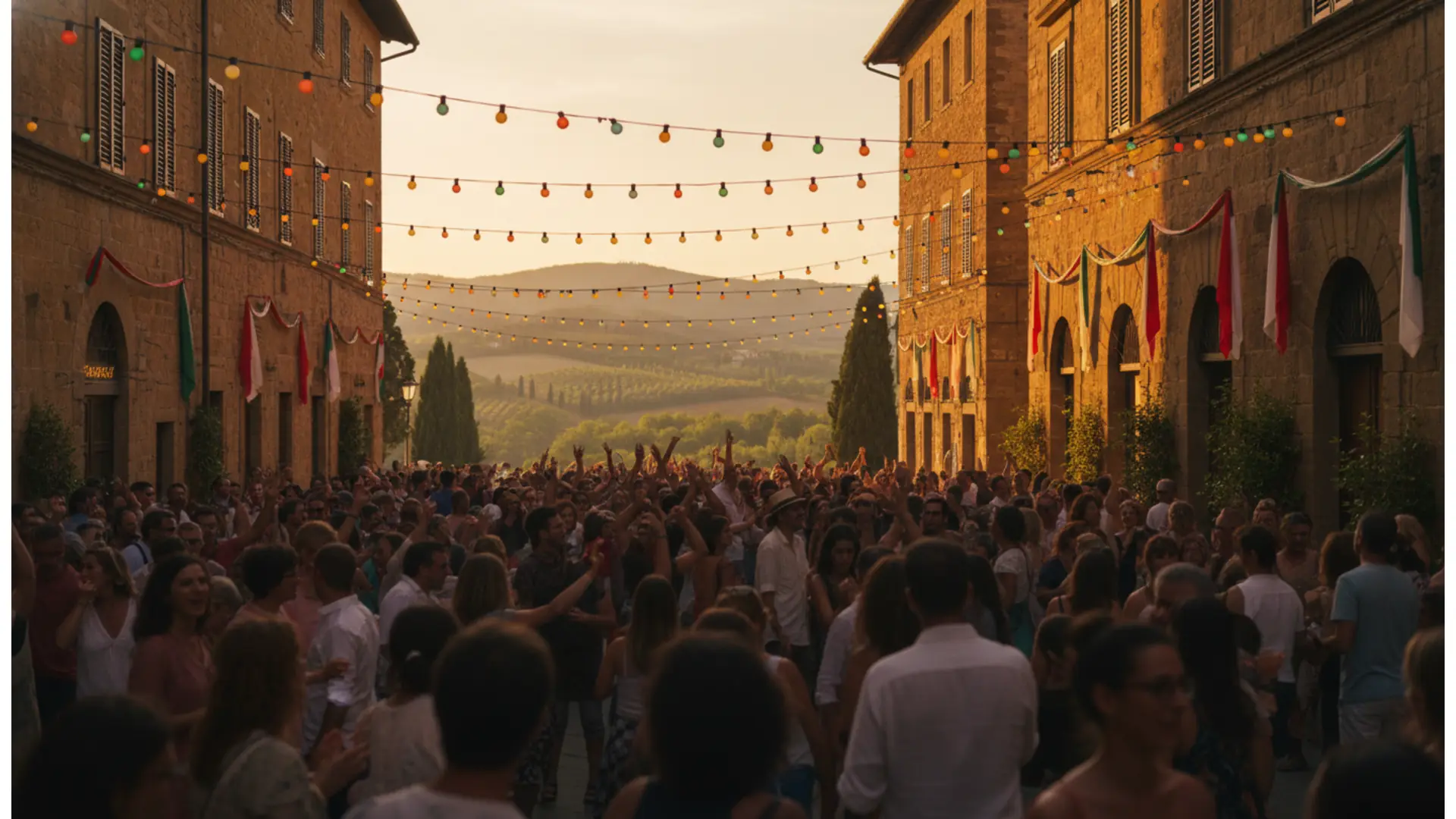
The most intense moment is the solemn procession on Tuesday morning, which winds through the streets of the historic center: children dressed in devotional attire walk before the statue, and even today, women walk barefoot to fulfill a vow. Alongside the religious dimension, the traditional market fair enlivens the entire day, with stalls filling the streets amidst the festive lights. The celebrations conclude on Wednesday with a procession returning the statue from the Mother Church to its chapel, followed by a final fireworks display.
The Madonna di Loreto Festival is an unmissable event for those wanting to discover the most authentic side of Salento: a blend of faith, folklore, and community that every spring transforms Surbo, in the province of Lecce, into the beating heart of Puglian popular traditions.
Madonna di Loreto Surbo — edition 2026
The 2026 edition of the Madonna di Loreto Festival brought Surbo to life from April 5 to 7, 2026, following the liturgical calendar that sets the feast on the Tuesday after Easter. As per tradition, the community gathered for moments of religious reflection and popular celebration.
The heart of the celebration was the solemn procession on Tuesday morning, with the statue of the Madonna covered in votive jewels carried through the town streets, accompanied by children in devotional dress and women who walked barefoot to fulfill a vow. The procession crossed the center in the presence of the mayor, civil and military authorities, and the clergy. The festivities concluded with the return procession from the Mother Church to the Madonna's chapel and a fireworks display.
Programme Madonna di Loreto Surbo 2026
Monday, April 6 — Eve
- Eve rites and lighting of the illuminations in the center of Surbo
Tuesday, April 7 — Day of the Feast
- Morning — Solemn procession of the Madonna di Loreto statue through the town streets, with children in devotional dress and women walking barefoot to fulfill a vow
- Liturgical celebrations at the Mother Church of Santa Maria del Popolo
- All day — Traditional market fair with stalls and illuminations
- Entertainment with music and shows
Wednesday, April 8 — Conclusion
- Return procession of the statue from the Mother Church to the Madonna's chapel
- Final fireworks display
Highlights Madonna di Loreto Surbo 2026
Prices Madonna di Loreto Surbo 2026
Practical information — Madonna di Loreto Surbo
When
Every year on the Tuesday after Easter (Tuesday of the Easter octave); festivities take place between Easter Monday, Tuesday, and the following Wednesday.
Where
Surbo (LE), Salento. Mother Church of Santa Maria del Popolo, historic center, and town streets. The procession passes through the main streets of the center.
How to get there
Surbo is located a few kilometers north of Lecce and is easily accessible by car via the Lecce-Brindisi highway. The nearest train station is in Lecce, which is connected to Surbo by bus services.
Costs
The patronal feast and the fair are free to attend.
Festival-goer photos
No photos yet. Share yours!
Share your photos
5 photos max, 5 MB per photo (JPG, PNG, WebP)
Noticed an error or missing information?
Help us keep this listing up to date. Every proposal is verified by our team before publication.
Festival-goer reviews
No rating yet — be the first!
No comments yet. Be the first!
Were you there?
Share your experience with the community.
Published by Valentin Contard, festival listings writer. Reviewed, corrected and approved by Christophe Contard, editor-in-chief. .
Where does it take place — Madonna di Loreto Surbo
Chiesa Matrice Santa Maria del Popolo e centro storico