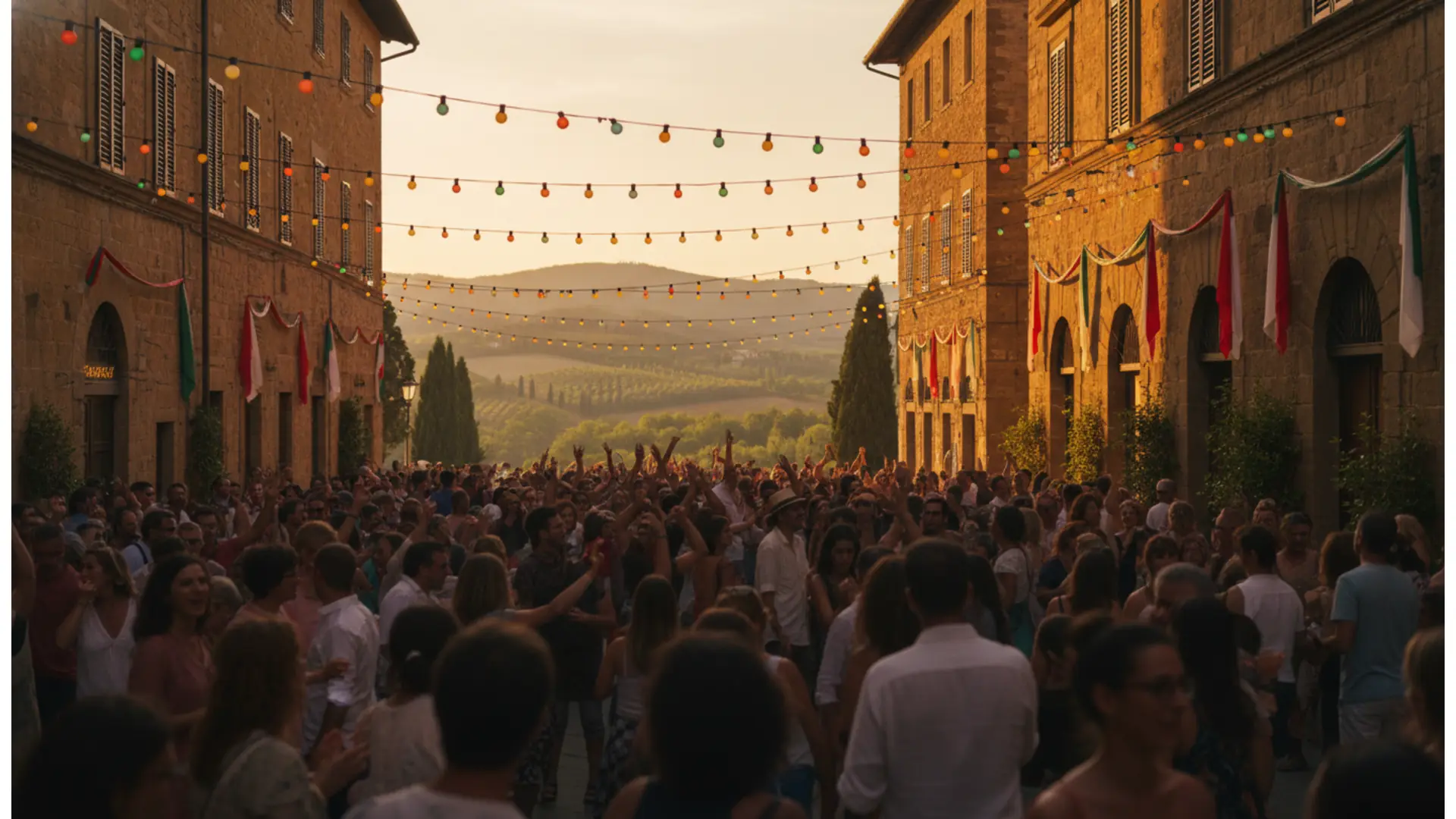
Living Nativity of Rocca Santo Stefano
The Nativity and ancient crafts in the alleys of this Alta Valle dell'Aniene village
Edition 2026 not confirmed to date
This edition has not been confirmed by the organiser to date. We recommend checking before going.
About Living Nativity
A nativity scene that comes alive in stone alleys
The Living Nativity of Rocca Santo Stefano is one of the most cherished Christmas events in the Upper Aniene Valley of eastern Lazio. The municipality of Rocca Santo Stefano, home to just under a thousand residents in the Metropolitan City of Rome, sits on a limestone spur surrounded by the chestnut groves of the Bosco di Antera, between the Ruffi and Affilani mountains. It is this very urban layout—narrow alleys, local stone houses, the ruins of the ancient fortress, and the Church of Santa Maria Assunta—that provides a natural backdrop for the performance, requiring no artificial sets.
The Nativity and ancient crafts
The performance goes beyond the Holy Family scene: the entire route is designed as a re-enactment of daily life in the village before modernity. Along the streets of the historic center, performers, all local volunteers, bring to life workshops and workstations where skills that have almost vanished are practiced once more.
- The cooper and the vat-maker — the woodworking crafts that made Rocca Santo Stefano famous, fueled for centuries by timber from the Bosco di Antera
- Bread-making and baking in wood-fired ovens
- Spinning and weaving, using spindles, spinning wheels, and looms
- Agricultural and pastoral work of the Lazio mountains
- The Nativity scene, the devotional heart of the route
The village's dedication to artisanal memory is no coincidence: the Porta del Bottaio (Cooper's Gate) was inaugurated in Rocca Santo Stefano, adorned with a travertine sculpture created through a project on ancient crafts with the Rome Academy of Fine Arts. In this sense, the living nativity is the living, participatory version of that same identity narrative.
A village atmosphere, not a tourist show
Visitors here will not find a tourist trap, but a village telling its own story. The lights are those of braziers and lanterns, the sounds are those of footsteps on cobblestones and the voices of the performers, and the scents are those of freshly baked bread and mulled wine. The performance takes place in the late afternoon, when the winter darkness makes the route through the alleys even more evocative, involving all generations of the village, from children to the elderly who safeguard the memory of these trades.
A rediscovered tradition
After a few years of hiatus, the living nativity has returned to animate the historic center thanks to the commitment of local associations and the municipal administration. The return of the event has been welcomed as an important signal for a small mountain town that, along with the famous Infiorata in June, entrusts its collective identity and its ability to attract visitors from the Aniene Valley, the Castelli Romani, and Rome to two major popular events—one in summer and one in winter.
What to see beyond the nativity
The visit can be extended to the local heritage: the San Francesco Retreat, nestled in the woods and reachable by a short path, the Grotta dell'Arco with its prehistoric cave paintings, and the nearby villages of the Upper Aniene Valley—Bellegra, Subiaco with its Benedictine monasteries, and Olevano Romano with its vineyards. The Christmas season is the perfect opportunity to discover an area of Lazio still untouched by mass tourism, less than an hour's drive from the capital.
Tips for your visit
The route takes place entirely outdoors on historic stone paving with some inclines: comfortable, non-slip shoes are recommended, along with clothing suitable for winter mountain temperatures, which can drop below freezing here. Arriving a little early allows you to park outside the historic center and walk through all the stations of the performance at your own pace.
Living Nativity — edition 2026
At the time of writing, no official dates have been published for the December 2026 edition of the Living Nativity of Rocca Santo Stefano. The event, which recently resumed after a few years of absence, is usually held during the Christmas period, featuring the performance of the Nativity and ancient crafts along the alleys of the historic center. We recommend checking for updates with the Municipality of Rocca Santo Stefano before planning your visit.
Programme Living Nativity 2026
Prices Living Nativity 2026
Practical information — Living Nativity
How to get there
By car — from Rome: A24 motorway, exit Vicovaro-Mandela, then follow the SS5 Tiburtina Valeria and provincial roads towards Subiaco and Rocca Santo Stefano (approx. 60 km, 1h15). Alternatively, via Palestrina and Olevano Romano. The historic center is pedestrian-only: parking is available in designated areas at the entrance to the village.
By train and bus
Take the FL2 line to Tivoli or Mandela-Sambuci station, then use Cotral bus lines towards the Aniene Valley. However, a car is recommended, especially for evening hours.
Admission
The performance takes place along the streets of the historic center and is traditionally free of charge.
Contacts
Municipality of Rocca Santo Stefano — Via Padre Pellegrino Ernetti, 9 — tel. +39 06 9567304. It is advisable to verify dates and times before traveling.
Where to stay
Limited accommodation in the village: farm stays and B&Bs are available in the nearby towns of Bellegra, Olevano Romano, and Subiaco.
Festival-goer photos
No photos yet. Share yours!
Share your photos
5 photos max, 5 MB per photo (JPG, PNG, WebP)
Noticed an error or missing information?
Help us keep this listing up to date. Every proposal is verified by our team before publication.
Festival-goer reviews
No rating yet — be the first!
No comments yet. Be the first!
Were you there?
Share your experience with the community.
Published by Valentin Contard, festival listings writer. Reviewed, corrected and approved by Christophe Contard, editor-in-chief. .
Where does it take place — Living Nativity
Centro storico di Rocca Santo Stefano