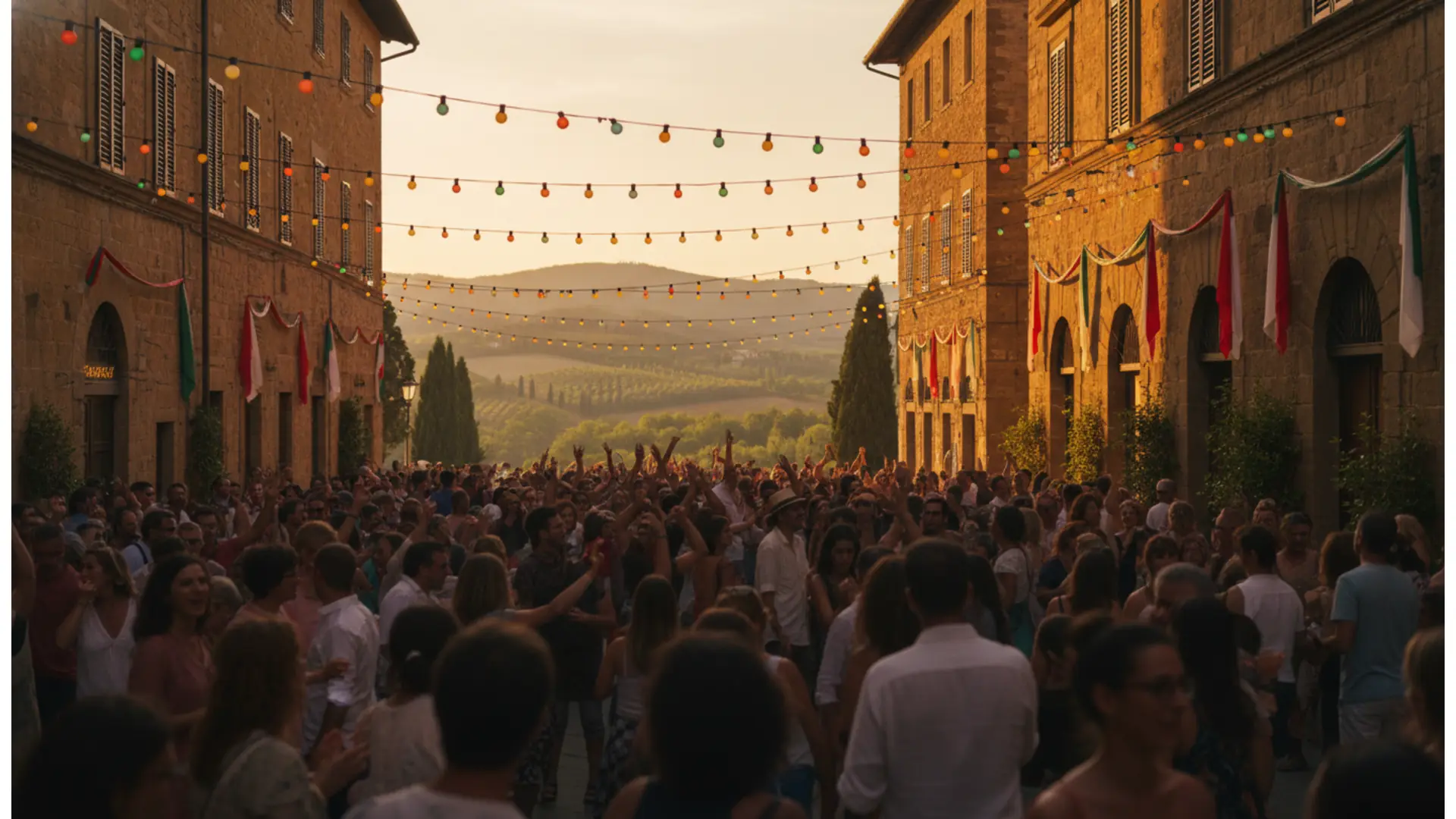
Italy Cowbell Festival
The ancient sound of Apennine pastoral culture in Valva
About Cowbell Festival
The ancient sound of cowbells returns to Valva
The Italy Cowbell Festival is an event created in Valva, a town of just over 1,500 inhabitants nestled in the upper Sele Valley, in the province of Salerno (Campania), at the foot of Mount Eremita and Mount Marzano. The inaugural edition took place on Saturday, March 7, 2026, focusing on one of the most iconic objects of Apennine agro-pastoral civilization: the cowbell, the metal bell that has accompanied flocks and herds along transhumance routes for centuries.
A sonic heritage from afar
Cowbells are not mere objects of utility. Originating with ceremonial and ritual functions as early as the Bronze Age, they became indispensable for pasture management, while always retaining a strong symbolic value through the Greek and Roman worlds and more recent peasant culture. Each shepherd chose and combined their own cowbells in a unique way: the result was a true sonic identity card, recognizable from a distance, capable of telling listeners which flock the sound belonged to. It is this culture, passed down orally and now at risk of disappearing, that the festival aims to recount and share with the general public.
The former Cellars of the Sovereign Military Order of Malta
The chosen venue is one of the most evocative in the region: the former Cellars of the Sovereign Military Order of Malta, historic spaces linked to the complex of the famous Villa d'Ayala Valva, the 17-hectare monumental park with its castle, gardens, and statues that represents the town's most famous landmark. A setting that adds charm to the visit and allows one to combine the festival with the discovery of local heritage in the same day.
Exhibitions, forging, and artisan crafts
The heart of the event is the exhibition dedicated to cowbells, a display gathering specimens of different shapes, sizes, and timbres. Alongside the exhibition, there are demonstrations of the crafts that revolve around these instruments:
- live forging, with masters at work on glowing metal;
- creation of wooden collars, an essential element for attaching the bell to the animal's neck;
- performances by cowbell players, who show how to play and make the cowbells sing;
- meetings and in-depth discussions with scholars of pastoral culture.
Folk music and cultural insight
The program gives ample space to pastoral traditional music. In the first edition, the central moment of the day was the presentation of the book Campanacci d'Italia by Professor Giovanni Mocchi, one of the leading Italian scholars on the subject, who explained how cowbells are true sonic identity cards for pastoral communities. The event also welcomed two prominent figures of Italian folk music, musician and ethnomusicologist Ambrogio Sparagna and singer and choir director Annarita Colaianni, whose presence gave the day a broader cultural scope.
The flavors of the upper Sele Valley
From 12:30 PM, food stalls dedicated to local products open. Valva's economy is still tied to agriculture and livestock, with the production of oil, cereals, fodder, and vegetables: the festival's table thus tells the story of the natural continuity between pasture, countryside, and the mountain cuisine of the Salerno Apennines.
Organizers and how to participate
The event is promoted by the Gruppo Amico association, active in the promotion and protection of folk traditions, with the patronage of the Municipality of Valva led by Mayor Giuseppe Vuocolo. Admission is free for the entire day: a choice that makes the festival accessible to families, the curious, folklore enthusiasts, and visitors passing through the Campania Region. For those who love inland villages, it is also an excellent opportunity to discover a more authentic and less-traveled corner of Campania compared to the coast.
Cowbell Festival — edition 2026
The first edition of the Italy Cowbell Festival
On Saturday, March 7, 2026, Valva, in the province of Salerno, hosted the inaugural edition of the Italy Cowbell Festival, promoted by the Gruppo Amico association with the patronage of the Municipality. The venue, the former Cellars of the Sovereign Military Order of Malta, welcomed exhibitors, artisans, and visitors for the entire day.
The exhibition route, open from 9:30 AM, gathered cowbells of various shapes and timbres, accompanied by live forging demonstrations and the creation of wooden collars. At 11:00 AM, Professor Giovanni Mocchi presented the book Campanacci d'Italia, illustrating the identity value of these instruments in Apennine pastoral civilization.
Enriching the day were appearances by Ambrogio Sparagna, musician and ethnomusicologist, and Annarita Colaianni, singer and choir director, while performances by cowbell players and traditional music marked the central hours of the event. From 12:30 PM, food stalls dedicated to typical local flavors opened; the event concluded at 6:30 PM, with a positive outcome that paves the way for future editions.
Programme Cowbell Festival 2026
Program for Saturday, March 7, 2026
- 8:00 AM — Exhibitor reception
- 9:30 AM — Opening of the cowbell exhibition
- 11:00 AM — Presentation of the book Campanacci d'Italia by Professor Giovanni Mocchi
- 12:30 PM — Opening of food stalls with local products
- 6:30 PM — Closing of the event
Throughout the day: cowbell player performances, pastoral traditional music, live forging demonstrations, and wooden collar crafting. Guests of the first edition included musician and ethnomusicologist Ambrogio Sparagna and singer and choir director Annarita Colaianni.
Highlights Cowbell Festival 2026
- Exhibition of cowbells from the Italian agro-pastoral tradition
- Presentation of the book Campanacci d'Italia with Professor Giovanni Mocchi
- Performances by cowbell players and pastoral traditional music
- Live forging demonstrations and wooden collar crafting
- Special guests: Ambrogio Sparagna and Annarita Colaianni
- Food stalls with products from the upper Sele Valley
Prices Cowbell Festival 2026
Practical information — Cowbell Festival
Where it takes place
Former Cellars of the Sovereign Military Order of Malta, Valva (SA), in the area linked to the Villa d'Ayala complex.
How to get there
By car: A2 del Mediterraneo motorway, exit Contursi Terme-Postiglione, then SS 691 Fondo Valle Sele until the exit for Colliano/Valva. From Salerno, the journey takes about an hour.
By train: The nearest useful station is Contursi Terme on the Salerno-Potenza line; however, from there it is necessary to continue by car, as public transport connections to the villages of the upper Sele Valley are limited on holidays.
By plane: Salerno-Costa d'Amalfi Airport, or Naples-Capodichino.
Admission
Free entry for the entire duration of the event.
Tips
Valva is located at an altitude of 510 meters: in March, warm clothing and comfortable shoes are recommended, as some activities take place outdoors. Lunch can be enjoyed directly on-site at the food stalls, which open at 12:30 PM.
Festival-goer photos
No photos yet. Share yours!
Share your photos
5 photos max, 5 MB per photo (JPG, PNG, WebP)
Noticed an error or missing information?
Help us keep this listing up to date. Every proposal is verified by our team before publication.
Festival-goer reviews
No rating yet — be the first!
No comments yet. Be the first!
Were you there?
Share your experience with the community.
Published by Valentin Contard, festival listings writer. Reviewed, corrected and approved by Christophe Contard, editor-in-chief. .
Where does it take place — Cowbell Festival
Ex Cantine del Sovrano Militare Ordine di Malta