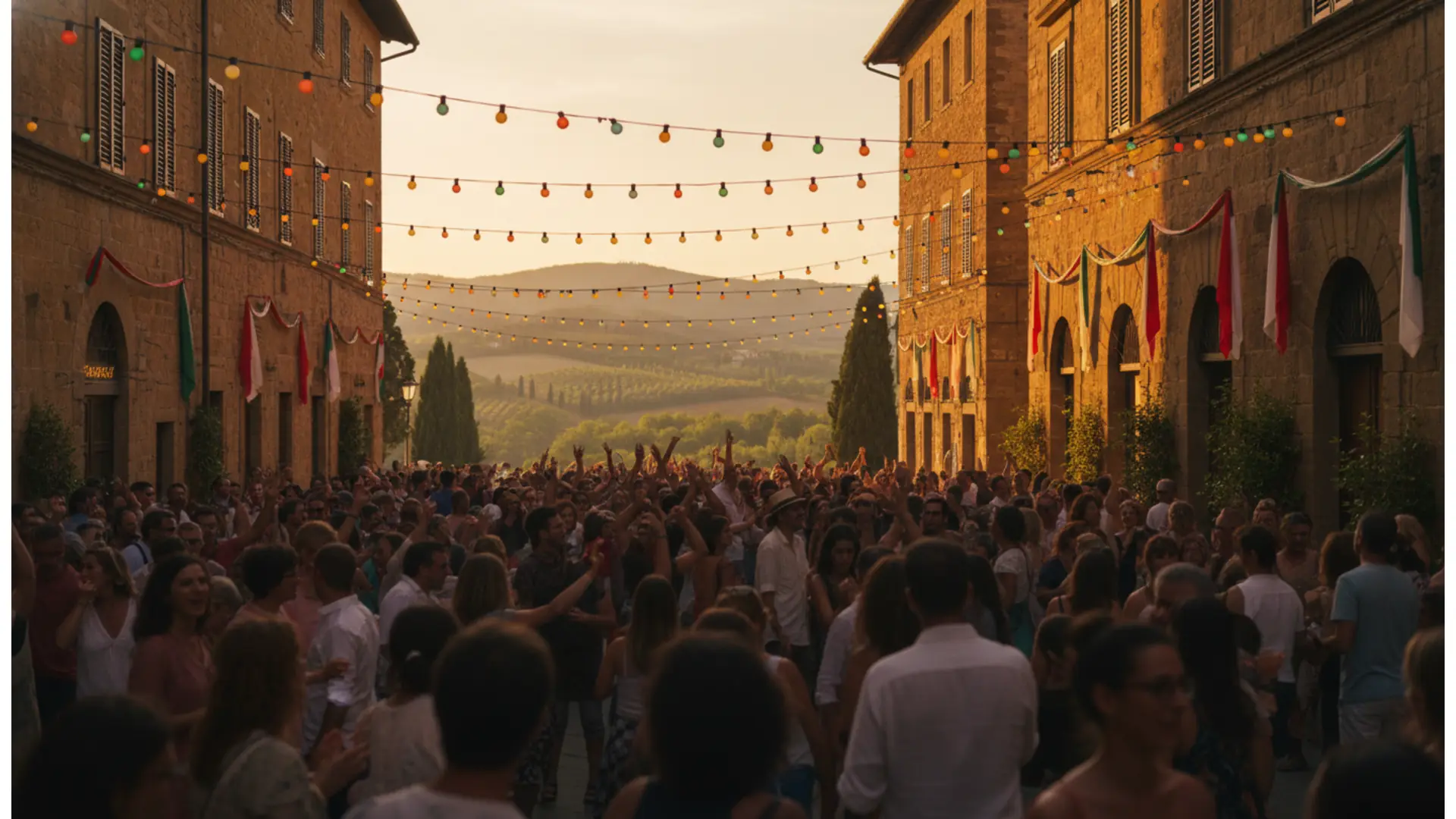
Historical Carnival of Viterbo
The oldest carnival in Italy, documented since 1198, featuring allegorical floats and the traditional Frisigello mask.
About Viterbo Carnival
The oldest carnival in Italy
The Historical Carnival of Viterbo, also known as the Viterbo Carnival, boasts ancient origins that make it one of the best-documented carnival celebrations in Italy. A parchment dated February 11, 1198, kept in the city archives, attests that the podestà Raniero di Pepone ordered the municipality of Valentano to pay ten pounds of Sienese currency to fund the festivities: while elsewhere the Carnival was just taking its first steps, in Viterbo it was already a social and political institution. In the 13th century, the Viterbo Statutes mentioned games such as the Ring Race and equestrian Palios.
A reborn tradition
After long interruptions, the event was brought back to life by a group of enthusiasts and, over the course of a decade, has returned to being one of the city's most cherished traditions. The Municipality of Viterbo, capital of the province of the same name in northern Lazio, supports the event together with the organizing committee. Artistic direction is entrusted to Lucio Matteucci, who coordinates the floats, groups, and performers in an event capable of attracting hundreds of participants.
Frisigello, the mask of Tuscia
The symbol of the Viterbo Carnival is Frisigello, a highly skilled jester linked to the city's nobility and the memory of the Church of Sant'Angelo in Spatha. This is the mask that traditionally opens the parade and embodies the fun-loving and popular spirit of the festival, that Viterbo "gojeria" made of irony, color, and a sense of community.
Allegorical floats and masquerade groups
The heart of the event is the grand parade of allegorical floats and masquerade groups that travels through the historic center. The procession starts from Piazza San Sisto and travels along Via Garibaldi, Piazza Fontana Grande, Via Cavour, Piazza del Plebiscito, Via Ascenzi, Piazza dei Caduti, and Via Marconi, amidst masks, majorettes, marching bands, and clouds of confetti. The final days come alive with shows, music, and entertainment for families and children.
Experiencing Viterbo during Carnival
Attending the Historical Carnival is also an opportunity to discover Viterbo, the "City of Popes," with its splendid medieval San Pellegrino district, fountains, and peperino stone palaces. The festival combines the memory of over eight centuries of history with the vibrancy of a community that, every February, fills the squares and streets of the center with its own identity.
Viterbo Carnival — edition 2026
The tenth edition of the Historical Carnival of Viterbo brought approximately 385 participants to the streets, including allegorical floats, masquerade groups, majorettes, and marching bands. The event, supported by the Municipality of Viterbo and coordinated by artistic director Lucio Matteucci, confirmed the city's role as the cradle of one of Italy's oldest carnivals, with the Frisigello mask serving as its symbol.
Programme Viterbo Carnival 2026
The 2026 program took place over several days in the historic center of Viterbo:
- Saturday, February 14, 3:00 PM — Carnival opening; the grand float parade was postponed due to bad weather.
- Sunday, February 15, 3:00 PM — Grand parade of allegorical floats and masquerade groups starting from Piazza San Sisto along Via Garibaldi, Piazza Fontana Grande, Via Cavour, Piazza del Plebiscito, Via Ascenzi, Piazza dei Caduti, and Via Marconi.
- Tuesday, February 17 (Shrove Tuesday), 3:00 PM — Masquerade groups took center stage in Piazza del Teatro, with a closing evening of music and entertainment until midnight.
Highlights Viterbo Carnival 2026
- Approximately 385 participants including allegorical floats and masquerade groups
- The traditional Frisigello mask opening the procession
- Parade along the squares and streets of Viterbo's historic center
- Closing Shrove Tuesday evening with music until midnight
Prices Viterbo Carnival 2026
Practical information — Viterbo Carnival
Getting there
Viterbo is accessible by car via the SS Cassia (SS2) or the Orte-Viterbo expressway from the A1 motorway. By train, you can reach the Viterbo Porta Fiorentina and Porta Romana stations, connected to Rome via the regional line and the Rome-Viterbo railway. During the parades, the historic center is closed to traffic: it is recommended to park in areas outside the walls and continue on foot.
Admission and information
Admission to the parades is free. The detailed program and updates are published on the official channels of the Viterbo Carnival and the Municipality of Viterbo. During the events, parking bans and traffic changes are expected along the parade route.
Festival-goer photos
No photos yet. Share yours!
Share your photos
5 photos max, 5 MB per photo (JPG, PNG, WebP)
Noticed an error or missing information?
Help us keep this listing up to date. Every proposal is verified by our team before publication.
Festival-goer reviews
No rating yet — be the first!
No comments yet. Be the first!
Were you there?
Share your experience with the community.
Published by Valentin Contard, festival listings writer. Reviewed, corrected and approved by Christophe Contard, editor-in-chief. .
Where does it take place — Viterbo Carnival
Centro storico di Viterbo