GastroDiplomacy Leadership Bootcamp
Four days of international gastrodiplomacy at the Paideia Campus in Pollica, in the heart of Cilento
About GastroDiplomacy Bootcamp
An international bootcamp in the village of the Mediterranean Diet
The GastroDiplomacy Leadership Bootcamp takes place every year in Pollica, in the province of Salerno, in the heart of the Cilento region and Campania. The venue is the Paideia Campus, an international training and research laboratory hosted in the Castello dei Principi Capano, which overlooks the village and the sea of the Cilento National Park. The program is promoted by the Future Food Institute in partnership with the Municipality of Pollica and the "Angelo Vassallo" Mediterranean Diet Study Center, bringing researchers, chefs, academics, policymakers, hospitality professionals, innovators, and young changemakers from several continents to this small Cilento town every June.
What is gastrodiplomacy?
Gastrodiplomacy is the concept, now widely studied in academic and diplomatic circles, that food can function as a true language of dialogue between communities, territories, and countries. The Pollica bootcamp focuses on exactly this: understanding how food practices generate identity, how they can produce social impact, and how they can inspire new models of cooperation and development. This is not a simple conference, but a residential school: participants live, cook, discuss, and design together for four days, in English, inside and around the castle.
Pollica, an UNESCO emblematic community
The location is no coincidence. Pollica, with its seaside hamlet of Pioppi, is one of the emblematic communities recognized by UNESCO for the Mediterranean Diet, inscribed in 2010 on the Representative List of the Intangible Cultural Heritage of Humanity. It was in Pioppi that the American physiologist Ancel Keys conducted the studies that made the Mediterranean dietary model famous worldwide, and the Living Museum of the Mediterranean Diet is now a regular stop on the training path. Surrounding the village, the Cilento landscape—olive groves, terraced hills, villages overlooking the Tyrrhenian Sea, and small-scale coastal fishing—becomes an open-air classroom in every sense.
How the program works
The bootcamp follows a three-phase structure—Inspiration, Aspiration, Action—that guides participants from initial inspiration to concrete design. The days alternate between:
- interactive workshops and dialogues with international experts;
- gastronomic labs and cooking sessions using local products;
- visits to local producers: beekeepers, fishermen, cheesemakers, and olive growers;
- mentorship with entrepreneurs, chefs, and researchers;
- immersive experiences at the Living Museum of the Mediterranean Diet in Pioppi;
- final co-design of food initiatives and policies.
Participants stay in Pollica for the duration of the program, and meals are prepared on-site using local products and traditional Cilento recipes: a way to gain direct experience of what is being studied.
The Gastrodiplomacy Forum, the public open day
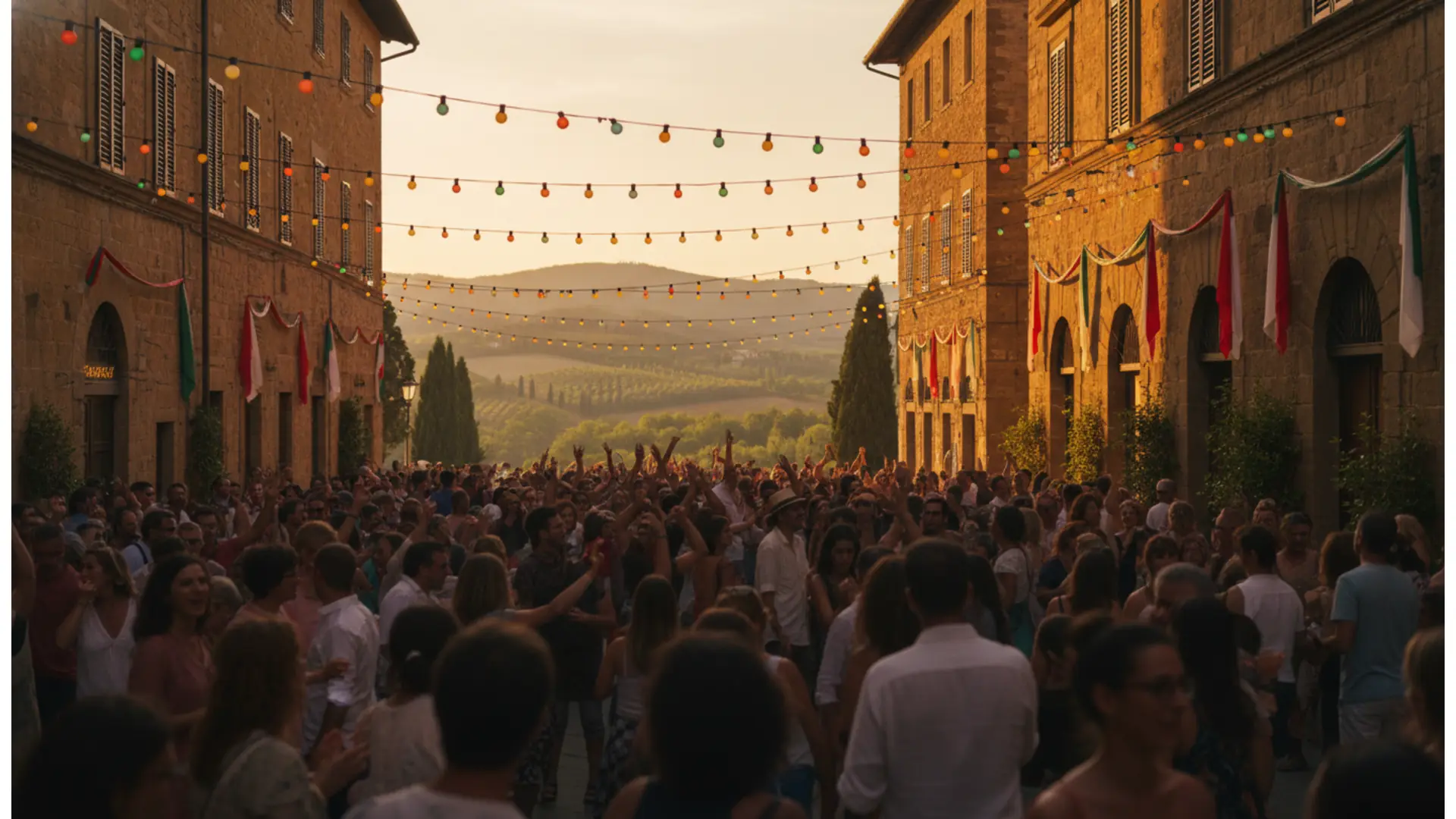
The most accessible part of the event is the Gastrodiplomacy Forum, held on Saturday and open to the public and the press. The Forum takes the bootcamp's themes outside the campus with round-table discussions dedicated to the relationship between the Mediterranean Diet, food policies, gastronomic education, and territorial regeneration, concluding with The Pollica Convivium, an experiential networking dinner by reservation. It is an opportunity for those living in Cilento or vacationing in the province of Salerno to participate in a high-level international discussion in the courtyard of a medieval castle.
A network of international partners
Over the years, a robust network of institutions and schools has been built around the Paideia Campus:
- Future Food Institute and its network of Future Food Fellows;
- Municipality of Pollica and "Angelo Vassallo" Mediterranean Diet Study Center;
- ALMA — The International School of Italian Cuisine;
- IUAV University of Venice and University of Naples Federico II;
- IGCAT — International Institute of Gastronomy, Culture, Arts and Tourism.
Why it is worth attending
In a territory that thrives on seaside tourism, the GastroDiplomacy Leadership Bootcamp offers a different perspective on Cilento: not just sea and food festivals, but a place where food policies, scientific research, and nutritional education are developed with a global outlook. For the local public, it is a rare event; for international participants, it is a week that often changes the way they look at their profession. The Municipality of Pollica has made this choice a development strategy, transforming the castle into a permanent campus for integral ecology.
GastroDiplomacy Bootcamp — edition 2026
An edition in the year of the International Day of the Mediterranean Diet
The 2026 edition held special significance: it was the first celebrated in the year of the establishment of the International Day of the Mediterranean Diet, set for November 16. For the fifth consecutive year, the community of Pollica, in the province of Salerno, hosted the international gastrodiplomacy ecosystem, bringing together researchers, chefs, academics, policymakers, hospitality professionals, and young changemakers from Europe, North America, and Asia for four days.
Work within the campus
The residential program, conducted in English, alternated workshops, dialogues with experts, gastronomic labs, immersive experiences at the Castello dei Principi Capano and the Living Museum of Pioppi, as well as field activities with small-scale coastal fishermen. Among the most discussed contributions were the conceptual framework of Vital Gastronomy presented by Peter and Jan Kees Klosse (TASTE Research) and the workshop conducted by IGCAT on utopian and dystopian food futures, the results of which are destined to be presented at the World Gastronomy Summit in Ecuador in October 2026. A screening of award-winning food-related documentaries was also held at the castle.
The public day
The moment open to the city was the Gastrodiplomacy Forum 2026 on Saturday, June 27, dedicated to the relationship between the Mediterranean Diet, food policies, gastronomic education, and territorial regeneration, with the participation of Sara Roversi (Future Food Institute), Mayor Stefano Pisani, Peter Klosse, and Diane Dodd. The day concluded at 9:00 PM with The Pollica Convivium, an experiential dinner by reservation.
Programme GastroDiplomacy Bootcamp 2026
The residential bootcamp — June 25-28, 2026
Four days of immersive training at the Paideia Campus, in the Castello dei Principi Capano, reserved for registered participants: interactive workshops, dialogues with experts, gastronomic labs, visits to local producers (beekeepers, fishermen, cheesemakers), experiences at the Living Museum of the Mediterranean Diet in Pioppi, and co-design sessions. Theme of the edition: Creativity and Culinary Activism to Unleash the Power of Food for Integral Ecological Revolution. Among the activities mentioned by the organizers: the IGCAT workshop on utopian and dystopian food futures and the screening of award-winning documentaries on food at the Castle of Pollica.
Saturday, June 27, 2026 — Gastrodiplomacy Forum, public open day
- 5:30 PM — Registration and guest welcome
- 6:00 PM — Opening of the proceedings with Sara Roversi (President of the Future Food Institute), Stefano Pisani (Mayor of Pollica), Peter Klosse, and Diane Dodd
- 6:20 PM — Culinary Leadership for Change: dialogue with Candida D'Elia (ALMA) and Peter Klosse on the educational value of gastronomy and the responsibility of new generations of food professionals in safeguarding culinary heritage, promoting health, and driving innovation
- 6:40 PM — Food Scape and Future Lands: round-table on food policies, gastronomic education, and territorial regeneration
- 9:00 PM — The Pollica Convivium: experiential dinner and networking (by reservation, limited seating)
International guests
Diane Dodd (IGCAT — International Institute of Gastronomy, Culture, Arts and Tourism), Peter and Jan Kees Klosse (TASTE Research), Prof. Habib Saidi (Université Laval, Canada), Prof. Teresa Del Giudice (University of Naples Federico II), Candida D'Elia and Laila Ciocca (ALMA — The International School of Italian Cuisine), Shujun Cheng (FAO), as well as professors, chefs, and European, North American, and Asian Future Food Fellows.
Highlights GastroDiplomacy Bootcamp 2026
- Fifth consecutive edition of the international gastrodiplomacy bootcamp in Pollica
- Exceptional venue: the Paideia Campus in the Castello dei Principi Capano
- First edition in the year of the International Day of the Mediterranean Diet (November 16)
- Gastrodiplomacy Forum on June 27 open to the public and press
- Experiential dinner The Pollica Convivium closing the Forum
- Field activities with fishermen, beekeepers, and cheesemakers of Cilento
- Participants and speakers from Europe, North America, and Asia
Prices GastroDiplomacy Bootcamp 2026
Practical information — GastroDiplomacy Bootcamp
Where it takes place
Paideia Campus, Castello dei Principi Capano, Pollica (SA) — 84068, province of Salerno, Campania. Some activities are held in the seaside hamlet of Pioppi, at the Living Museum of the Mediterranean Diet.
How to get there
- By car: A2 del Mediterraneo motorway, Battipaglia exit, then SS18 and SP roads to Pollica-Acciaroli; about 1 hour and 40 minutes from Salerno.
- By train: Vallo della Lucania-Castelnuovo station (Naples-Reggio Calabria line), then bus or taxi to Pollica.
- By plane: Naples-Capodichino Airport, about 2 hours by car; Salerno-Costa d'Amalfi Airport.
Registration
Participation in the residential bootcamp requires paid registration through the Future Food Institute. The public day of the Gastrodiplomacy Forum is open access upon registration; the evening convivial dinner is by reservation, with limited seating.
Tips
The program is held in English. The village of Pollica is perched on a hill: comfortable shoes are recommended. In high season, it is advisable to book accommodation in Acciaroli, Pioppi, or Casal Velino well in advance.
Contacts
Email: [email protected] — Websites: paideiacampus.org and futurefoodinstitute.org
Festival-goer photos
No photos yet. Share yours!
Share your photos
5 photos max, 5 MB per photo (JPG, PNG, WebP)
Noticed an error or missing information?
Help us keep this listing up to date. Every proposal is verified by our team before publication.
Festival-goer reviews
No rating yet — be the first!
No comments yet. Be the first!
Were you there?
Share your experience with the community.
Published by Valentin Contard, festival listings writer. Reviewed, corrected and approved by Christophe Contard, editor-in-chief. .
Where does it take place — GastroDiplomacy Bootcamp
Paideia Campus — Castello dei Principi Capano
Castello dei Principi Capano, 84068 Pollica