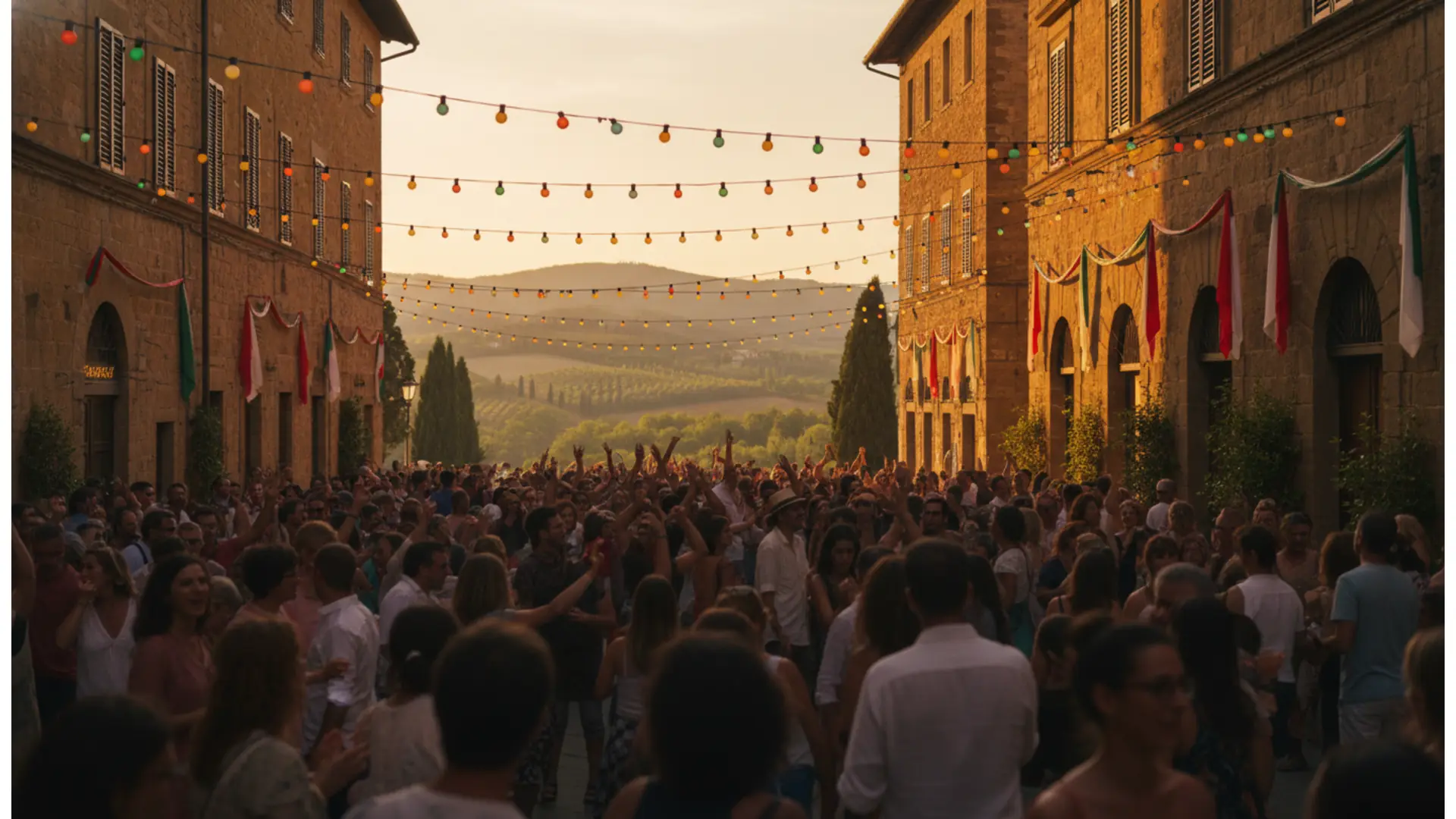
Feast of the Madonna della Libera and Saint Vitus
Two days of devotion, processions, and music in the highest municipality in Campania
Edition 2026 not confirmed to date
This edition has not been confirmed by the organiser to date. We recommend checking before going.
About Madonna della Libera and Saint Vitus Feast
A devotion spanning over a thousand years
In Trevico, in the province of Avellino, the Feast of the Madonna della Libera and Saint Vitus is no staged event; it is the moment when the entire community of the Irpinian Baronia reconnects with its history. Manuscripts by theologian Don Andrea Calabrese trace the veneration of the Madonna della Libera back to the 8th century, with the feast coinciding with the Nativity of Mary on September 8th. The Cathedral of Santa Maria Assunta and Saint Euplio houses three wooden statues of the Virgin from different eras, each depicting her welcoming the faithful under her mantle.
A landmark moment in recent history was the solemn coronation in 1924, when the statue received a three-tiered gold crown weighing over a kilogram, crafted by a Neapolitan artisan thanks to a local benefactor's legacy. In 1948, the image was taken on a pilgrimage through the Baronia parishes to uplift the community in the post-war period; in 2010, the sculpture was restored by South Tyrolean masters, who also created a faithful replica.
September 8th: The Madonna della Libera
The religious program begins with the novena in late August, drawing pilgrims from across the Baronia. On September 8th, multiple masses are celebrated, often presided over by visiting priests and the local Bishop. In the afternoon, the traditional blessing of cars and drivers takes place, honoring the Madonna della Libera's reputation as a protector of travelers. The day culminates in a solemn mass, a procession through the village streets, and a fireworks display.
The devotion remains deeply rooted in popular tradition. Pilgrims from nearby towns—such as Bisaccia, Vallata, and Carife—used to walk to Trevico, sometimes barefoot, during the night between September 7th and 8th. Today, they arrive by car, but the climb to the cathedral remains a sacred ritual. Those who received a grace would offer votive gold, silver hearts, rings, and in the past, even their own hair braids, which were displayed in the church during the feast.
September 9th: Saint Vitus in his district
The following day, the festivities move to the small San Vito district, just outside the town center. The program includes a morning mass in the Church of Saint Vitus, followed by an afternoon procession from the Cathedral carrying the saint's relic. The day continues with a mass and a procession through the district streets, accompanied by a brass band concert. The evening is dedicated to music and dancing, capturing the spirit of an authentic village festival.
The civil program
Alongside the liturgical celebrations, the Festival Committee organizes civil events. In recent years, the square named after Ettore Scola—the great director born in Trevico—has hosted Neapolitan and folk music performances with food and wine stalls, while the San Vito district concludes the celebrations with a dance party.
Trevico, the balcony of Campania
It is worth arriving a few hours early. At 1,094 meters, Trevico is the highest municipality in Campania. From the viewpoints of Sant'Antonio, the Balcony, and the Castle, the view on clear days stretches from Mount Vesuvius on one side to the Gargano promontory in Puglia on the other. Don't miss Port'Alba, the only survivor of the three 16th-century gates, the cathedral crypt with its 1472 portal and a 13th-century wooden statue, and the ancient linden tree dating back to 1692.
What to expect
- Solemn masses and novena in the Cathedral of Santa Maria Assunta and Saint Euplio
- Blessing of cars and drivers
- Procession with the statue of the Madonna della Libera through the village streets
- Fireworks on the highest peak in the region
- Procession with the statue and relic of Saint Vitus in the namesake district, accompanied by a brass band
- Musical evenings in Piazza Ettore Scola and food stalls
A festival that captures the essence of inland Irpinia better than any guidebook: a few thousand people, a mountain, an ancient cathedral, and a faith that, as shown by the community's resilience even after the theft of the votive gold in 2026, remains unshakable.
Madonna della Libera and Saint Vitus Feast — edition 2026
2026 Edition: What we know
In Trevico, in the Irpinian Baronia, the celebrations in honor of the Madonna della Libera and Saint Vitus are held every year in September, coinciding with the Nativity of Mary. No official program has been published for 2026 yet: dates, mass times, procession details, and musical events will be announced by the Santa Maria Assunta Parish and the Festival Committee in the weeks preceding the event.
Those wishing to participate can follow the parish community's channels and the social media pages of the youth of Trevico, where the poster and full program are released each year. The devotion remains vibrant and deeply felt throughout the Province of Avellino: in April 2026, following the theft of the votive gold kept in the cathedral, the community publicly reaffirmed its attachment to the cult of the Virgin.
Highlights Madonna della Libera and Saint Vitus Feast 2026
Prices Madonna della Libera and Saint Vitus Feast 2026
Practical information — Madonna della Libera and Saint Vitus Feast
Getting there
By car: Take the A16 Naples-Canosa motorway, exit at Vallata, then follow the SP ex SS 91 bis for about 9 km to Trevico. It is approximately 71 km from Avellino. The final stretch consists of mountain roads: drive carefully, especially in foggy conditions.
Parking: The historic center is small and partially closed to traffic during processions; it is best to leave your car in the areas below the village and walk up.
Prices
Participation in religious celebrations and square events is free. Only purchases at food and wine stalls are paid.
Tips
- At 1,094 meters, September evenings are cool even after warm days: bring a jacket.
- Wear comfortable shoes: the village is hilly and processions are on foot.
- For the blessing of cars, arrive early to secure a spot in the designated area.
- The exact program is released by the Santa Maria Assunta Parish and the Festival Committee in the weeks leading up to the event.
Where to stay
Accommodation in Trevico is limited. You can find agritourisms and B&Bs in the nearby Baronia towns (Vallata, Vallesaccarda, Ariano Irpino) and along the A16 motorway axis.
Festival-goer photos
No photos yet. Share yours!
Share your photos
5 photos max, 5 MB per photo (JPG, PNG, WebP)
Noticed an error or missing information?
Help us keep this listing up to date. Every proposal is verified by our team before publication.
Festival-goer reviews
No rating yet — be the first!
No comments yet. Be the first!
Were you there?
Share your experience with the community.
Published by Valentin Contard, festival listings writer. Reviewed, corrected and approved by Christophe Contard, editor-in-chief. .
Where does it take place — Madonna della Libera and Saint Vitus Feast
Cattedrale di Santa Maria Assunta e Sant'Euplio
Piazza Nicola Ferrara, 20, 83058 Trevico