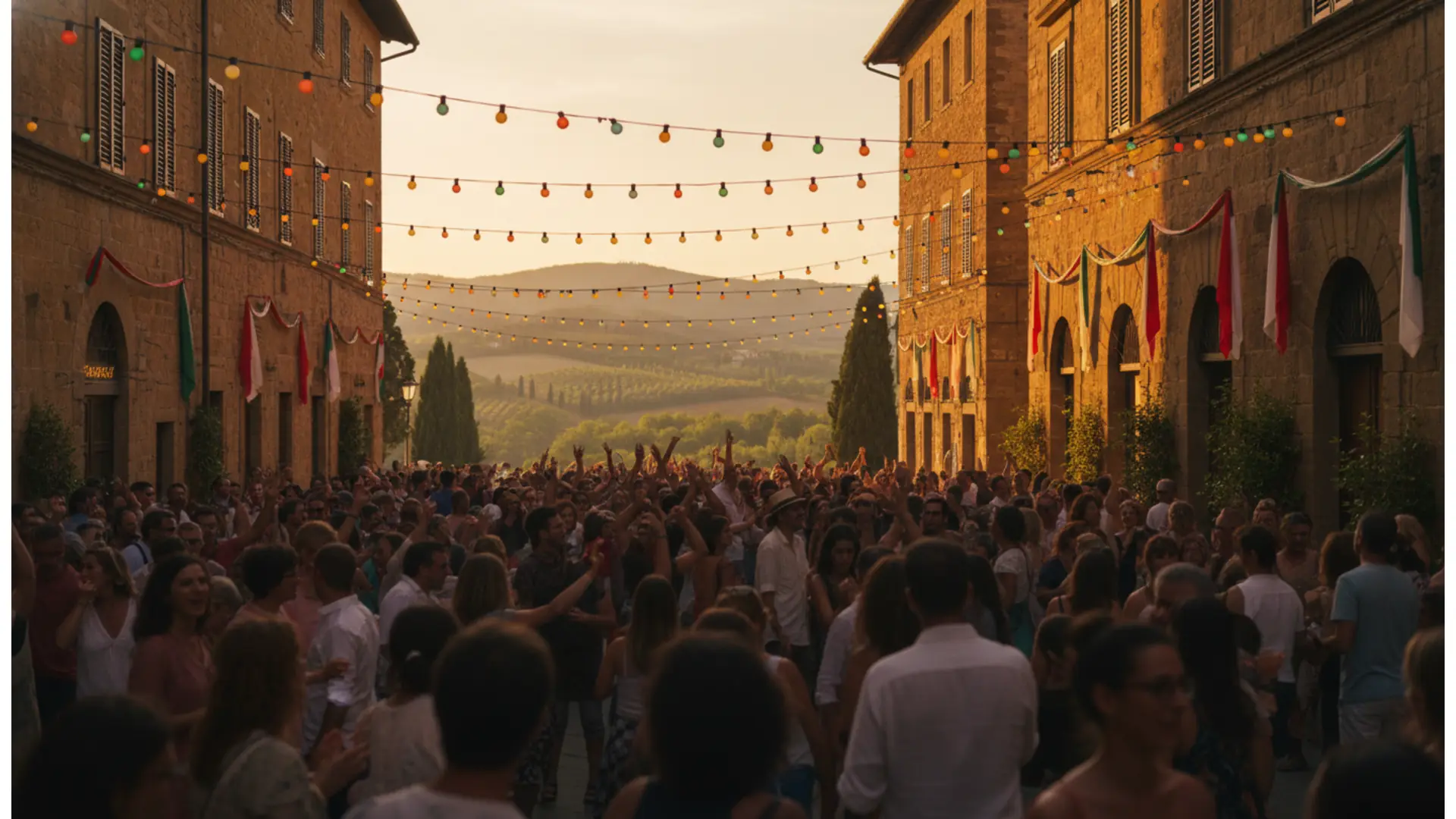
Feast of the Madonna del Santissimo Rosario
The patronal feast commemorating the miraculous discovery of 1822, in the highest municipality of the Apennines
Edition 2026 not confirmed to date
This edition has not been confirmed by the organiser to date. We recommend checking before going.
About Feast of the Madonna del Rosario
A celebration of faith on the Altopiano delle Rocche
The Feast of the Madonna del Santissimo Rosario is the most deeply felt religious event in Rocca di Cambio, a small municipality in the province of L'Aquila, Abruzzo. Situated at an altitude of 1,434 meters, Rocca di Cambio is considered the highest municipality in the entire Apennine range and stands in the heart of the Altopiano delle Rocche, within the Sirente-Velino Regional Natural Park. Every year, in mid-July, the village gathers around its patron saint in a festival that weaves together devotion, historical memory, and a sense of community.
The miracle of 1822
The festival is rooted in an event that local tradition recounts as miraculous. In 1822, inside the Collegiate Church of San Pietro, a canvas on one of the altars fell, revealing a beautiful fresco of the Madonna del Rosario on the wall behind the ancient Marinangeli family altar. It is said that on that occasion, a local man, Rimualdo Pietropaoli, who had been immobilized for some time, felt suddenly healed and left his crutches at the foot of the altar. This episode sparked great popular devotion and made the Madonna del Rosario the spiritual mother of the local community.
The procession and sacred sites
The central moment of the festival is the solemn procession, which winds through the village streets, connecting the Collegiate Church of San Pietro, located at the highest point of the town, and the 17th-century Mother Church of the Annunziata in Piazza Agnifili. The Collegiate Church, with its single nave and nine altars, houses a 10th-century wooden and majolica statue of Saint Peter; the Mother Church preserves a 1569 baptismal font and a 15th-century wooden statue of Saint Lucy. Liturgical rites, Eucharistic celebrations, and the procession of the sacred image mark the two days of festivities.
Between the sacred and the popular
Beyond its religious dimension, the event is an opportunity for the entire community and the many vacationers who frequent the Altopiano delle Rocche during the summer months to come together. The days are enlivened by convivial moments, musical performances, and initiatives organized by the local Pro Loco, which accompany the patronal feast in the serene and participatory atmosphere typical of Abruzzo mountain villages.
A village between mountains and history
Visiting Rocca di Cambio during the Feast of the Madonna del Rosario means discovering a village with ancient charm, immersed in a high-altitude landscape of pastures and peaks. Founded in the Middle Ages and linked to the history of L'Aquila, the village offers visitors the beauty of its churches, the fresh Apennine air, and a religious tradition that has remained unchanged for over two centuries.
Feast of the Madonna del Rosario — edition 2026
The 2026 edition of the Feast of the Madonna del Santissimo Rosario in Rocca di Cambio will renew the religious tradition of this Abruzzo village. At the moment, the precise dates and program have not yet been published by the organizers: the festival is usually held in mid-July, with the solemn procession between the Collegiate Church of San Pietro and the Mother Church of the Annunziata. Information will be updated as soon as it is released by the local Pro Loco.
Practical information — Feast of the Madonna del Rosario
How to get there
Rocca di Cambio can be reached by car from the A24 motorway (exit L'Aquila Est or Tornimparte), continuing towards the Altopiano delle Rocche. The reference railway station is L'Aquila, connected to the village by provincial mountain roads.
When
The festival is traditionally held in mid-July, around July 13, the date commemorating the discovery of the sacred image in 1822.
Tips
Located at over 1,400 meters in altitude, evenings can be cool even in summer: layered clothing is recommended. The village has accommodation facilities linked to the nearby Campo Felice ski resort.
Festival-goer photos
No photos yet. Share yours!
Share your photos
5 photos max, 5 MB per photo (JPG, PNG, WebP)
Noticed an error or missing information?
Help us keep this listing up to date. Every proposal is verified by our team before publication.
Festival-goer reviews
No rating yet — be the first!
No comments yet. Be the first!
Were you there?
Share your experience with the community.
Published by Valentin Contard, festival listings writer. Reviewed, corrected and approved by Christophe Contard, editor-in-chief. .
Where does it take place — Feast of the Madonna del Rosario
Collegiata di San Pietro