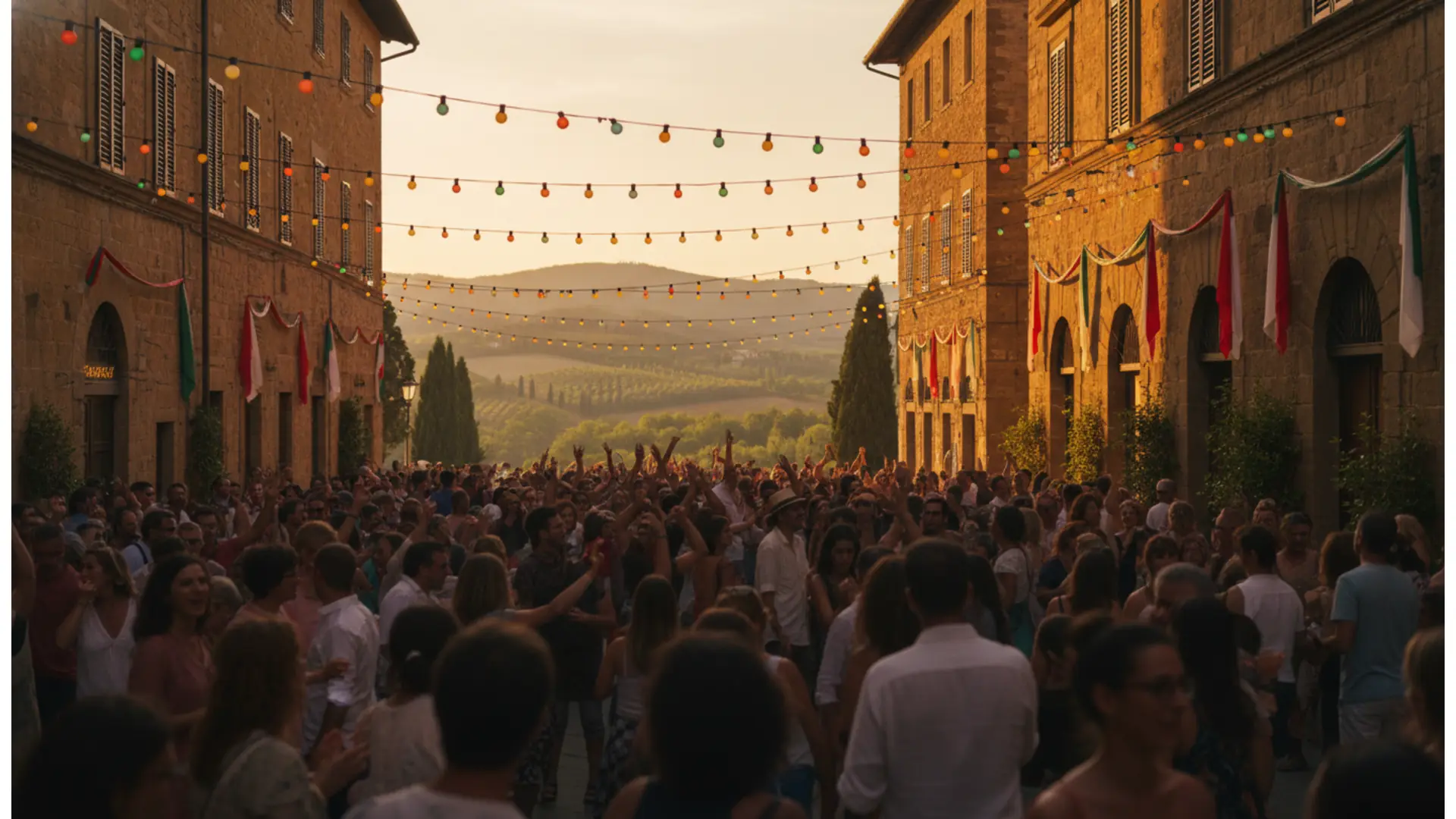
Feast of the Madonna del Rosario
The feast of Mottola's co-patron saint, blending faith and tradition since 1761
Edition 2026 not confirmed to date
This edition has not been confirmed by the organiser to date. We recommend checking before going.
About Madonna del Rosario Mottola
A devotion rooted in centuries
The Feast of the Madonna del Rosario is one of the most deeply felt religious and popular celebrations for the community of Mottola, a town in the Murgia region of the Taranto province, in the heart of Puglia. Devotion to the Rosary dates back to the 16th century: as early as 1569, devotees commissioned a fresco still visible in the cathedral, and by 1592, the first documented records of a Rosary confraternity appeared, later becoming the Confraternity of the Most Holy Sacrament and the Rosary. After various vicissitudes, the confraternity was refounded in 1740 thanks to the Jesuit Raffaele Manca, who gave new impetus to the cult.
The feast since 1761
The celebration has taken place uninterruptedly since 1761 on October 12th and 13th, an appointment that has marked the life of the town for over two and a half centuries. Since 1907, the Virgin of the Rosary has served alongside Saint Thomas of Canterbury as co-patron and secondary protector of the city of Mottola: a recognition that confirms her central role in the city's identity.
The procession and the keys to the city
The most solemn moment is the procession on the afternoon of October 12th. In front of the Church of the Rosary, the mayor symbolically hands the keys of the city to the Virgin, sealing the deep bond between the community and its patron saint. From there, the statue travels through the streets of the historic center, accompanied by civil and military authorities, praying faithful, and the moving notes of the brass band. The festival is enriched by highly evocative moments: band concerts, illuminations lighting up the streets, market stalls, fireworks displays that ignite the Mottola sky, and acts of solidarity involving the entire citizenry.
The Church of the Blessed Virgin of the Rosary
The heart of the devotion is the Church of the Blessed Virgin of the Rosary, built between 1752 and 1786. It houses a central altar created between 1740 and 1750, inspired by the Neapolitan school of Domenico Antonio Vaccaro, and above all, the precious 18th-century wooden statue of the Virgin, embellished with a wig from 1794 and a lavish dress from 1799. The oratory also preserves the oldest organ among local churches, purchased in 1899.
A ritual that unites faith and community
Experiencing the Feast of the Madonna del Rosario in Mottola means immersing yourself in an authentic Southern Italian tradition, where popular religiosity, history, and a sense of belonging merge into two days of intense participation. For visitors, it is an opportunity to discover the Murgian historic center of Mottola, its alleys, and its churches, during one of the most defining moments of the year.
Madonna del Rosario Mottola — edition 2026
The detailed program for the 2026 edition has not yet been published by the Festival Committee and the Confraternity of the Most Holy Sacrament and the Rosary. Following tradition, religious rites are expected at the Church of the Blessed Virgin of the Rosary, along with the procession of the 18th-century statue through the streets of Mottola accompanied by a brass band, illuminations, and fireworks. Dates and the full program will be announced in the weeks leading up to the feast.
Practical information — Madonna del Rosario Mottola
When
The feast is traditionally celebrated on October 12th and 13th. Official dates for the 2026 edition have not yet been announced.
Where
Church of the Blessed Virgin of the Rosary and the historic center of Mottola (TA), Puglia. The procession travels through the main streets of the town.
How to get there
By car: Mottola is accessible via the SS100 Taranto-Bari road, taking the Mottola exit. By train: the nearest station is Taranto, about 30 km away, with onward travel by bus. Nearest airports: Bari-Palese and Brindisi-Salento.
Admission
Participation in religious rites and the procession is free and open to all.
Festival-goer photos
No photos yet. Share yours!
Share your photos
5 photos max, 5 MB per photo (JPG, PNG, WebP)
Noticed an error or missing information?
Help us keep this listing up to date. Every proposal is verified by our team before publication.
Festival-goer reviews
No rating yet — be the first!
No comments yet. Be the first!
Were you there?
Share your experience with the community.
Published by Valentin Contard, festival listings writer. Reviewed, corrected and approved by Christophe Contard, editor-in-chief. .
Where does it take place — Madonna del Rosario Mottola
Chiesa della Beata Vergine del Rosario e centro storico