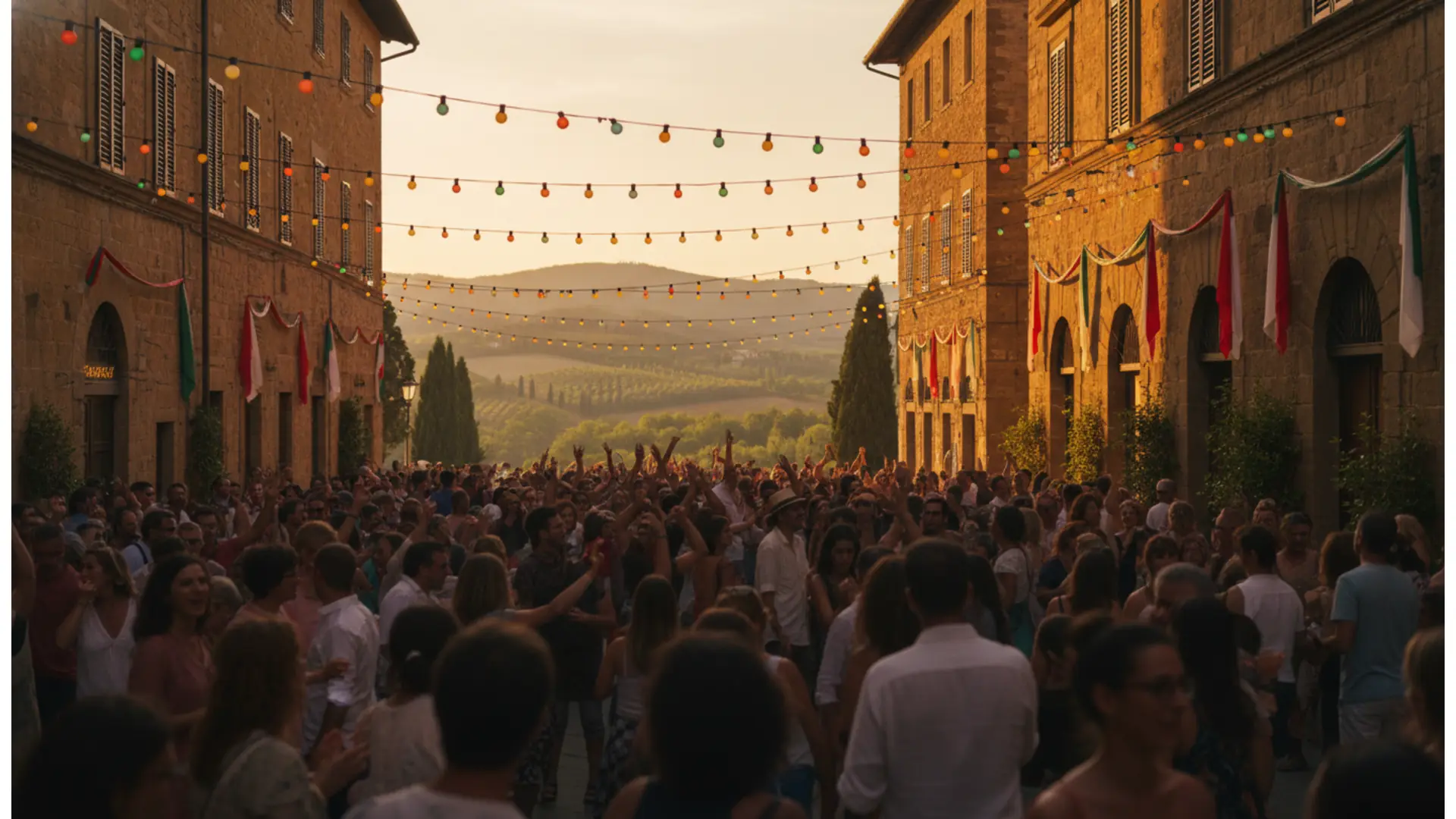
Feast of the Immaculate Conception
The Marian solemnity that unites devotion, tradition, and civic identity in the heart of Palermo every December 8th.
Edition 2026 not confirmed to date
This edition has not been confirmed by the organiser to date. We recommend checking before going.
About Immaculate Conception of Palermo
A devotion born from the 1624 plague
The Feast of the Immaculate Conception is one of the oldest and most deeply rooted Marian celebrations in Palermo, in the heart of Sicily. Its origins date back to 1624, when the city was struck by a violent plague epidemic: the population and the City Senate consecrated themselves to the Immaculate with a solemn vow, pledging to defend her devotion "usque ad effusionem sanguinis", even unto the shedding of blood. Once freed from the disease, Palermo proclaimed the Immaculate the primary patron saint of the city, the Archdiocese, and the entire island, while Saint Rosalia remained the secondary patron. Since then, every December 8th, the Municipality of Palermo renews this bond with a day of intense popular participation.
The Eve of December 7th
Festivities begin on the evening of December 7th at the Sanctuary of Santa Teresa alla Kalsa. In the late afternoon, brass bands perform in Piazza Kalsa, followed by solemn Vespers, which include the entrustment of the city to the Immaculate, the traditional oath, and the offering of shields by the Mayor. The evening culminates with the Office of Readings and the evocative solemn Midnight Mass.
December 8th: From the Alborata to the procession
The day of the solemnity begins at dawn: in the early morning hours, the confraternities set off on a pilgrimage from the Basilica of San Francesco d'Assisi toward the Sanctuary of Santa Teresa, accompanied by the Alborata. The morning continues with the solemn Pontifical Mass in the Cathedral, presided over by the Archbishop of Palermo. In the afternoon, the most anticipated moment takes place: the city procession featuring the precious silver statue of the Immaculate, kept in the Basilica of San Francesco, which travels through the historic center to Piazza San Domenico. Here, the Fire Brigade pays the traditional floral tribute at the foot of the monument to the Immaculate, a gesture that has moved the faithful for decades.
Tradition, identity, and the historic center
- Silver statue carried in procession along the city's monumental streets
- Pilgrimage of the confraternities in the early morning
- Alborata and Midnight Mass as moments of great emotional impact
- Floral tribute by the Fire Brigade in Piazza San Domenico
- Re-enactment of the 1624 civic vow
The festival involves some of the symbolic landmarks of Palermo's historic center: the Cathedral, the Basilica of San Francesco d'Assisi, the Church of San Domenico, Santa Maria della Pietà, and the Sanctuary of Santa Teresa alla Kalsa. More than just a liturgical recurrence, the Immaculate represents a defining appointment for the people of Palermo, where faith merges with the history, art, and popular culture of the city.
Immaculate Conception of Palermo — edition 2026
The 2026 edition of the Feast of the Immaculate Conception in Palermo will follow, as per tradition, the liturgical solemnity of December 8th. The dates for the 2026 edition have not yet been officially confirmed with a published program. Based on established tradition, the usual highlights are expected: the solemn Vespers of the eve, the pilgrimage of the confraternities, the Alborata, the Pontifical Mass in the Cathedral, and the grand procession with the silver statue to Piazza San Domenico. For times and details, it is recommended to consult the official channels of the Archdiocese and the Municipality of Palermo.
Practical information — Immaculate Conception of Palermo
When
Every year on December 7th and 8th, with the main celebrations concentrated on December 8th, the solemnity of the Immaculate Conception.
Where
Historic center of Palermo: Cathedral, Basilica of San Francesco d'Assisi, Piazza San Domenico, Sanctuary of Santa Teresa alla Kalsa. All locations are within walking distance in the heart of the city.
How to get there
By train to Palermo Central Station, then on foot or by public transport toward the historic center. By plane to Falcone-Borsellino Airport in Punta Raisi, connected to the center by train and shuttle. By car, parking in areas adjacent to the center is recommended during processions.
Admission
All celebrations and processions are free and open to the faithful and visitors.
Festival-goer photos
No photos yet. Share yours!
Share your photos
5 photos max, 5 MB per photo (JPG, PNG, WebP)
Noticed an error or missing information?
Help us keep this listing up to date. Every proposal is verified by our team before publication.
Festival-goer reviews
No rating yet — be the first!
No comments yet. Be the first!
Were you there?
Share your experience with the community.
Published by Valentin Contard, festival listings writer. Reviewed, corrected and approved by Christophe Contard, editor-in-chief. .
Where does it take place — Immaculate Conception of Palermo
Centro storico (Cattedrale, Basilica di San Francesco d'Assisi, Piazza San Domenico)