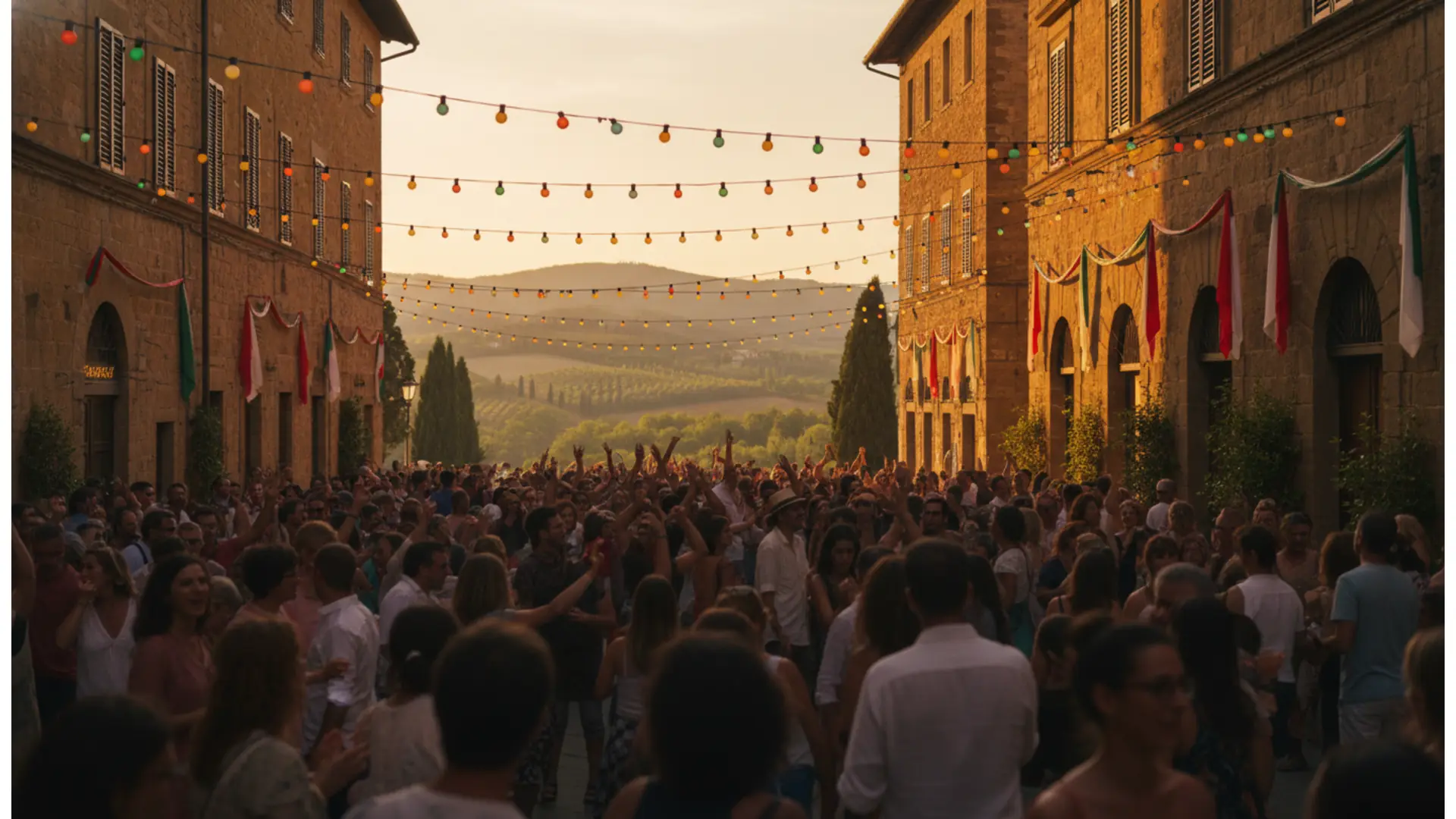
Feast of the Immaculate Conception
The Immaculate Conception procession and the burning of 'lu Diavulazzu' in Caltabellotta
Edition 2026 not confirmed to date
This edition has not been confirmed by the organiser to date. We recommend checking before going.
About Immacolata of Caltabellotta
One of the most iconic festivals of inland Sicily
In Caltabellotta, a charming medieval village perched over 900 meters above sea level in the province of Agrigento, December 8th is more than just a religious holiday: it is the day the entire community gathers around its oldest devotion. The Feast of the Immaculate Conception is the most heartfelt celebration in the town's calendar, drawing not only residents but also many emigrants returning home for the occasion, alongside visitors captivated by a tradition unique throughout Sicily.
The novena and preparations
The festivities span more than a single day: the nine days leading up to the solemnity are marked by the novena, featuring daily late-afternoon services, the rosary, and the traditional singing of the 'Stella dell'Immacolata'. On the evening of December 7th, the eve of the feast, a traveling vigil moves through the village districts to reach the Chiesa dell'Itria, the heart of the celebrations.
The December 8th procession
The day of the solemnity begins with morning mass. In the late afternoon, the statue of the Immaculate Conception leaves the Chiesa dell'Itria and is carried in procession along the narrow streets of the historic center, accompanied by the faithful, a brass band, and festive lights. The procession winds through the town for hours before returning to the church late in the evening.
'Lu Diavulazzu': burning the devil
The element that makes the Caltabellotta festival truly unique is 'lu Diavulazzu' (or Diavulazzo). This is an imposing effigy, about 7-8 meters tall, built by filling a wire mesh structure with straw and oakum, then covered in fabric and colored paper to resemble a devil: horns, a tail, a trident in the right hand, and a snake in the left. Between December 7th and 8th, the effigy is hoisted onto a beam overlooking Piazza Leone XIII and, upon the return of the procession, it is set on fire. The burning, which concludes the day late at night, carries deep symbolic value: it represents the victory of Good over Evil and the defeat of sin, as celebrated by the dogma of the Immaculate Conception.
A heritage of the Agrigento hills
Recognized as one of the most representative traditions of Caltabellotta and the Agrigento hinterland, the festival blends popular religion, spectacle, and community identity. For visitors, it is also an opportunity to discover one of Sicily's most fascinating villages, dominated by the ruins of the Castle and overlooking the Belice Valley.
Immacolata of Caltabellotta — edition 2026
The 2026 edition of the Feast of the Immaculate Conception in Caltabellotta does not yet have an official published program. As it is a religious festival on a fixed date, the celebrations are traditionally scheduled around December 8th, with the novena in the preceding days, the procession of the Immaculate Conception, and the characteristic burning of 'lu Diavulazzu'. The detailed program (times for masses, the vigil, and the procession) will be released by the parish and the Municipality of Caltabellotta in the weeks leading up to the event.
Practical information — Immacolata of Caltabellotta
When
The festival is celebrated every year on December 8th, preceded by a novena during the nine days prior. The highlight (the procession and the burning of 'lu Diavulazzu') takes place from the late afternoon of December 8th until late at night.
Where
Caltabellotta (Zip Code 92010), province of Agrigento, Sicily. The heart of the celebrations is the Chiesa dell'Itria and Piazza Leone XIII in the historic center.
How to get there
By car from Agrigento or Sciacca, following the provincial roads that climb toward the mountain village; the historic center is accessible on foot. The nearest airports are Palermo and Trapani-Birgi. Warm clothing is recommended: Caltabellotta is at high altitude, and evening temperatures in December are quite cold.
Admission
Participation in the celebrations and the burning is free.
Festival-goer photos
No photos yet. Share yours!
Share your photos
5 photos max, 5 MB per photo (JPG, PNG, WebP)
Noticed an error or missing information?
Help us keep this listing up to date. Every proposal is verified by our team before publication.
Festival-goer reviews
No rating yet — be the first!
No comments yet. Be the first!
Were you there?
Share your experience with the community.
Published by Valentin Contard, festival listings writer. Reviewed, corrected and approved by Christophe Contard, editor-in-chief. .
Where does it take place — Immacolata of Caltabellotta
Chiesa dell'Itria