Ebraica - International Festival of Culture
Four days of Jewish culture in the heart of Rome's Ghetto
About Ebraica Festival
A festival in the oldest Jewish quarter in Europe
Ebraica - International Festival of Culture takes place every June in the Sant'Angelo district, the Ghetto of Rome, within the city of Rome, in the Lazio region. The heart of the event is the Palazzo della Cultura on Via del Portico d'Ottavia, just steps away from the Great Synagogue and the archaeological remains of the Portico d'Ottavia: a setting that perfectly encapsulates the unique layers of this part of the city.
Promoted by the Jewish Community of Rome and curated by Ariela Piattelli, Raffaella Spizzichino, and Marco Panella, the festival has established itself over the years as one of the most anticipated cultural events of the Roman summer. Participation is free until capacity is reached, with mandatory online booking.
A community living in Rome for over two thousand years
The Jewish community of Rome is the oldest in Western Europe, with a continuous presence in the city dating back to the 2nd century BC. The Ghetto was established in 1555 and remained in force until 1870, leaving a profound legacy in the urban fabric, the Judeo-Romanesco language, the local cuisine, and the collective memory of the neighborhood. Ebraica was created to make this heritage accessible to everyone, not as a museum piece, but as a living culture capable of engaging with the present.
What to expect in the program
Each edition revolves around a theme that unites the four evenings. The program alternates between different registers and formats:
- Talks and debates with writers, historians, journalists, and rabbis on current affairs, ethics, and memory.
- Book launches, often featuring authors in conversation with critics and witnesses.
- Photographic and documentary exhibitions hosted within the spaces of the Palazzo della Cultura.
- Film screenings with guest directors and international cinema.
- Staged readings and theatrical performances, often as original productions.
- Musical evenings blending Romanesco songs, liturgical traditions, and Ghetto poetry.
The atmosphere of the evenings
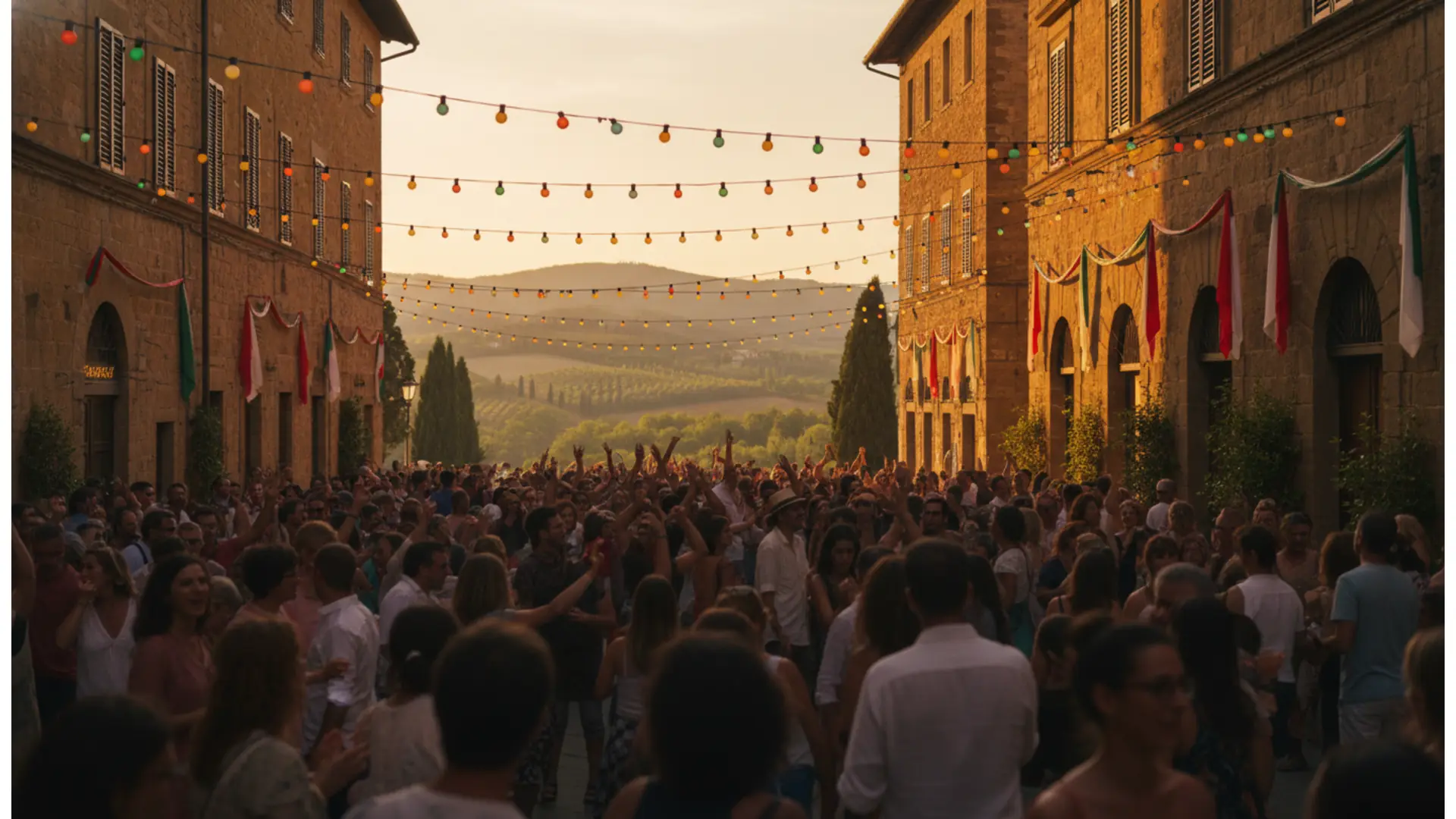
Events are concentrated in the late afternoon and evening, when the neighborhood fills with visitors and the streets around Via del Portico d'Ottavia come to life. Many visitors combine the festival with a stroll through the district and dinner at local restaurants, where traditional Judeo-Romanesco cuisine is a staple: carciofi alla giudia (Jewish-style artichokes), zucchini concia, salt cod, and ricotta and sour cherry cakes. It is a natural way to complement the cultural experience with a culinary one.
A broad audience, well beyond the community
Although born from a community institution, Ebraica is designed as a city-wide and international festival. Guests arrive from various countries, and the audience consists largely of Romans and tourists with no direct ties to the community. The event enjoys the support of Rome's municipal government and various institutional and private partners, representing one of the moments when the Ghetto opens itself most widely to the city.
Why it is worth visiting
Those visiting Rome in June will find in Ebraica a rare opportunity: a high-level, free festival in an extraordinary historical setting that offers an inside look at one of the oldest and least-told components of Roman identity. For those living in the city, it is the annual appointment that brings themes of memory, coexistence, and responsibility to the center of public debate.
Ebraica Festival — edition 2026
Tikvàh - Being Hope
The 19th edition of Ebraica - International Festival of Culture chose as its guiding thread the Hebrew word tikvàh, hope. A term that in the Jewish tradition goes far beyond optimism: its root evokes the image of a taut rope, binding the present to what is yet to be fulfilled. A theme addressed over four evenings at the Palazzo della Cultura on Via del Portico d'Ottavia, in the heart of Rome's Jewish quarter.
The program night by night
Sunday, June 14th — Opening at 7:00 PM with Defending Words, a conversation between writer Erri De Luca and Maurizio Molinari on the need to protect language from aggression and misinformation. At 8:00 PM, the inauguration of the photographic exhibition Exodus. The Ships of Hope, dedicated to the Aliyah Bet and the journeys of survivors toward Palestine between 1945 and 1948.
Monday, June 15th — At 7:00 PM, the reading Two Lives, One Memory by Dina Hassan, which reconstructs the story of a girl from Tripoli forced to leave Libya in 1967. At 9:00 PM, a meeting on Reading Lolita in Tehran with director Eran Riklis, followed at 9:30 PM by the film screening.
Tuesday, June 16th — At 7:00 PM, the presentation of the book Wherever Home Is by Ghila Piattelli, with journalist Lara Crinò, actor and director Luca Barbareschi, and Clelia Piperno. At 8:00 PM, historian Serena Di Nepi presents The Ghetto of Rome. History of a Jewish Community, covering three centuries of Roman events from 1555 to 1870.
Wednesday, June 17th — At 7:00 PM, Hope in the Age of Artificial Intelligence, a dialogue on technology and ethics with Ruggero Raccah, Marco Panella, Clelia Piperno, and Rabbi Ariel Di Porto. Closing at 9:00 PM with Once Upon a Time in the Ghetto, a journey through Roman Jewish memory featuring Romanesco songs and poetry, with Alberto Laurenti and Sandro Di Castro.
Admission
Participation was free until capacity was reached, with mandatory online booking for each event.
Programme Ebraica Festival 2026
Highlights Ebraica Festival 2026
Prices Ebraica Festival 2026
Practical information — Ebraica Festival
Location
Palazzo della Cultura, Via del Portico d'Ottavia 73, 00186 Rome (Sant'Angelo district, Jewish quarter). Some events may take place in other locations within the neighborhood.
How to get there
By bus: lines along Lungotevere de' Cenci and Via Arenula (Arenula/Ministero Grazia e Giustizia stop). By tram: line 8, Piazza Venezia terminus, then a five-minute walk. By metro: line B, Circo Massimo or Colosseo stop, then bus or a twenty-minute walk. By train: from Roma Termini, bus H or 40 to Largo di Torre Argentina. By car: not recommended, as the area is in a restricted traffic zone (ZTL); it is better to use park-and-ride facilities served by the metro.
Admission and booking
Participation is free until capacity is reached, with mandatory online booking for each event. Spots fill up quickly for popular guest speakers, so it is advisable to book as soon as the program is published.
Tips
Arrive at least twenty minutes early. The neighborhood is best explored on foot: the Great Synagogue with the Jewish Museum of Rome, the Portico d'Ottavia, and the Theatre of Marcellus are all within a few hundred meters. Reservations are recommended for dinner in the area during the festival evenings.
Festival-goer photos
No photos yet. Share yours!
Share your photos
5 photos max, 5 MB per photo (JPG, PNG, WebP)
Noticed an error or missing information?
Help us keep this listing up to date. Every proposal is verified by our team before publication.
Festival-goer reviews
No rating yet — be the first!
No comments yet. Be the first!
Were you there?
Share your experience with the community.
Published by Valentin Contard, festival listings writer. Reviewed, corrected and approved by Christophe Contard, editor-in-chief. .
Where does it take place — Ebraica Festival
Palazzo della Cultura
Via del Portico d'Ottavia 73, 00186 Roma