Capo Sava Living Nativity in Sava di Baronissi
Between Christmas and Epiphany, the narrow streets of Sava transform into an ancient Palestinian village
About Capo Sava Living Nativity
A Palestinian village in the heart of the Irno Valley
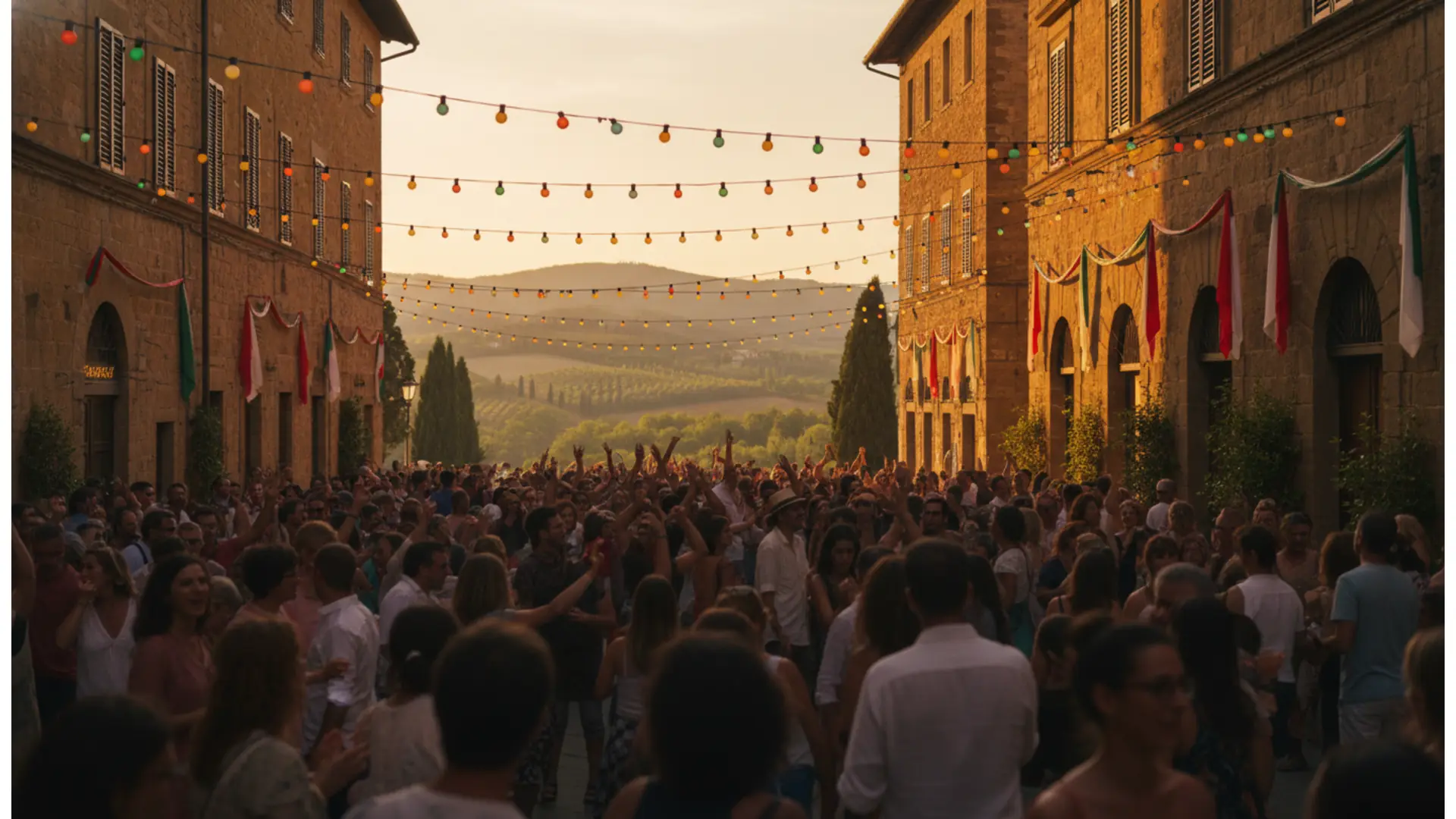
The Capo Sava Living Nativity is one of the most cherished Christmas traditions in the Municipality of Baronissi, in the province of Salerno, nestled in the heart of the Irno Valley in Campania. Every year, between Christmas and Epiphany, the small village of Sava—and specifically the Capo Sava district—is transformed into an ancient Palestinian village. The alleys, doorways, courtyards, and stairways of the hamlet become the natural backdrop for the Nativity scene.
The event is organized by the Catholic Action Youth Group of the Sant'Agnese Parish, with the support of the entire parish community. Local youths and families build the sets, sew the costumes, and play the characters, giving the event its deeply authentic and communal atmosphere.
A journey through workshops and forgotten trades
The visitor route winds on foot through the district's alleys and is designed as an immersive journey into the past. Along the way, you will encounter artisan workshops and stations dedicated to forgotten trades, meticulously reconstructed and brought to life by the actors:
- the pasta maker busy rolling and cutting pasta by hand;
- the blacksmith at the forge, with anvil and hammer;
- scribes hunched over parchment;
- fishermen with nets and baskets;
- scenes of daily village life, including weaving, spinning, and processing local produce.
The path then leads to Herod's palace, guarded by royal soldiers and animated by court dances, before reaching the climax of the story: the Nativity grotto, illuminated and set at the end of the route, featuring the Holy Family, shepherds, and animals.
The Magi procession and the zampogne
The most anticipated day is the Epiphany. On January 6th, the comet star guides the traditional Magi procession, which travels through the town streets to Capo Sava to pay homage to Baby Jesus and bring gifts. The procession is accompanied by the sound of zampogne (traditional bagpipes), the iconic instrument of Southern Italian Christmas, which has accompanied novenas and processions in the Apennine towns of Campania for centuries.
The taste of a Campanian Christmas
The Nativity is not just a visual experience: along the route, food stalls managed by volunteers offer local Christmas specialties. Highlights include:
- freshly fried pizza fritta;
- caciocavallo impiccato (hanging cheese), melted over embers;
- warm zeppole;
- roasted chestnuts and mulled wine;
- 'o per e 'o muss, a historic Neapolitan street food delicacy served at the butcher's stall.
A tradition that grows with every edition
Born as a parish initiative, the Capo Sava Living Nativity has now celebrated over ten editions and attracts visitors from across the province of Salerno and the Naples metropolitan area, thanks to Baronissi's proximity to the provincial capital. With over one hundred actors involved, it is now one of the most popular living nativity scenes in the Irno Valley.
For the public, the experience is also a chance to discover a village that usually remains off the beaten tourist path: Sava preserves its original rural layout, with clustered houses, external staircases, and shared courtyards that light up with fires, lights, and voices during the evenings of December and January.
When it takes place
The Living Nativity is traditionally held in two blocks of dates: a few evenings just after Christmas (between December 26th and 29th) and the evenings leading up to the Epiphany (between January 4th and 6th), with evening opening hours. The exact dates are announced each year by the parish and promoted by the local Salerno press.
Capo Sava Living Nativity — edition 2026
The 11th edition
The eleventh edition of the Capo Sava Living Nativity, in the Municipality of Baronissi (province of Salerno), took place on the evenings of December 26, 27, and 28, 2025, and January 4, 5, and 6, 2026. As every year, the Capo Sava district was transformed into an ancient Palestinian village by the Catholic Action Youth Group of the Sant'Agnese Parish, with the support of the entire parish community.
The route wound through the village alleys, featuring artisan workshops, scenes of daily life, and forgotten trades: from the pasta maker to the blacksmith, from scribes to fishermen, leading up to Herod's palace with its royal guards and the illuminated Nativity grotto. Over one hundred actors brought the stations to life. On January 6th, the day of the Epiphany, the traditional Magi procession traveled through the town streets accompanied by the sound of zampogne to bring gifts to Baby Jesus.
Programme Capo Sava Living Nativity 2026
Opening days
- Friday 26, Saturday 27, and Sunday 28 December 2025 — opening of the route in the alleys of Capo Sava, in the evening (approx. 6:00 PM - 10:00 PM).
- Sunday 4, Monday 5, and Tuesday 6 January 2026 — second tranche of openings, until the Epiphany.
The route
- Entrance set up on Via XX Settembre, near the Town Hall.
- Artisan workshops and ancient trades: pasta maker, blacksmith, scribes, fishermen.
- Scenes of daily village life, with over one hundred costumed actors.
- Herod's palace, with royal guards and court.
- The illuminated Nativity grotto, at the end of the route.
Tuesday, January 6, 2026 — Epiphany
- Traditional Magi procession along the town streets to Capo Sava, accompanied by the sound of zampogne, to pay homage to Baby Jesus.
Food stalls along the route
- Freshly fried pizza fritta.
- Caciocavallo impiccato.
- Zeppole.
- Roasted chestnuts and mulled wine.
- 'O per e 'o muss, a novelty of this edition, served at the butcher's stall.
Highlights Capo Sava Living Nativity 2026
- Eleventh edition of the performance, in the Capo Sava district.
- Over one hundred costumed actors along the entire route.
- Reconstruction of forgotten trades: pasta maker, blacksmith, scribes, fishermen.
- Herod's palace with royal guards and court.
- The illuminated Nativity grotto.
- Magi procession with zampogne on January 6th.
- Tastings of traditional Campanian Christmas food along the alleys.
Prices Capo Sava Living Nativity 2026
Practical information — Capo Sava Living Nativity
How to get there
Baronissi is located a few kilometers from Salerno, in the Irno Valley. By car, it can be reached via the Salerno-Avellino motorway junction (Baronissi exit) or the A2 del Mediterraneo motorway. The Sava district is signposted from the town center; in recent editions, the entrance to the Nativity route was set up on Via XX Settembre, near the Town Hall. By train, the reference station is Salerno, which is connected to Baronissi by local buses.
Opening hours
Visits take place in the evening, approximately from 6:00 PM to 10:00 PM on opening days.
Contacts
- Phone and group bookings: +39 388 1284370
- Organization: Catholic Action Youth Group of the Sant'Agnese Parish, Sava di Baronissi
Tips
The route winds along alleys, stairs, and sloping paths: comfortable shoes and clothing suitable for winter evenings are recommended. It is best to arrive early, as the alleys fill up quickly on peak evenings. Parking is available in the center of Baronissi, a short walk from the entrance.
Festival-goer photos
No photos yet. Share yours!
Share your photos
5 photos max, 5 MB per photo (JPG, PNG, WebP)
Noticed an error or missing information?
Help us keep this listing up to date. Every proposal is verified by our team before publication.
Festival-goer reviews
No rating yet — be the first!
No comments yet. Be the first!
Were you there?
Share your experience with the community.
Published by Valentin Contard, festival listings writer. Reviewed, corrected and approved by Christophe Contard, editor-in-chief. .