San Nicola di Bari Festival
Ten days of novena, processions, and the blessing of the cherries in a Cilento village
About San Nicola di Bari Roccagloriosa
A ten-day celebration
In Roccagloriosa, a village of about 1,500 inhabitants nestled 430 meters above sea level in the Cilento hinterland, the San Nicola di Bari Festival is far more than a single-evening event. It begins on April 30th with the novena and concludes on May 9th, the Saint's feast day. It is the event that kicks off the season in the Municipality of Roccagloriosa, in the Province of Salerno, drawing back residents and families from across the coast and the Vallo di Diano.
Why May 9th and not December 6th?
While Saint Nicholas, Bishop of Myra in Lycia, is liturgically celebrated on December 6th, the Cilento region and the entire Italian South also dedicate May 9th to him, marking the 1087 translation of his relics to Bari. This is the "seafaring" and popular date for the cult of Saint Nicholas, which in Southern Italy has become intertwined with agrarian rites and spring thanksgiving. In Roccagloriosa, the occasion is particularly significant because the town historically has two patron saints: Saint John the Baptist, linked to the main village, and Saint Nicholas of Bari, linked to the Rocchetta, the other parish of the village, which was once distinct and of ancient Greek-Byzantine tradition before the two communities merged.
The Church of San Nicola at the Rocchetta
The heart of the celebrations is the Church of San Nicola di Bari, built between the 15th and 16th centuries and later expanded, located in the upper part of the town. Surrounding it is a remarkable religious heritage for such a small center: the Church of the Gloriosa, which tradition dates back to 412 and which gave the town its name, the 11th-century Church of Saint John the Baptist, and the ancient San Mercurio complex, where a special mass is held during the novena.
The Novena, from April 30th to May 8th
For nine consecutive evenings, the town gathers for the Holy Rosary, the novena, and the Eucharistic celebration. This is not just a devotional exercise inside the church; the novena marks community gestures renewed each year, from visiting and bringing communion to the sick at home to the mass at the cemetery in suffrage of the deceased, and the celebration at San Mercurio. The eve of the feast, May 8th, opens with the supplication to the Madonna in the Church of the Most Holy Rosary and continues in the evening with a Eucharistic procession and blessing.
May 9th: Procession and the Blessing of the Cherries
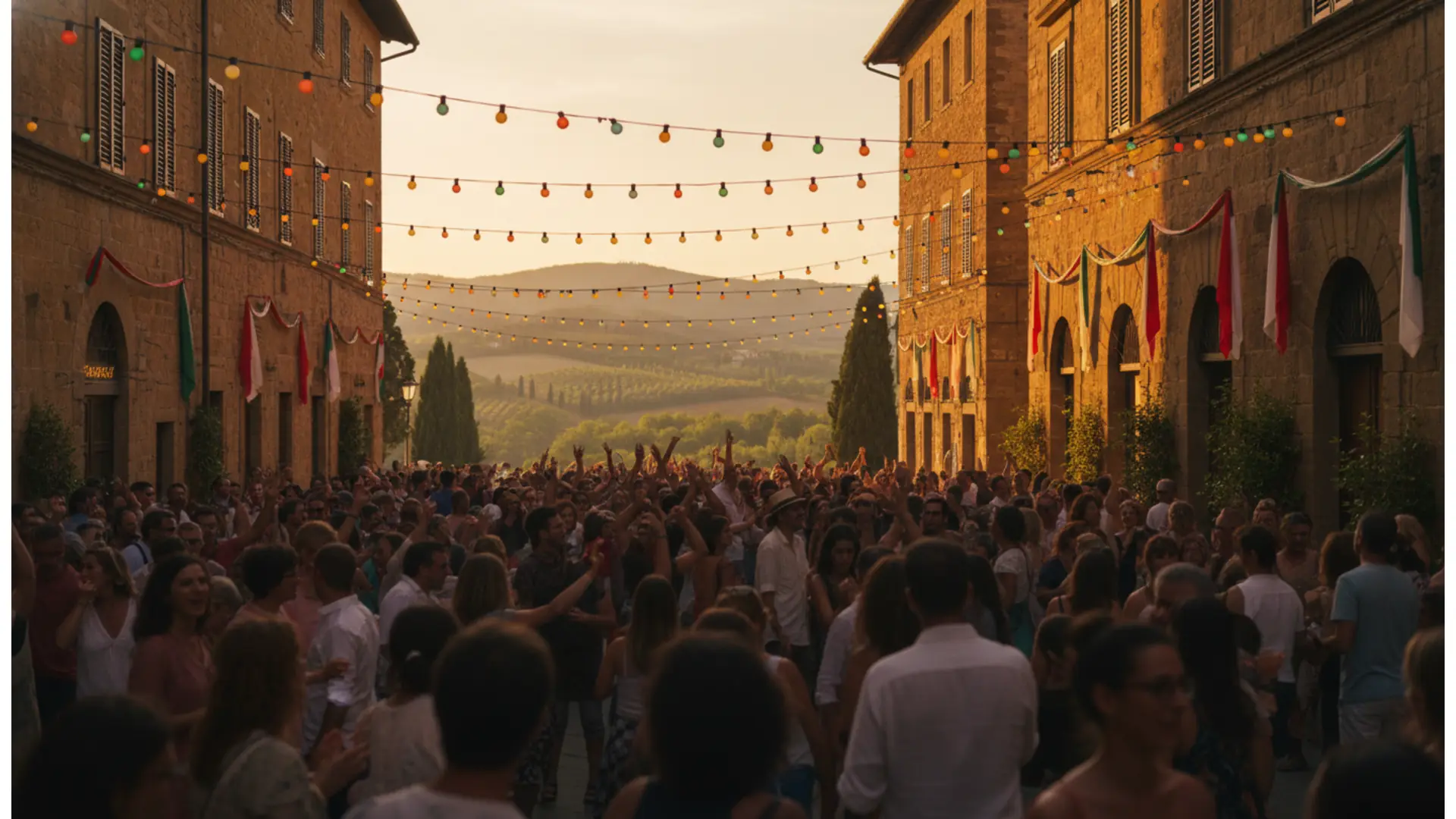
The feast day begins early with brass bands marching through the streets, culminating in the solemn mid-morning mass. In the afternoon, the effigy of Saint Nicholas leaves the church and travels in procession through the alleys and squares, amidst arches of lights and decorated balconies. This is where the most characteristic and beloved rite takes place: the blessing of the cherries, the first fruit of the season in the Cilento countryside, brought as an offering and blessed before the Saint. A simple gesture that links popular devotion to the agricultural calendar, passed down through generations in Roccagloriosa.
The secular program: bands, folk music, and fireworks
Alongside the religious program is the secular one, organized by the Festival Committee. The evenings of May 8th and 9th host brass band concerts—the irreplaceable soundtrack of patronal feasts in Southern Italy—and folk music groups that bring Piazza San Nicola and Piazza San Leonardo to life. The scenery is completed by artistic illuminations along the procession route, food stalls serving Cilento cuisine, and the fireworks display that closes the festival, lighting up the valley.
Roccagloriosa beyond the festival
Visitors arriving for the festivities will find a village worth a half-day visit: the medieval historic center around the castle ruins, stone alleys, panoramic viewpoints over the Gulf of Policastro, and, above all, the Lucanian archaeological site with its associated Antiquarium, evidence of one of the most important fortified settlements of the 4th-3rd century BC in Southern Italy. All this is located within the Cilento, Vallo di Diano and Alburni National Park, a UNESCO World Heritage site.
Why visit
- An authentic patronal feast of the inland Campania region, lived by residents rather than staged for tourism
- The blessing of the cherries, a rare agricultural-devotional rite
- Brass bands, folk music, illuminations, and fireworks: the classic repertoire of a Southern Italian feast
- Free entry to all events, in a village just a few kilometers from the beaches of Marina di Camerota and Palinuro
San Nicola di Bari Roccagloriosa — edition 2026
Ten days of novena and celebration
The 2026 festivities in honor of Saint Nicholas of Bari spanned ten days, from April 30th to May 9th, following the calendar proposed by the Roccagloriosa parish and the Festival Committee. Every evening, from April 30th to May 8th, the 6:30 PM Holy Rosary opened the novena and the Eucharistic celebration in the Church of San Nicola.
Community gestures
The novena alternated prayer with the moments of closeness that characterize this festival: on May 1st, the visit and communion for the sick; on May 2nd, the mass at the cemetery in suffrage of the deceased; and on May 3rd, the Holy Mass in the ancient Church of San Mercurio. On Friday, May 8th, the eve of the feast, the supplication to the Madonna in the Church of the Most Holy Rosary preceded the evening celebration with a Eucharistic procession and blessing.
May 9th, the Saint's Day
On Saturday, May 9th, the day opened with morning celebrations and the "Città di San Giovanni a Piro" Brass Band marching through the streets; at 11:00 AM, the solemn mass was presided over by Father Francesco Alpino. In the afternoon, the procession with the effigy of Saint Nicholas crossed the village, culminating in the traditional blessing of the cherries. The illuminations were provided by the Forte company from Massicelle, and the fireworks display by the Di Muoio company from Vatolla; food stalls were open on both evenings. Father Emanuele Cammarano and the Committee invited the community to experience these days as a moment of faith, tradition, and sharing.
Programme San Nicola di Bari Roccagloriosa 2026
Thursday, April 30th to Friday, May 8th — Solemn Novena
- 6:30 PM – Holy Rosary, followed by Novena and Eucharistic Celebration (daily, in the Church of San Nicola)
- Friday, May 1st – Visit and communion for the sick
- Saturday, May 2nd – Holy Mass at the cemetery for the deceased
- Sunday, May 3rd – Holy Mass in the Church of San Mercurio
Friday, May 8th — Eve of the feast
- Supplication to the Madonna in the Church of the Most Holy Rosary
- Evening – celebration, Eucharistic procession, and Eucharistic blessing
- "Città Vallo di Diano" Brass Band concert
- In Piazza San Nicola – performance by the Aldo Cesaro Band
- Food stalls open
Saturday, May 9th — Feast of San Nicola di Bari
- Morning – celebrations and parade through the town by the "Città di San Giovanni a Piro" Brass Band
- 11:00 AM – Solemn mass presided over by Father Francesco Alpino
- Afternoon – solemn procession with the Saint's effigy through the village streets
- Followed by – traditional blessing of the cherries
- Evening – concert by the Tarantam Project in Piazza San Leonardo
- Food stalls open
Festival features
- Artistic illuminations by the Forte company of Massicelle
- Fireworks display by the Di Muoio company of Vatolla
Highlights San Nicola di Bari Roccagloriosa 2026
- Solemn mass on May 9th at 11:00 AM, presided over by Father Francesco Alpino
- Afternoon procession with the effigy of Saint Nicholas through the village alleys
- Traditional blessing of the cherries, a Cilento agricultural-devotional rite
- "Città Vallo di Diano" Brass Band on May 8th and "Città di San Giovanni a Piro" on May 9th
- Aldo Cesaro Band in Piazza San Nicola and Tarantam Project in Piazza San Leonardo
- Illuminations by the Forte company and fireworks by the Di Muoio company
Prices San Nicola di Bari Roccagloriosa 2026
Practical information — San Nicola di Bari Roccagloriosa
Getting there
By car: A2 del Mediterraneo motorway, exit Padula-Buonabitacolo, then follow the SS517 and SP roads towards Torre Orsaia and Roccagloriosa; from the north, you can also take the Battipaglia exit and the SS18 to Poderia-Celle di Bulgheria. By train: Sapri or Pisciotta-Palinuro station on the Tyrrhenian line, then bus or taxi. By plane: Salerno-Costa d'Amalfi or Naples-Capodichino airports.
Where it takes place
Celebrations are held at the Church of San Nicola di Bari in the Rocchetta area, with events also at the Church of the Most Holy Rosary, the cemetery, and San Mercurio. Evening performances take place in Piazza San Nicola and Piazza San Leonardo in the village center.
Parking
The historic center features narrow alleys and is very crowded during the festival: it is best to leave your car in the parking areas at the entrance to the village and continue on foot. Comfortable shoes are recommended as the procession route is uphill.
Costs
Religious celebrations, the procession, brass band concerts, square performances, and fireworks are free of charge. Only food and drinks at the stalls are paid.
Where to stay and eat
Roccagloriosa offers agriturismos and B&Bs; coastal facilities (Marina di Camerota, Policastro Bussentino, Scario) are a 15-20 minute drive away. Be sure to try traditional local dishes, starting with cavatielli and products from the Cilento National Park.
Information
Municipality of Roccagloriosa, tel. +39 0974 981113 — website comune.roccagloriosa.sa.it; San Nicola di Bari Festival Committee, at the parish office.
Festival-goer photos
No photos yet. Share yours!
Share your photos
5 photos max, 5 MB per photo (JPG, PNG, WebP)
Noticed an error or missing information?
Help us keep this listing up to date. Every proposal is verified by our team before publication.
Festival-goer reviews
No rating yet — be the first!
No comments yet. Be the first!
Were you there?
Share your experience with the community.
Published by Valentin Contard, festival listings writer. Reviewed, corrected and approved by Christophe Contard, editor-in-chief. .
Where does it take place — San Nicola di Bari Roccagloriosa
Chiesa di San Nicola di Bari alla Rocchetta, Piazza San Nicola e Piazza San Leonardo
Piazza San Nicola, 84060 Roccagloriosa