Saint Magnus Patronal Feast
On August 19th, join the procession up to the hermitage carved into the rock, blending deep devotion with village festivities.
Edition 2026 not confirmed to date
This edition has not been confirmed by the organiser to date. We recommend checking before going.
About Saint Magnus Feast
A devotion that climbs the mountain
The Saint Magnus Patronal Feast is the defining event for the town of San Mango Piemonte, a small village in the province of Salerno, Campania, nestled at the foot of Mount Tubenna just a few kilometers from the regional capital. Here, the saint is more than just a patron; he is the very origin of the town's name, which appears in ancient documents as Terra Sancti Magni ed Pedemontis. Every year, on August 19th, the community renews a centuries-old ritual: a procession to the hermitage carved into the rock, with the statue of the saint carried on shoulders along a steep path, accompanied by hymns and prayers.
The legend of the Bishop of Trani
According to local tradition, Saint Magnus, Bishop of Trani, took refuge in a natural mountain cave during his long pilgrimage to Rome to escape the persecutions of Decius, dedicating his time to prayer and preaching the Gospel to the valley below. After his death, traditionally dated August 19th, the saint is said to have appeared in a dream to the faithful, designating that very cavity as a sacred place to be protected. This legend forms the foundation of the devotional structure that still defines the festival today.
The Hermitage of Saint Magnus
The hermitage is a natural cavity embedded in the rocky face of the mountain, overlooked by the ruins of the ancient Merola castle tower. Inside, it preserves two precious treasures for the community:
- a fresco depicting the saint, dated 1542, which remains visible and an object of veneration;
- an early 18th-century wooden statue, which leads the processional cortege.
This isolated, panoramic spot is accessible only on foot via the ancient trail climbing the ridge. The physical effort of the ascent is an integral part of the ritual, marking the transition from village life to the contemplative atmosphere of the hermitage.
The August 19th Procession
On the day of the solemnity, the faithful gather in the village and proceed toward the hermitage, accompanying the statue along a path that winds through the Mediterranean scrub. The Eucharistic celebration in front of the cave is the highlight of the day. Participation is open to all, but visitors should be prepared for a mountain hike: sturdy shoes and water are essential, especially in the heat of the Salerno summer.
A returning custom: the myrtle broom
One of the most characteristic customs follows the mass: pilgrims gather young branches of mortella (myrtle) in the surrounding woods to craft a rustic broom. They take it home as a symbolic tool to "sweep away evil" from their houses. It is a simple gesture of popular piety that links the devotion to the mountain's natural landscape, passed down through generations.
Secular festivities
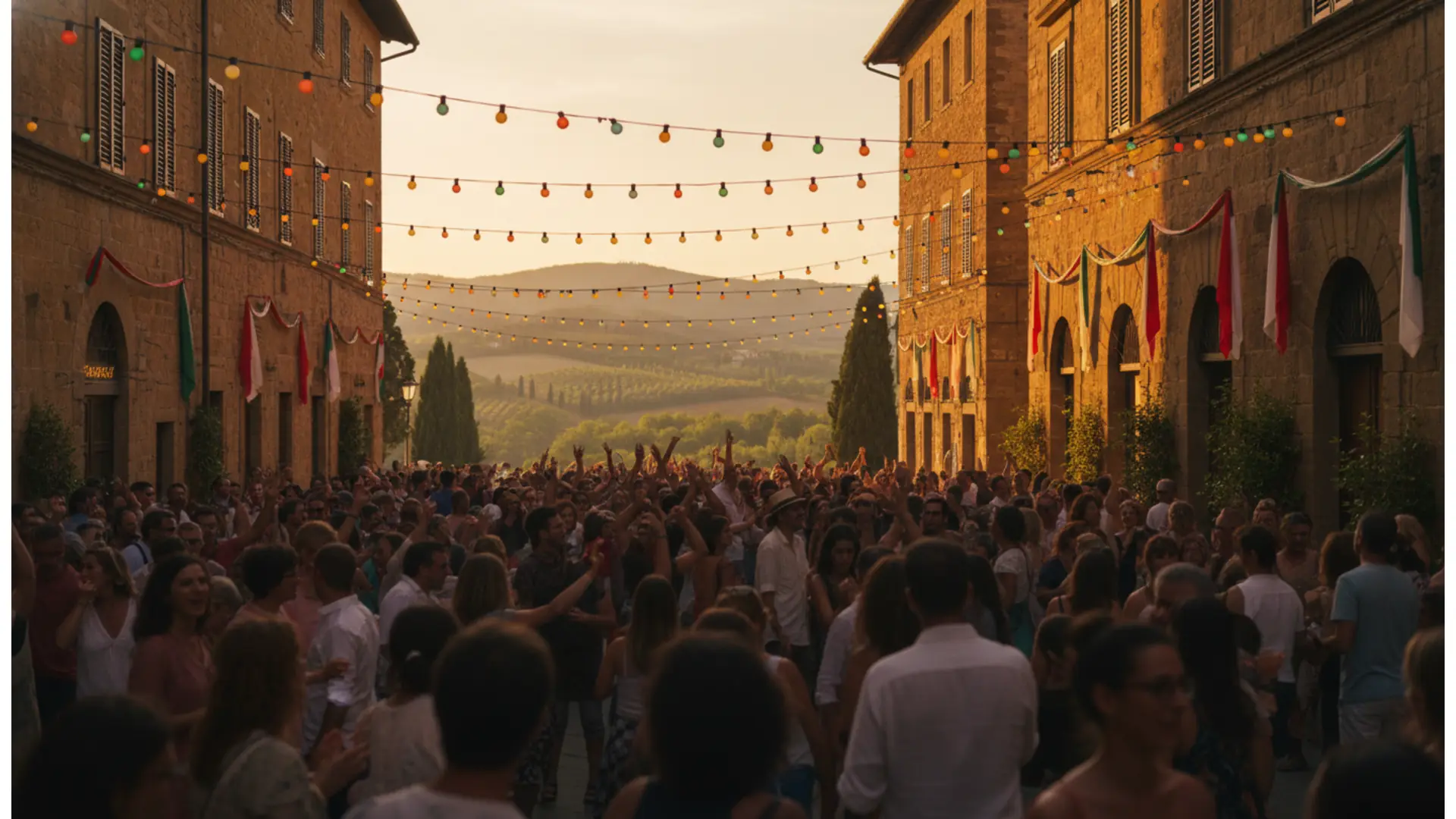
Alongside the religious observances, the Saint Magnus Festival Committee organizes secular events throughout the week of August 19th. These include evenings in the square, live music, illuminations, and convivial moments that bring the village center to life, often drawing back former residents who plan their return for this special time. The detailed program is traditionally released by the Committee and the parish of Saints Nicholas and Matthew shortly before the event.
The calendar of San Mango traditions
The patronal feast is the pinnacle of a calendar of popular events that mark the year in San Mango Piemonte: the Saint Anthony Fair on June 13th, the fusillo al tegamino festival held about a month before the patronal feast, the bonfires on the eve of the Immaculate Conception on December 8th, carnival parades, the living nativity scene, and the animated Stations of the Cross. Visitors in August will find a community that lives its heritage as a daily reality, not as a tourist re-enactment.
What to see nearby
The location of San Mango Piemonte makes it a convenient base for combining the festival with sightseeing. Salerno, with its seafront promenade and Cathedral, is just minutes away, while the Amalfi Coast and the plains of Paestum lie further south. Mount Tubenna itself offers hiking trails with expansive views of the gulf, perfect for those wishing to extend their hermitage visit with a walk.
Saint Magnus Feast — edition 2026
2026 Edition: program not yet published
At the time of writing, no official program has been released for the 2026 edition of the Saint Magnus Patronal Feast in San Mango Piemonte, in the province of Salerno. The dates indicated are therefore to be considered tentative and linked to the liturgical recurrence of the patron saint, traditionally celebrated on August 19th.
What to expect
According to established custom, the day of the patron saint includes a procession to the Hermitage of Saint Magnus with the 18th-century wooden statue and a celebration in front of the cave, while the Saint Magnus Festival Committee organizes secular festivities in the village throughout the week. The detailed program is usually announced close to the event through the Committee, the parish of Saints Nicholas and Matthew, and local channels.
Highlights Saint Magnus Feast 2026
Prices Saint Magnus Feast 2026
Practical information — Saint Magnus Feast
Getting there
By car: San Mango Piemonte is located a few kilometers northeast of Salerno; it can be reached from the Salerno area motorway exits by following provincial roads toward the village. By train: the reference station is Salerno, served by Frecce and Intercity trains, from where you can continue by bus or taxi. By plane: Naples-Capodichino Airport is about an hour away.
The climb to the hermitage
The Hermitage of Saint Magnus is accessible exclusively on foot via a steep trail. Hiking shoes, water, and a hat are highly recommended, and one should account for the mid-August heat. The path is not suitable for strollers or individuals with mobility issues.
Costs
Participation in the procession and religious celebrations is free and open to all, as is access to the secular festivities in the village.
Where to stay
Accommodation options in the small town are limited; it is advisable to stay in Salerno or neighboring towns, which offer quick road connections.
Information
Updated details on the program are released by the Saint Magnus Festival Committee, the parish of Saints Nicholas and Matthew, and the Pro Loco San Mango Piemonte in the weeks leading up to the event.
Festival-goer photos
No photos yet. Share yours!
Share your photos
5 photos max, 5 MB per photo (JPG, PNG, WebP)
Noticed an error or missing information?
Help us keep this listing up to date. Every proposal is verified by our team before publication.
Festival-goer reviews
No rating yet — be the first!
No comments yet. Be the first!
Were you there?
Share your experience with the community.
Published by Valentin Contard, festival listings writer. Reviewed, corrected and approved by Christophe Contard, editor-in-chief. .
Where does it take place — Saint Magnus Feast
Eremo di San Magno e centro storico