Saint George Patronal Festival (Palio di San Giorgio)
The patron saint, the three Rioni, and the village in the shadow of Castello Orsini
Edition 2026 not confirmed to date
This edition has not been confirmed by the organiser to date. We recommend checking before going.
About Palio di San Giorgio
A patronal festival in the heart of the Roman Sabina
April 23rd is the date that has marked life for centuries in Nerola, a small town in the Metropolitan City of Rome Capital, in the Lazio region, nestled at an altitude of 453 meters on the northern slopes of the Lucretili Mountains. It is the day of Saint George the Martyr, the town's patron saint, to whom the parish church of Santa Maria Assunta and San Giorgio Martire is also dedicated. The patronal festival is the moment when the village, located about fifty kilometers from the capital, gathers around its most ancient identity.
The Palio di San Giorgio and the three Rioni
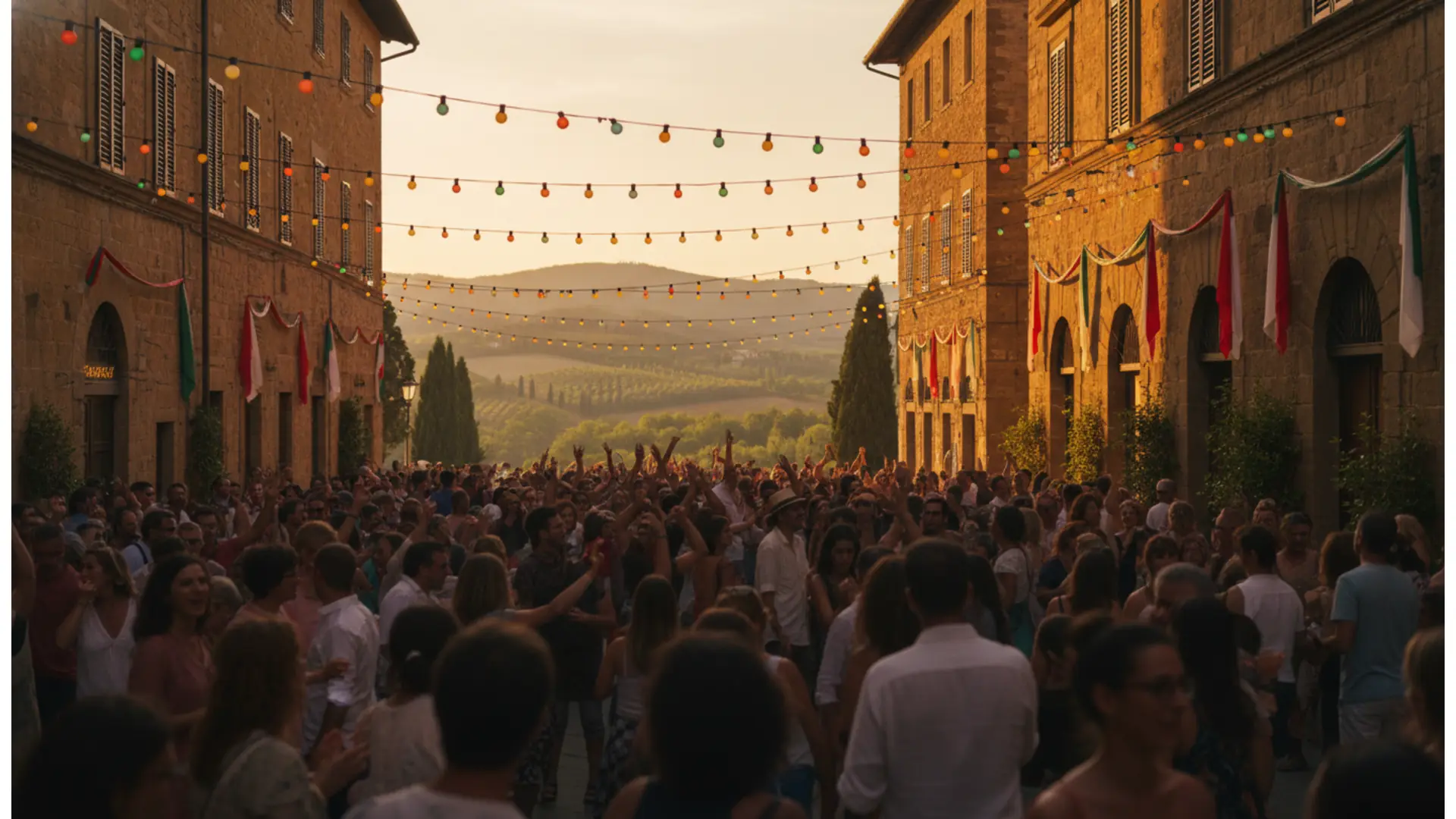
Since 2024, the celebrations have been joined by the Palio di San Giorgio, a historical re-enactment that has brought new energy to the festival. For the occasion, the historic center is decorated with the colors of the village's three Rioni, which compete in a series of traditional games. The contest takes place through the streets and squares of the village, dominated by the bulk of the Castello Orsini, and is enlivened by musical groups, street performers, and food stalls.
- Challenge between the three Rioni in traditional games
- Historical pageant and setting in the old town
- Musical groups and street performers along the route
- Food stalls with local specialties
Participation as players is open to residents and enthusiasts: the local cultural association collects registrations in the weeks leading up to the festival.
The religious aspect and the fair
The devotional heart of the festival remains unchanged. In the days leading up to April 23rd, the Triduum in honor of Saint George is celebrated at the church of San Sebastiano, which houses a 16th-century wooden crucifix. The patron saint's day is traditionally opened by the town band's parade, followed by solemn mass and, in the evening, a fireworks display. In larger editions, the program extends over several days, with live music, karaoke, dance evenings, and the Saint George Fair, a long-standing market event that occupies the town's streets from early morning.
Nerola, the village and its castle
Founded around the year 1000 as Castrum Nerulae by the Crescenzi family, the village later passed to the Orsini family, who transformed the fortress into a noble residence between the 15th and 16th centuries, reinforcing it with massive towers. The town's name is said to derive from the Sabine term nero or nerio, meaning "strong" or "valiant": an etymology that fits well with the spirit of the challenge between the Rioni. Nerola is also located along one of the stages of the Cammino di San Francesco.
Flavors of the Sabina
The festival is also an opportunity to taste local products. The Sabina region is a land of DOP extra virgin olive oil, while local specialties include handmade pasta and fried pizza, a regular star of the evening squares. During the festival days, there are also exhibitions of historical agricultural tools and photographic displays that recount the town's peasant memory.
Why visit
The Palio di San Giorgio is a young event grafted onto an ancient tradition: it does not have the scale of the great Italian palios, but it offers an authentic immersion into the life of a Lazio village, a short distance from Rome and the Abbey of Farfa. A day in April that combines devotion, play, and conviviality.
Palio di San Giorgio — edition 2026
Nerola in celebration on April 23rd, 2026
The calendar for the Nerola patronal festival is set by the liturgical recurrence: Saint George the Martyr is celebrated on April 23rd, a date that fell on a Thursday in 2026. The historic center of the village, in the province of Rome, welcomed as every year the devotional moments dedicated to the patron saint, accompanied by the traditional fair and public initiatives.
Since 2024, the festival has also included the Palio di San Giorgio, the historical re-enactment that dresses the streets of the town in the colors of the three Rioni and pits them against each other in traditional games, amidst musical groups, street performers, and food stalls.
Programme Palio di San Giorgio 2026
The detailed program for the 2026 edition was not released online by the organizers. The consolidated structure of the Nerola patronal festival includes:
- Triduum in honor of Saint George in the church of San Sebastiano in the preceding days
- Parade of the town band on the morning of April 23rd
- Solemn mass in honor of the patron saint
- Palio di San Giorgio: challenge between the three Rioni in traditional games in the historic center
- Entertainment with musical groups and street performers
- Food stalls with Sabina specialties
- Fireworks display at the end
- Saint George Fair along the town streets
For the official program and times, it is recommended to contact the Municipality of Nerola or the local cultural association.
Highlights Palio di San Giorgio 2026
- The challenge between the three Rioni of the Palio di San Giorgio
- The historic center decorated at the foot of the Castello Orsini
- The solemn mass for the patron saint and the fireworks display
- The Saint George Fair and the Sabina food stalls
Prices Palio di San Giorgio 2026
Practical information — Palio di San Giorgio
How to get there
By car: from the A1 Milan-Naples motorway, take the Ponzano Romano-Soratte exit, then follow provincial roads towards Nerola (about 50 km from Rome). Alternatively, take the Via Salaria (SS4) with a detour towards Montelibretti and Nerola.
By train: take the Rome-Fara Sabina/Poggio Mirteto line, then a bus connection to Nerola.
Where it takes place
In the historic center of Nerola: Corso Umberto I, Piazza San Sebastiano, Piazza Municipio, and the streets at the foot of the Castello Orsini.
Admission
Access to the events in the square and the Rioni games is generally free; food and drinks at the stalls are for purchase.
Tips
The village is on a slope and the paving is uneven: comfortable shoes are recommended. Park at the entrance to the town, as the historic center has restricted traffic during the festival.
Information
Municipality of Nerola and local cultural association: tel. +39 320 2214249 / +39 338 9423160, e-mail [email protected].
Festival-goer photos
No photos yet. Share yours!
Share your photos
5 photos max, 5 MB per photo (JPG, PNG, WebP)
Noticed an error or missing information?
Help us keep this listing up to date. Every proposal is verified by our team before publication.
Festival-goer reviews
No rating yet — be the first!
No comments yet. Be the first!
Were you there?
Share your experience with the community.
Where does it take place — Palio di San Giorgio
Centro storico di Nerola
Corso Umberto I, 00017 Nerola