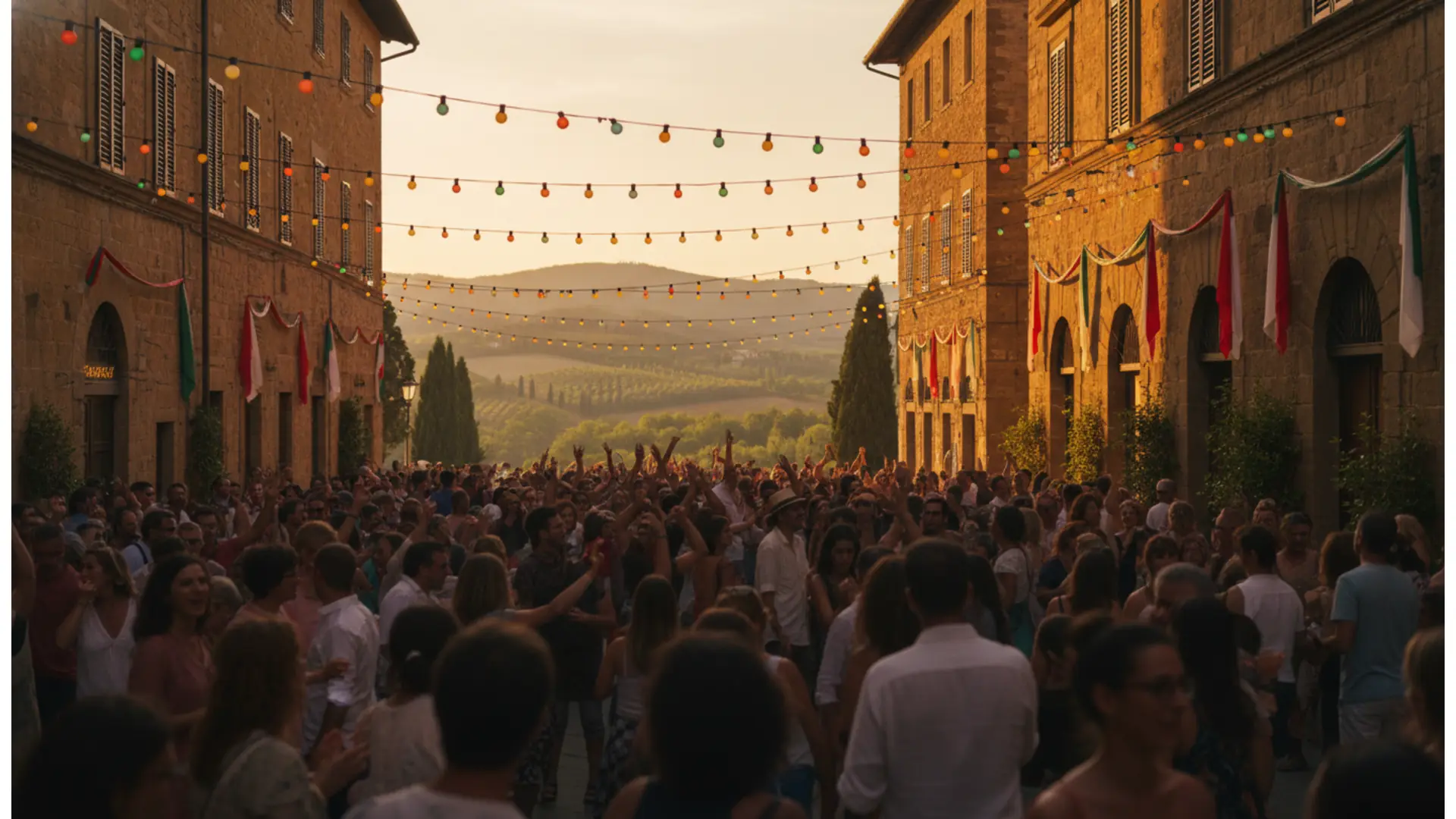
Patronal Feast of Saint Nicholas of Bari
Devotion, processions, and community spirit in a Cilento village on December 6th
Edition 2026 not confirmed to date
This edition has not been confirmed by the organiser to date. We recommend checking before going.
About Saint Nicholas Feast
A winter tradition in the heart of Cilento
Every year on December 6th, Montano Antilia celebrates the Patronal Feast of Saint Nicholas of Bari, an event that signals the start of the Christmas season in this corner of the Cilento hinterland. The village, located in the province of Salerno, Campania, gathers for religious celebrations and a procession, in a day that unites devotion, family memories, and a sense of belonging.
This is not a festival designed for mass tourism: it is a community-focused, sober, and heartfelt occasion that takes place when the village is already wrapped in the cold air of the inland hills and houses are decorated for the upcoming holiday weeks.
Saint Nicholas, an ancient cult rooted in the land
Saint Nicholas of Bari—also venerated as Saint Nicholas of Myra—is among the most beloved figures in Southern Italian popular devotion: protector of children, sailors, and the humble, his liturgical feast falls on December 6th. In the territory of Montano Antilia, the cult has deep roots: the Church of Saint Nicholas of Myra, with its Byzantine layout and later modifications, is one of the oldest buildings in the municipality and bears witness to how deeply the Saint is linked to the history of these places.
The local devotional calendar is particularly rich: alongside Saint Nicholas, the community venerates Saint Sebastian, Saint Montano, and Saint Irene, each with their own feast day. The December festival thus fits into a tapestry of events that mark the village's year.
How the day unfolds
The program follows the traditional structure of Cilento patronal feasts, with both religious and secular elements:
- Liturgical services in the church, featuring a solemn mass dedicated to the Saint;
- Procession through the streets of the town center, with the statue of Saint Nicholas carried among the festively decorated houses;
- Brass band accompanying the procession of the faithful, one of the most moving moments of the day;
- Convivial gatherings among relatives and fellow villagers, featuring traditional Cilento winter dishes.
Times and organizational details are announced annually by the parish and the Municipality, usually in the days immediately preceding the event.
Montano Antilia, the village that hosts the feast
Nestled at an altitude of about 767 meters at the foot of Mount Gelbison, between the Mingardo and Lambro valleys, Montano Antilia has just over 1,600 inhabitants and is part of the Cilento, Vallo di Diano and Alburni National Park. The village, along with the hamlets of Abatemarco and Massicelle, preserves a medieval historic center, the parish of the Most Holy Annunciation with late 17th-century frescoes, and a Holy Staircase, one of the very few in the world. Furthermore, the Filadelfi uprising of 1828, an episode that preceded the Risorgimento, began here.
The flavors of the Cilento winter
December in the Cilento hinterland is the season of new olive oil, chestnuts, walnuts, and legumes. The economy of Montano Antilia has historically been agricultural and forestry-based—cereals, chestnuts, walnuts, olives, grapes, and oak and chestnut timber—and home cooking remains simple and generous: handmade pasta, preserved vegetables, and sweets prepared for the holidays. Participating in the patronal feast also means rediscovering these flavors, both in homes and in the village's few local eateries.
Why it's worth visiting
Those who arrive in Montano Antilia on December 6th will not find a large, spectacular event, but something rarer: a community coming together, the sound of the band echoing through the sloping alleys, and lights glowing in the early winter afternoon. It is the perfect opportunity to discover a side of Cilento different from the summer coastal scene, made of quiet villages, forests, mountains, and traditions that are still very much alive.
Saint Nicholas Feast — edition 2026
2026 Edition: what we know so far
At the moment, there are no official announcements regarding the 2026 edition of the Patronal Feast of Saint Nicholas of Bari in Montano Antilia, in the province of Salerno. The event is linked to the Saint's liturgical feast, which falls on December 6th, but final dates and times must be confirmed with the parish or the Municipality.
What to expect
Based on the village's established tradition, the day should include religious celebrations, a solemn mass, and a procession of the Saint's statue through the town center, accompanied by a brass band and the faithful, with the village houses decorated for the feast.
We will update this page as soon as the calendar and the full program for the 2026 edition are released.
Prices Saint Nicholas Feast 2026
Practical information — Saint Nicholas Feast
How to get there
Montano Antilia can be reached by car along the provincial roads that climb up the Mingardo valley in lower Cilento; from the coast, you can drive up from the Palinuro and Futani area. The most convenient train stations are those on the Tyrrhenian line along the Cilento coast, about thirty kilometers away, from which you can continue by car or local bus services.
Information
Municipality of Montano Antilia — phone +39 0974 951053, official website comune.montano-antilia.sa.it. For mass and procession times, it is best to contact the parish in the days leading up to the feast.
Costs
Participation in the celebrations and the procession is free and open to all.
Tips
The village is located at an altitude of nearly 800 meters: in December, winter clothing and comfortable shoes for the sloping alleys of the historic center are recommended. Parking in the center is limited during the hours of the procession.
Where to stay
Accommodation options in the village are limited: you can find B&Bs and farmhouses in the neighboring municipalities of lower Cilento and facilities open all year round along the coast between Palinuro and Marina di Camerota.
Festival-goer photos
No photos yet. Share yours!
Share your photos
5 photos max, 5 MB per photo (JPG, PNG, WebP)
Noticed an error or missing information?
Help us keep this listing up to date. Every proposal is verified by our team before publication.
Festival-goer reviews
No rating yet — be the first!
No comments yet. Be the first!
Were you there?
Share your experience with the community.
Published by Valentin Contard, festival listings writer. Reviewed, corrected and approved by Christophe Contard, editor-in-chief. .
Where does it take place — Saint Nicholas Feast
Centro storico di Montano Antilia