Patronal Feast of Saint Leo the Great
The patronal feast of Ruviano, in the Alto Casertano area, held every first Sunday of May
About Saint Leo the Great in Ruviano
The Patron Saint of Ruviano
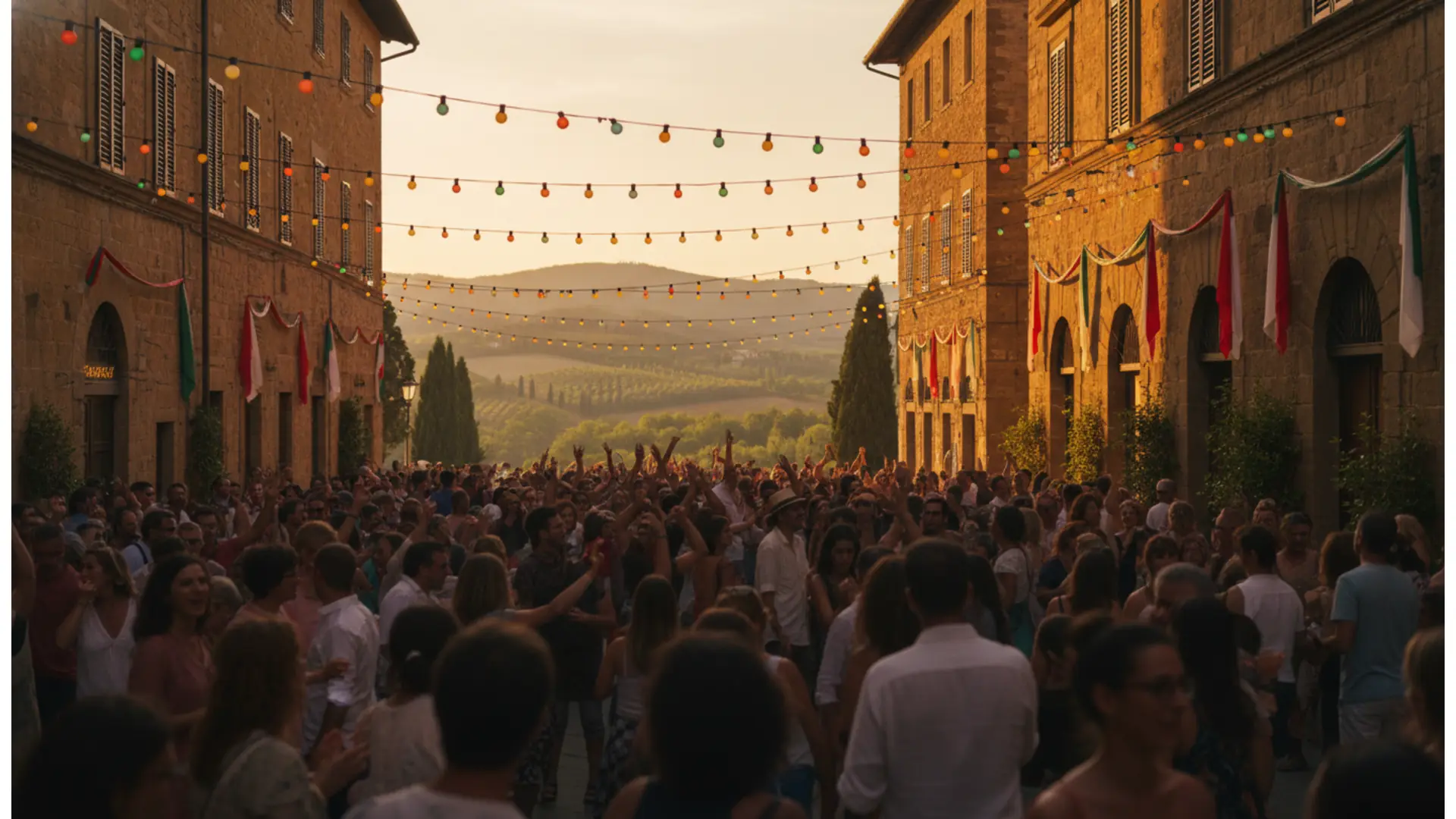
In the Municipality of Ruviano, in the Province of Caserta, in the heart of the Alto Casertano region overlooking the Volturno valley, the Patronal Feast of Saint Leo the Great is the most anticipated event of the year. Every first Sunday of May, over seventeen hundred residents fill the square and the town streets to honor Pope Leo the Great, the titular saint of the parish church and patron of the community, who is also celebrated on November 10th for his liturgical feast day. It is one of those patronal festivals in inland Campania that does not need huge crowds to be memorable: a brass band playing through the streets at dawn, a sunset procession, and a square full of people until late at night are all it takes.
Seven Centuries of Devotion
The devotion of Ruviano to Saint Leo the Great has roots dating back to the Middle Ages. The oldest written record of the church dates to 1326, when the Vatican archives mention the «ecclesia Sancti Leonis de Rayano»: this is one of the oldest parish dedications to Pope Leo the Great in Italy. The current building dates back to the 18th century and stands next to the site of the original church, while an Angevin-era collection plate from Ruviano is kept in storage at the Museo Campano in Capua.
The Religious Heart of the Feast
The liturgical schedule marks the entire week. The solemn triduum begins on the Thursday before the first Sunday of May with the recitation of the Rosary at 6:00 PM, Holy Mass at 6:30 PM, and the Novena, continuing with the same schedule in the following days. Sunday is the main day: morning Eucharistic celebrations, the procession with the patron saint through the town streets in the late afternoon, and, subsequently, the solemn Mass presided over by the bishop. The celebrations are organized by the parish priest Monsignor Antonio Chichierchia together with the Festival Committee.
Evenings in the Square
Alongside the liturgy runs the secular program, entirely outdoors and free of charge. Every evening, around 9:00 PM, the square hosts a different show: light music, cabaret, and groups from the Campania folk tradition. On Sunday, the rhythm changes as early as 8:00 AM with the arrival of the brass band, and it ends on a high note with the fireworks display, the charity lottery drawing, and the final concert in the square. Festive lights, market stalls, and the classic exchange of greetings among fellow villagers complete an atmosphere that remains that of the village festivals of yesteryear.
A Community That Gets Involved
One of the most recognizable features of the Ruviano festival is the leading role played by young people. The parish liturgical group handles the organization firsthand, supported by the Youth City Council: in recent years, a soccer tournament has been established on the parish field, open to local teams and supported by local merchants, as well as a photo exhibition set up in the church regarding the cult of Saint Leo the Great and the devotion to the patron, covering history, art, architecture, and papal magisterium. The municipal administration, the parish, and the citizens work side by side: this is the simple and effective formula that keeps the festival alive.
2026 and the 700 Years of the Parish
The 2026 edition, celebrated from April 30 to May 3, had a special significance: the community celebrated the 700th anniversary of the first documentary evidence of the parish, with an enriched program and the presence of Bishop Monsignor Giacomo Cirulli on the day of the solemn feast. An anniversary that gave the usual recurrence the flavor of a historic date for the town.
Ruviano and the Alto Casertano
Ruviano is located along the course of the Volturno river, in the inland area of the Province of Caserta, a short distance from Caiazzo and the mountains that lead to the Matese range. It is a territory of cultivated hills, olive groves, and small villages, little touched by mass tourism and therefore ideal for those seeking the most authentic Campania. The feast of Saint Leo the Great is the best opportunity to discover it: you arrive in town and you are immediately inside it, without barriers, between a stroll in the square, a chat, and the sound of the band.
Saint Leo the Great in Ruviano — edition 2026
An anniversary that happens once every seven centuries
The 2026 patronal feast of Ruviano was planned by the parish and the Festival Committee as a true local jubilee year: in 1326, the first mention of the «ecclesia Sancti Leonis de Rayano» appeared in the Vatican archives, and 2026 marked its seventh centenary. The parish priest Monsignor Antonio Chichierchia led a program that intertwined liturgy, historical memory, and civil celebration.
The days of the festival
From April 30, the town experienced the solemn triduum, with the Rosary, Holy Mass, and Novena every afternoon and a different show in the square every evening. Sunday, May 3, the main day, saw the Airola brass band arrive at 8:00 AM, Eucharistic celebrations held at 8:30 AM and 11:00 AM, the procession with the patron saint starting at 6:00 PM, followed by the Mass presided over by Bishop Monsignor Giacomo Cirulli. In the evening, fireworks, the lottery drawing, and the final concert.
Young people at the center
Setting the tone for the edition were above all the young people of the parish liturgical group, who organized a photo exhibition in the church dedicated to the cult of Saint Leo the Great and a soccer tournament on the parish field, played on May 1st with five teams and over thirty participants, together with the Youth City Council.
Programme Saint Leo the Great in Ruviano 2026
Thursday, April 30, 2026
- 6:00 PM — Recitation of the Rosary, opening of the solemn triduum in honor of Saint Leo the Great
- 6:30 PM — Holy Mass and Novena
- 9:00 PM — Musical show «Le Stelle Italiane» in the square
Friday, May 1, 2026
- In the afternoon — Rosary, Holy Mass, and Novena
- Soccer tournament on the parish field for the 700 years of the parish (five teams, over thirty youths), with field blessing
- 9:00 PM — Cabaret evening with «Arteteca»
Saturday, May 2, 2026
- In the afternoon — Rosary, Holy Mass, and Novena
- 9:00 PM — Musical show with «I Bottari», a group from the folk tradition
Sunday, May 3, 2026 — Day of the solemn feast
- 8:00 AM — Arrival of the Airola brass band
- 8:30 AM and 11:00 AM — Eucharistic celebrations
- 6:00 PM — Procession with the patron saint through the town streets
- Following — Holy Mass presided over by Bishop Monsignor Giacomo Cirulli
- 8:30 PM — Fireworks display
- 9:00 PM — Charity lottery drawing
- 9:30 PM — Concluding musical evening with «Domenico and his accordion»
Throughout the festival
- Photo exhibition in the church on the cult of Saint Leo the Great and the devotion to the patron
Highlights Saint Leo the Great in Ruviano 2026
- The 700 years of the parish: in 1326 the first attestation of the «ecclesia Sancti Leonis de Rayano» in the Vatican archives
- The procession on Sunday at 6:00 PM and the Mass presided over by Bishop Monsignor Giacomo Cirulli
- The arrival of the Airola brass band at 8:00 AM on Sunday
- The evening with «I Bottari», among the most representative groups of the Campania folk tradition
- The cabaret with «Arteteca» on May 1st in the square
- The fireworks display and the lottery drawing at the end of Sunday
- The youth soccer tournament and the photo exhibition on the cult of the patron
Prices Saint Leo the Great in Ruviano 2026
Practical information — Saint Leo the Great in Ruviano
When
The festival takes place every year on the occasion of the first Sunday of May, with a triduum and evening events in the days immediately preceding it. In 2026, the events were held from April 30 to May 3.
Where
Parish Church of Saint Leo the Great and the central square of Ruviano (Postal Code 81010), Province of Caserta, Campania.
How to get there
- By car: Take the Caianello or Caserta Nord exit on the A1 motorway, then follow provincial roads towards the Volturno valley; the town is also reachable from Caiazzo and Alvignano.
- By train: The Alifana/Naples-Piedimonte Matese regional line serves the towns of the Volturno valley; from there, continue by car or local bus.
- By plane: Naples-Capodichino airport, about an hour's drive away.
Admission and costs
All religious events and shows in the square are free: no fees are indicated in the consulted sources. Only purchases at the market stalls and charity lottery tickets are paid.
Tips
- The town is small: it is advisable to arrive early on Sunday evening and park along the access roads, then move on foot.
- For updated times of masses, the procession, and shows, refer to the poster posted in town and distributed by the parish.
- There is no shortage of farmhouses and accommodation facilities in the surrounding area between Caiazzo, Alvignano, and the Volturno valley.
Festival-goer photos
No photos yet. Share yours!
Share your photos
5 photos max, 5 MB per photo (JPG, PNG, WebP)
Noticed an error or missing information?
Help us keep this listing up to date. Every proposal is verified by our team before publication.
Festival-goer reviews
No rating yet — be the first!
No comments yet. Be the first!
Were you there?
Share your experience with the community.
Published by Valentin Contard, festival listings writer. Reviewed, corrected and approved by Christophe Contard, editor-in-chief. .
Where does it take place — Saint Leo the Great in Ruviano
Chiesa Parrocchiale di San Leone Magno e piazza del paese