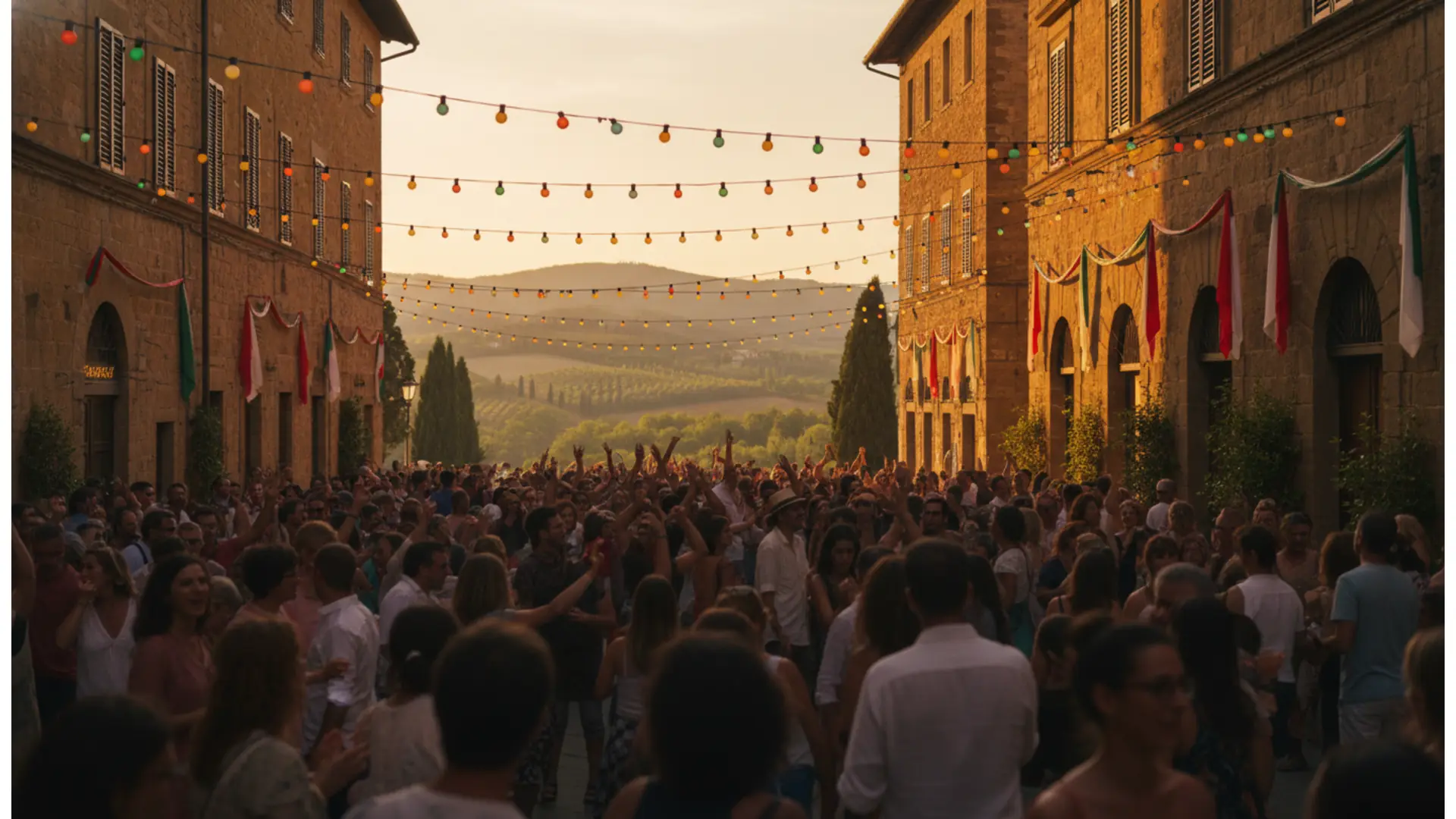
Maggio di Pizzofalcone
A month of tours, walks, and performances on the hill where Parthenope was born
About Maggio di Pizzofalcone
The month when Pizzofalcone opens up to the city
Every May, the Pizzofalcone hill, the tuff promontory overlooking the Gulf of Naples between Chiaia and Santa Lucia, becomes the hub of a widespread cultural festival. Maggio di Pizzofalcone is conceived and organized directly by Municipality I of the City of Naples—which encompasses the districts of Chiaia, San Ferdinando, and Posillipo—with the support of the Department of Tourism and Productive Activities. For four weeks, churches, libraries, archives, historic palaces, and viewpoints open their doors to citizens and visitors alike, hosting guided tours, theatrical and musical performances, photo exhibitions, and readings.
Where Parthenope was born
The heart of the event is Monte Echia, the height that, according to tradition, hosted the city's first settlement—the Parthenope of the Greek colonists—before the founding of Neapolis. Walking here means traversing over twenty-five centuries of history in just a few hundred meters: the cavities carved into the tuff, the viceregal palaces of Monte di Dio, the Nunziatella Military School, the Bourbon Tunnel, and the belvedere overlooking Castel dell'Ovo, the harbor, and Mount Vesuvius. The festival was created specifically to restore public and daily access to a heritage that is often little-known even to Neapolitans.
A widespread festival across churches, archives, and palaces
The program moves each year between dozens of locations within the First Municipality, many of which are normally closed to the public or accessible only by appointment. Among the venues involved in recent editions:
- Monte Echia and its Belvedere, with the natural amphitheater used for evening shows;
- the Nunziatella Military School and the church of SS. Annunziata with its annexed museum spaces;
- the Basilica of Santa Maria degli Angeli a Pizzofalcone and the church of Santa Maria Egiziaca;
- the Sanctuary of the Immaculate Conception on Monte Echia;
- the National Library of Naples and the State Archives;
- the Parisio Photographic Archive, MUSAP, and the Bourbon Tunnel;
- urban spaces such as Piazza del Plebiscito, Via Chiaia, Piazza Santa Maria degli Angeli, and Castel dell'Ovo.
What the program includes
The format alternates between different styles: archaeological itineraries led by scholars and associations like the Archeoclub d'Italia, extraordinary openings of institutional sites, book presentations, meetings on Neapolitan culinary culture, choral concerts in the basilicas, and theatrical and musical performances at sunset on Monte Echia. The artistic direction is entrusted to Marco Panico. Alongside the more spectacular events, there are narrative neighborhood walks designed to recount the life of Via Chiaia and its alleyways through the voices of those who live and work there.
A project built with the local community
One of the hallmarks of Maggio di Pizzofalcone is its method: every year, Municipality I publishes a public call for project proposals to be included in the calendar, opening the festival to cultural associations, neighborhood committees, schools, and private operators. The result is a collective program that changes from year to year, weaving together historical dissemination, civic memory, and new participatory practices. The President of the Municipality, Giovanna Mazzone, has emphasized how the public's response demonstrates the neighborhood's need for culture, identity, and participation.
Part of the Maggio dei Monumenti calendar
The festival is part of the broader Maggio dei Monumenti calendar, the major event through which the City of Naples opens its heritage to thematic tours and itineraries every spring. For those arriving from out of town, it is the ideal opportunity to get to know a different side of Naples, away from the most beaten paths: not the ancient center of Spaccanapoli, but the hill looking out to sea, with its convents, eighteenth-century palaces, and panoramas. Naples, the capital of Campania and the homonymous Metropolitan City, displays here the stratification that makes it unique in Italy.
Who it is designed for
The events are suitable for a wide audience: families, history and archaeology enthusiasts, urban walkers, and tourists staying in the Chiaia and Santa Lucia areas. Almost all initiatives are free of charge, but places are limited and booking is almost always mandatory: it is advisable to check the program as soon as it is published by the City of Naples, usually at the end of April.
Maggio di Pizzofalcone — edition 2026
A broader edition
The 2026 edition, the third consecutive one, expanded the festival's scope to the three districts of the First Municipality—Chiaia, San Ferdinando, and Posillipo—introducing historical and narrative walks along Via Chiaia and the use of Piazza Santa Maria degli Angeli as a space for public discussion. The artistic direction was entrusted to Marco Panico.
Institutions and territory
Alongside Municipality I, the National Library of Naples, the Nunziatella Military School, the Parisio Photographic Archive, the Archeoclub d'Italia, the Bourbon Tunnel, and various neighborhood associations collaborated, selected also through the public call for project proposals. Almost all events were free with mandatory booking.
Programme Maggio di Pizzofalcone 2026
Artistic direction: Marco Panico. Bookings: [email protected]
- May 4-14 — Parisio Photographic Archive exhibition in the Portico of San Francesco di Paola, Piazza del Plebiscito: shots by Studio Parisio and other authors ([email protected]).
- May 5, 12, 19, and 26 — "Pizzofalcone on Paper", guided tours of the National Library of Naples ([email protected]).
- May 8 and 9 — Extraordinary openings of the Nunziatella Military School, with guided tours of the church of SS. Annunziata and annexed museum spaces.
- May 14-30 — "Cuciture: Chiaia Street Stories", installation and photographic narrative along Via Chiaia.
- May 14 and 28 — Free narrative walks along Via Chiaia, mandatory booking ([email protected]).
- May 17 — Artistic and spiritual itinerary between the Basilica of Santa Maria degli Angeli, the church of Santa Maria Egiziaca a Pizzofalcone, and the Sanctuary of the Immaculate Conception on Monte Echia.
- May 20 — Presentation of the book "Una, nessuna, duemilacinquecento Napoli" at Palazzo Zapata.
- May 21 — "L'arte presa per la gola", meeting dedicated to coffee at Al Blu di Prussia ([email protected]).
- May 22 — "in…CANTANO", choral event in the Basilica of Santa Maria degli Angeli.
- May 24, 30, and 31 — "In the belly of Parthenope", archaeological walks curated by the Archeoclub d'Italia.
- May 26 — "Generations compared before a book", in Piazza Santa Maria degli Angeli, curated by the TempoLibero association.
- May 27 — Award ceremony of the historical memory competition at Palazzo Zapata.
- May 29 — "Armonia in scena", theatrical performance at Monte Echia directed by Lello Pipolo.
- May 30 — "Fare pace – Il racconto", narrative event at Monte Echia curated by Giuseppe Ferraro.
- May 31 — "Festa a Palazzo Carafa", Renaissance music and dances at the Bourbon Tunnel, entrance from Via Monte di Dio 14.
Highlights Maggio di Pizzofalcone 2026
- Extraordinary openings of the Nunziatella Military School on May 8th and 9th, with the church of SS. Annunziata and its museum spaces.
- "In the belly of Parthenope" archaeological walks between Castel dell'Ovo, Monte Echia, and Piazza del Plebiscito.
- "Armonia in scena", the theatrical performance on May 29th in the natural amphitheater of Monte Echia.
- The closing event on May 31st with the "Festa a Palazzo Carafa", featuring Renaissance music and dances at the Bourbon Tunnel.
- The Parisio Photographic Archive exhibition in the Portico of San Francesco di Paola, overlooking Piazza del Plebiscito.
Prices Maggio di Pizzofalcone 2026
Practical information — Maggio di Pizzofalcone
How to get there
The Pizzofalcone hill can be reached on foot from Piazza del Plebiscito or Via Chiaia. By metro, Line 1 stops at Toledo or Municipio; the Central Funicular connects Via Toledo to Vomero, and the Chiaia Funicular leads to Corso Vittorio Emanuele. Numerous bus lines serve Via Acton and Piazza Municipio. Those arriving by train should get off at Napoli Centrale and continue with Metro Line 1; from Capodichino Airport, the connection is guaranteed by the Alibus.
Getting around during the festival
Events are distributed across a hilly area: routes include inclines, stairs, and cobblestones. Comfortable shoes are recommended. Private cars are not recommended due to traffic and the difficulty of parking in the Monte di Dio area.
Bookings and information
Bookings and general information: [email protected]. Municipality I of the City of Naples, tel. +39 081 7951743 / +39 081 7951750, e-mail [email protected]. Updates are available on the social media pages of Municipality I and the City of Naples website.
Tips
Some tours (National Library, Nunziatella Military School) have very limited spots and sell out in a few days: it is best to write as soon as the program is released. Sunset from the Monte Echia Belvedere is one of the best times for evening shows.
Festival-goer photos
No photos yet. Share yours!
Share your photos
5 photos max, 5 MB per photo (JPG, PNG, WebP)
Noticed an error or missing information?
Help us keep this listing up to date. Every proposal is verified by our team before publication.
Festival-goer reviews
No rating yet — be the first!
No comments yet. Be the first!
Were you there?
Share your experience with the community.
Published by Valentin Contard, festival listings writer. Reviewed, corrected and approved by Christophe Contard, editor-in-chief. .
Where does it take place — Maggio di Pizzofalcone
Collina di Pizzofalcone e Monte Echia