Liminaria
Art, sound, and rural technocultures in the Caudine Valley
About Liminaria
An international festival in the inland areas of Campania
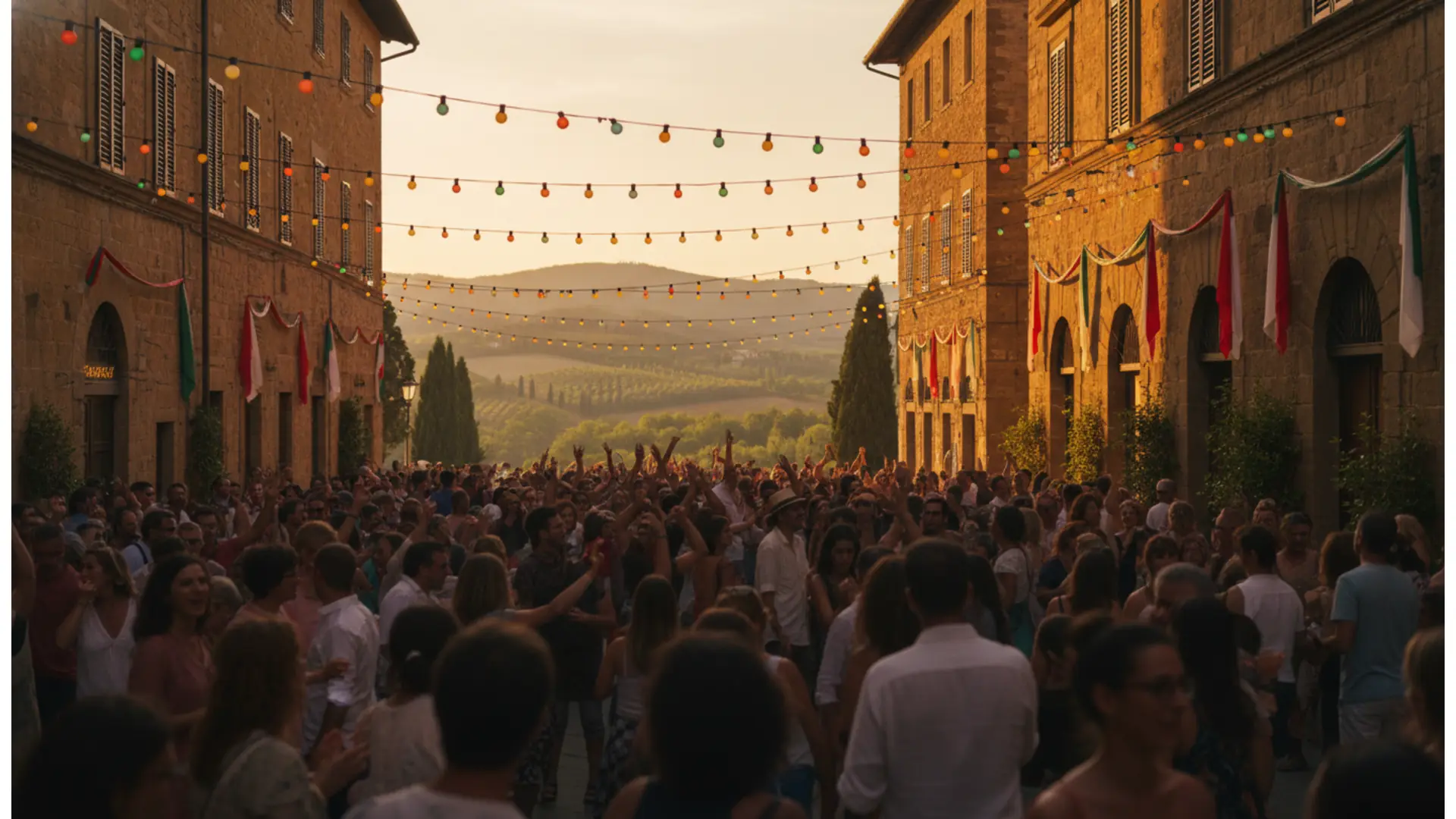
Liminaria is an international festival of art, sound, and rural technocultures established in 2014 as a curatorial platform dedicated to the marginalized territories of Southern Italy. The project, conceived and curated by critic and curator Leandro Pisano, connects international artists and researchers with the landscapes of the Campanian Apennines, transforming villages, trails, and abandoned spaces into genuine hubs of contemporary cultural production. It is not a one-off summer event, but a long-term endeavor built alongside the communities that inhabit these valleys.
San Martino Valle Caudina, the heart of the project
The municipality of San Martino Valle Caudina, in the province of Avellino, is now the center of gravity for Liminaria. Here you will find the Ducal Palace and the Caudine Center for the Contemporary, the spaces that host meetings, installations, concerts, and screenings, alongside the former Italian Left Section. However, the festival does not remain confined to a single village: it crosses the Caudine Valley and the Sannio region, also reaching Cervinara, San Marco dei Cavoti, and Cautano, in a cultural geography that unites the provinces of Avellino and Benevento in the heart of Campania.
Hauntologica: what returns in rural landscapes
The current cycle is titled Hauntologica and is dedicated to the presences that inhabit rural territories across space and time. The trace, the residue, the abandoned infrastructure, the recorded voice of those who are no longer here: everything that seems to have disappeared continues to work on the landscape and shape it. Through sound, media, and technocultures, Liminaria attempts to make this stratification audible, reading the rural not as a lagging periphery, but as a critical stance on the present.
Artist residencies, workshops, and the Metarural School
The festival is structured as a layered program that alternates between work sessions and public moments:
- micro-artist residencies in the various municipalities involved, with site-specific interventions created on the territory;
- the Metarural School, a space for training and discussion dedicated to the languages of contemporary rurality;
- the radio and sound composition workshop KIN – Sound Weavings, led by Roberto Paci Dalò in collaboration with Usmaradio;
- soundwalks and guided listening sessions in the agricultural and wind-swept landscapes of the Apennines;
- roundtables with scholars, curators, and administrators on cultural policies for inland areas.
Live music, cinema, and visual arts
The final weekend concentrates the most spectacular part of the program: audiovisual performances, electroacoustic live sets, and DJ sets that continue late into the night in the gardens and halls of the Ducal Palace. Alongside the concerts, there are installations, documentary film screenings, and editorial presentations in a deliberately multidisciplinary format. The atmosphere is intimate, far removed from large festivals with thousands of people: you listen, discuss, and have a drink with the artists, often just a few meters away.
Who organizes Liminaria
The festival is promoted by the Interzona Cultural Association APS, based in San Martino Valle Caudina, the same organization that has been conducting research on sound, electronic arts, and rurality in Campania since 2003. Curatorship is entrusted to Leandro Pisano with Martina Macchia and Tommaso Nudo. Over the years, the project has built a network of institutional and academic partners including the Donnaregina Foundation/MADRE Museum of Naples, the University of Salerno, the Master in Environmental Humanities at Roma Tre University, the Partenio Regional Park, and ARCI Benevento.
Why it is worth it
Liminaria is arguably the most interesting way to discover the Caudine Valley outside of classic tourist circuits. Those who arrive here find a festival that does not merely bring international artists to the province, but uses contemporary art to tell the story of Irpinia and Sannio from the inside: the springs, the streams, the wind turbines, the depopulating villages, and the communities that resist. An experience recommended for those who love sound art, documentaries, and places that reveal themselves slowly.
Liminaria — edition 2026
Liminaria MMXXVI – Hauntologica
The 2026 edition of Liminaria was spread over five days, from Tuesday, July 21 to Saturday, July 25, following the festival's now-established formula: a first part distributed across the territory, consisting of micro-residencies and evening events in the various municipalities, and a final weekend concentrated in San Martino Valle Caudina, among the gardens and halls of the Ducal Palace, the Caudine Center for the Contemporary, and the former Italian Left Section.
The title Hauntologica guided the entire program: an investigation into the presences that continue to inhabit rural territories, the traces that return, and what remains unfinished in the contemporary ecologies of the Campanian Apennines. Around this thread, visual arts, sound research, documentary cinema, radio, and critical reflection were intertwined.
The program involved artists and scholars from Italy, Japan, Australia, and Sweden, curated by Leandro Pisano together with Martina Macchia and Tommaso Nudo, and supported by a network of partners including the Donnaregina Foundation/MADRE Museum, the University of Salerno, the Master in Environmental Humanities at Roma Tre, the Partenio Regional Park, and ARCI Benevento.
Programme Liminaria 2026
Tuesday, July 21 — San Martino Valle Caudina and Cervinara
- 7:00 PM, «Gianni Raviele» Council Chamber: inaugural lecture by Leandro Pisano Energy Territories. Listening after extraction
- Following: opening of the fifth edition of the Metarural School and presentation of the KIN – Sound Weavings workshop by Roberto Paci Dalò, with contributions from artists Sara Persico, Django Burdeau, and Robert Willim
- 9:00 PM, Cervinara, via Aia de Panno 29: screening of the film REAL by Adele Tulli, with commentary by Jacopo Babuscio
Wednesday, July 22 — San Martino Valle Caudina and Cervinara
- 10:00 AM, Caudine Center for the Contemporary: continuation of the KIN workshop with a guided listening session led by Roberto Paci Dalò
- 6:00 PM, Council Chamber: roundtable Life downwind. Building utopias in inland contexts, with Chiara Pisano, Paolo Bosca, and students from the Master in Environmental Humanities at Roma Tre University
- 9:00 PM, Cervinara: screening of Me ne vado e divento Papa by Antonello Carbone, in the presence of the director
Thursday, July 23 — Fortore and Sannio
- Soundwalk in the wind-swept landscapes of the Fortore with Philip Samartzis, between San Marco dei Cavoti and Cautano
- DJ set by Tommaso Nudo
Friday, July 24 — San Martino Valle Caudina
- Morning: final phase of the international workshop Sound Steps / KIN – Sound Weavings
- Opening of the installation What remains of those we never met? by Irene Macalli
- 5:00 PM, Ducal Palace gardens: greetings from Mayor Pasquale Pisano and talk The rural as a position, on art and cultural policies in inland areas
- 6:00 PM: roundtable Images that return, dedicated to archives, memory, and contemporary imagination, with Angela Tecce and artists Giliberti, Macalli, and Por; preview of the film installation Pompeii Sequence I by Giacomo Por
- Evening: audio-performance Geomorphologies by Philip Samartzis and Emanuele Errante; live set by Roberto Paci Dalò and Vittoria Assembri; DJ set by Gamino
Saturday, July 25 — San Martino Valle Caudina
- Public broadcast of Radio Improvvisata (ma non troppo) with Felice Cimatti, aired on Usmaradio
- Presentation of the magazine IMPURE – Journal of Art and Anthropology
- Audiovisual performance Mundania Caudina by Robert Willim
- Live sets by Nicola Di Croce and Sara Persico
- Closing DJ set by Elisa Batti
Highlights Liminaria 2026
- The inaugural lecture by Leandro Pisano Energy Territories. Listening after extraction, which set the tone for the entire edition
- The soundwalk by Philip Samartzis in the wind-swept landscapes of the Fortore, between San Marco dei Cavoti and Cautano
- The audio-performance Geomorphologies by Philip Samartzis and Emanuele Errante in the gardens of the Ducal Palace
- The audiovisual performance Mundania Caudina by Swedish artist Robert Willim, produced on-site
- The radio broadcast Radio Improvvisata (ma non troppo) with Felice Cimatti on Usmaradio
- The two final evenings of live sets and DJ sets with Roberto Paci Dalò, Vittoria Assembri, Nicola Di Croce, Sara Persico, Gamino, and Elisa Batti
Prices Liminaria 2026
Practical information — Liminaria
How to get there
By car: San Martino Valle Caudina is located along the SS7 Appia state road, which connects Naples to Benevento crossing the Caudine Valley; from the A16 Naples-Canosa motorway, the most convenient exit is Avellino Ovest. By train: the town is served by the EAV Naples-Benevento railway line via the Caudine Valley, with a stop at San Martino Valle Caudina. By plane: the reference airport is Naples Capodichino, just over an hour's drive away.
Where it takes place
The main events are held at the Ducal Palace, the Caudine Center for the Contemporary, and the Town Hall Council Chamber, all in the center of San Martino Valle Caudina and within walking distance. Some days move to Cervinara, San Marco dei Cavoti, and Cautano: for these trips, a car is essential.
Tickets
Admission to events is free. For workshops and listening sessions, it is advisable to contact the organization in advance.
Tips
The evenings take place outdoors: even in the height of summer, the temperature in the Apennines drops significantly after sunset, so it is best to bring a sweater. For soundwalks, light hiking shoes and a water bottle are needed.
Contacts
Interzona Cultural Association APS, Via Frattasi 20, 83018 San Martino Valle Caudina (AV) — [email protected]
Festival-goer photos
No photos yet. Share yours!
Share your photos
5 photos max, 5 MB per photo (JPG, PNG, WebP)
Noticed an error or missing information?
Help us keep this listing up to date. Every proposal is verified by our team before publication.
Festival-goer reviews
No rating yet — be the first!
No comments yet. Be the first!
Were you there?
Share your experience with the community.
Published by Valentin Contard, festival listings writer. Reviewed, corrected and approved by Christophe Contard, editor-in-chief. .
Where does it take place — Liminaria
Palazzo Ducale e Centro Caudino del Contemporaneo