La Madonna che Véle
The Easter ritual of the Madonna who flies to meet the Risen Christ in Introdacqua
About La Madonna che Véle
The ritual of the Madonna who flies
Every Easter Sunday, the small village of Introdacqua, in the province of L'Aquila, renews one of the most intense and poignant rituals of the Abruzzo Holy Week: La Madonna che Véle. This is not merely a folkloric event, but a popular representation of the Resurrection deeply rooted in the community, preserved and passed down by the local confraternities. The uniqueness lies in the name itself: here, the Madonna does not «run» (as in nearby Sulmona), but véle, meaning she flies to meet her risen Son.
The Volata in the square
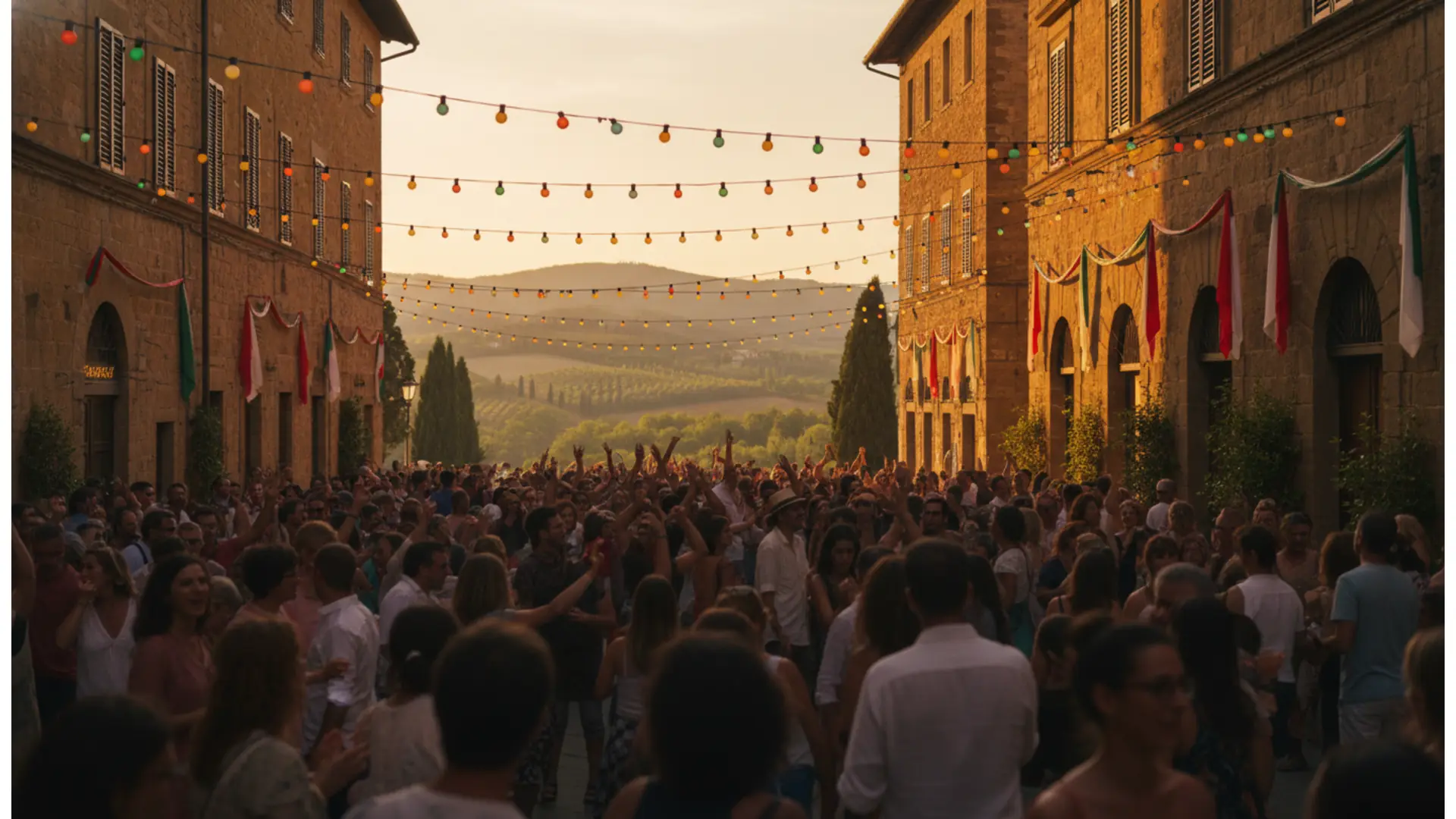
At noon, the historic square fills with a crowd in breathless anticipation. From the Salita di San Rocco, the statue of the Madonna dressed in mourning slowly emerges, carried on the shoulders of four young men—an honor earned through a public auction held before the festival deputies. The Virgin advances toward the opposite side of the square, where the statue of the Risen Christ awaits. When the Risen Christ enters her line of sight halfway through the square, the bearers launch into the Volata: an increasingly fast run across the square amidst the sound of firecrackers, festive church bells, and the local band. At that moment, the black mourning mantle falls from the statue's shoulders, and she reappears in her traditional sky-blue dress, while a rose magically appears in her hands, replacing the handkerchief of tears.
The procession and the confraternities
After the moving encounter between the Madonna and her risen Son, a grand procession winds through the main streets of the village, followed with devotion by the two confraternities, city authorities, and the entire community. The organization of the ritual is entrusted to the Archconfraternity of the Most Holy Trinity, which guards its memory and oversees every detail, from the selection of the bearers to the dressing of the statue.
An ancient ritual between the sacred and the symbolic
According to scholars, the tradition of La Madonna che Véle in Introdacqua dates back to the second half of the 19th century, with roots that some trace back to the late 1700s. It belongs to the broad family of Abruzzo rituals known as the «Madonna che scappa» (the Madonna who runs), of which the one in Sulmona, in Piazza Garibaldi, is the most famous and spectacular example. In all these rituals, the mourning mother, incredulous at the resurrection of her Son, finally rushes toward him, abandoning her black veil and revealing her luminous dress: a powerful symbol of the victory of life over death and the renewal of spring.
Introdacqua, one of Italy's most beautiful villages
The ritual takes place in the heart of Introdacqua, a medieval village in the Peligna Valley at the foot of Mount Rotella, recognized as one of the Most Beautiful Villages in Italy. Located just a few kilometers from Sulmona, in Abruzzo, the village offers visitors alleys, churches, and squares that provide a suggestive backdrop for one of the most authentic Easter celebrations in the region. The falling of the statue is considered a bad omen: such episodes are remembered with unease from the years 1953, 1981, and 2004, testifying to how deeply the community experiences every single Volata.
La Madonna che Véle — edition 2026
2026 Edition
On Sunday, April 5, 2026, Easter Day, the La Madonna che Véle ritual was renewed in the historic center of Introdacqua before a massive crowd of about a thousand people who gathered in the square. At noon, the statue of the Madonna dressed in mourning emerged from the Salita di San Rocco, carried on the shoulders of four young men, before rushing into the Volata toward the Risen Christ amidst the sound of firecrackers, church bells, and the local band. At the climax, the black mantle fell from the Virgin's shoulders, revealing her sky-blue dress and the rose in her hands. Following this, the solemn procession wound through the village streets with the two confraternities and the authorities.
Programme La Madonna che Véle 2026
Sunday, April 5, 2026 (Easter)
- Noon — Exit of the statue of the mourning Madonna from the Salita di San Rocco, carried on the shoulders of four young men.
- Advance toward the Risen Christ and, halfway through the square, the Volata: a frantic run amidst firecrackers, bells, and the local band. The black mantle falls, revealing the sky-blue dress and the rose.
- Following — Grand procession along the main streets of the village with the two confraternities, city authorities, and the community.
Ritual organized by the Archconfraternity of the Most Holy Trinity.
Highlights La Madonna che Véle 2026
Prices La Madonna che Véle 2026
Practical information — La Madonna che Véle
How to get there
Introdacqua is located in the province of L'Aquila, in the Peligna Valley, a few kilometers from Sulmona. By car: A25 motorway exit Pratola Peligna-Sulmona, then local roads toward Introdacqua. By train: Sulmona station, then bus connections to the village.
When
The ritual takes place every year on Easter Sunday, with the Volata in the square at noon followed by the procession.
Information
The event is free and held outdoors. For schedules and details, it is recommended to contact the Municipality of Introdacqua or follow the official social media channels of the village and the confraternities.
Festival-goer photos
No photos yet. Share yours!
Share your photos
5 photos max, 5 MB per photo (JPG, PNG, WebP)
Noticed an error or missing information?
Help us keep this listing up to date. Every proposal is verified by our team before publication.
Festival-goer reviews
No rating yet — be the first!
No comments yet. Be the first!
Were you there?
Share your experience with the community.
Published by Valentin Contard, festival listings writer. Reviewed, corrected and approved by Christophe Contard, editor-in-chief. .
Where does it take place — La Madonna che Véle
Piazza del centro storico di Introdacqua