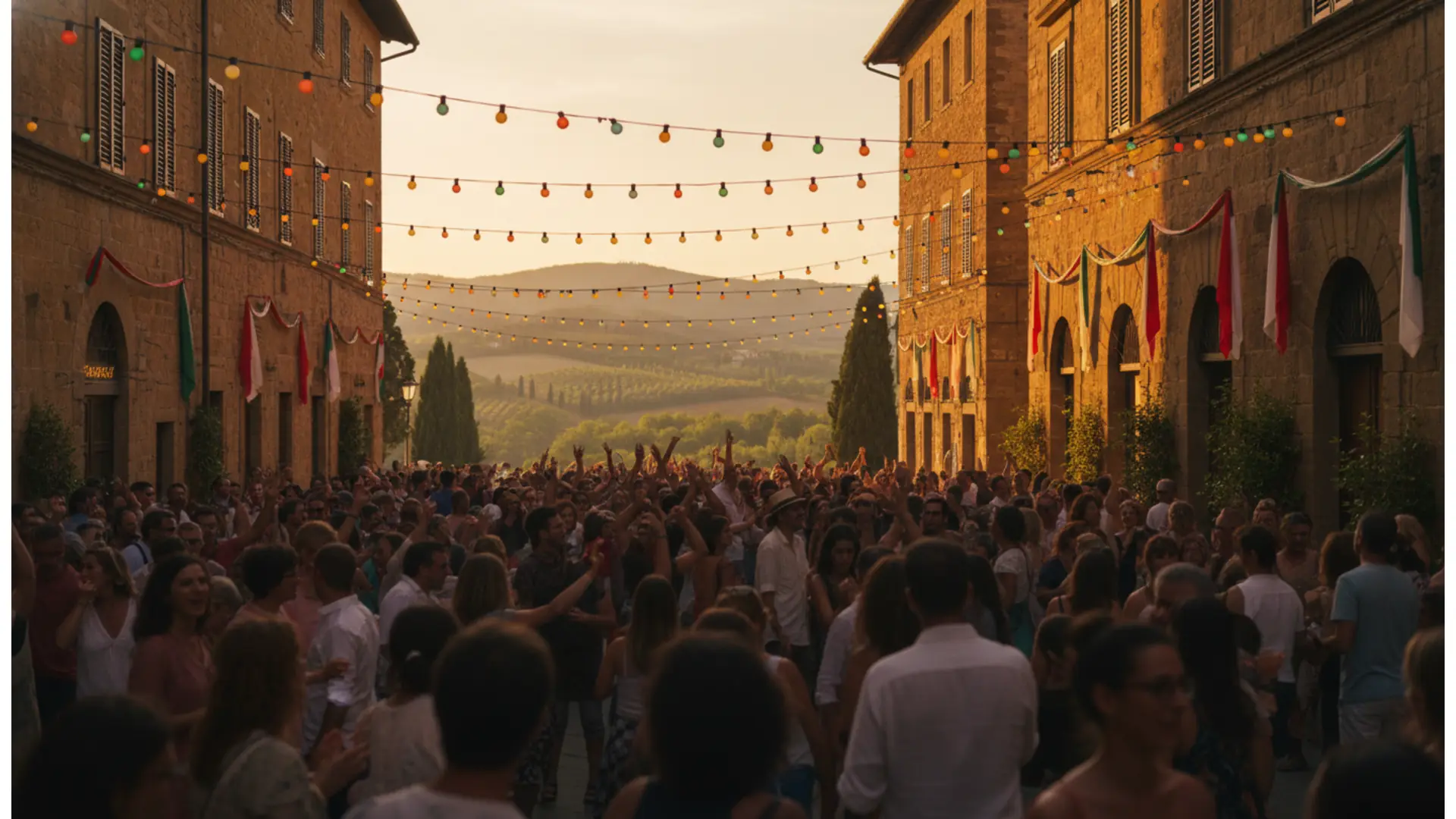
FAI Spring Days
A weekend of exclusive access to secret palaces and villas in Rome
About FAI Spring Days
The Capital's hidden heritage for two days
The FAI Spring Days represent the largest event dedicated to Italy's cultural and landscape heritage. Promoted by the FAI - Fondo per l'Ambiente Italiano ETS since 1993, the event takes place every year on a weekend in March, involving hundreds of cities across the peninsula. In Rome, the Metropolitan City of Rome Capital, and the wider Lazio region, the initiative takes on special significance: the density of institutional buildings, historic villas, religious complexes, and diplomatic seats allows for a program of openings that is unmatched elsewhere.
What to visit in Rome
The core of the initiative is the extraordinary opening of places that remain closed or accessible only by special authorization for the rest of the year. Recent Roman editions have opened the doors to, among others, the Palazzo della Cancelleria—the first great example of Renaissance architecture in Rome, featuring the famous Salone dei Cento Giorni frescoed by Giorgio Vasari—the Palazzo di Giustizia, home to the Supreme Court of Cassation, the Ministry of Education and Merit in Trastevere with its five internal courtyards, the Royal Academy of Spain on the Janiculum Hill, Villa Lante al Gianicolo, now the seat of the Irish Embassy, and Villa Spada.
Some openings are reserved for FAI members, who always enjoy priority access to all sites: this is the case, in several editions, for Palazzo Corrodi. Those who are not yet members can sign up directly on-site at the desks set up in front of the accessible locations.
The Apprendisti Ciceroni
The formula that makes the FAI Spring Days recognizable is the guidance provided by the Apprendisti Ciceroni: high school and university students, trained by FAI volunteers and teachers, who lead visitors while recounting the history, architecture, and stories of the sites. Every year, tens of thousands participate across Italy, and in Rome, they involve numerous schools from the city and province. It is a heritage education project that gives the event a strongly participatory and intergenerational character.
How the visits work
- Entry is by voluntary contribution: you do not buy a ticket, but support the Foundation's mission with a donation (suggested starting from 3 euros).
- Visits are guided and in groups, with shifts of varying duration (generally between 45 and 90 minutes depending on the site).
- Some locations require online booking or the presentation of an identity document, particularly institutional headquarters and ministries.
- FAI members have priority access and can enter some sites reserved exclusively for them.
A national event with local roots
The FAI Spring Days are organized locally by FAI Delegations, groups of volunteers who select the sites each year, obtain authorizations from owners, and manage visitor reception. In Lazio, the delegations cover, in addition to Rome, the provinces of Frosinone, Latina, Rieti, and Viterbo, with openings in villages, archaeological areas, castles, and rural complexes that broaden the scope well beyond the Capital.
Why it is worth attending
For those living in Rome, it is the chance to finally enter buildings you pass by every day without being able to enter. For those visiting the city, it is an experience different from the classic tourist circuit: no queues at the most famous museums, but courtyards, monumental staircases, historic libraries, and gardens that tell the story of a lesser-known Rome. The Roman spring, with its first warm days and blooming gardens, also offers the ideal setting for a walking itinerary between one opening and another, especially in the Janiculum Hill and historic center areas.
Information and program
The complete program, updated province by province, is published on the official FAI website in the weeks leading up to the event, with times, addresses, visit durations, and indications for sites requiring reservations. It is worth checking in advance: the most popular locations quickly fill up their available slots.
FAI Spring Days — edition 2026
The 34th edition
The 2026 edition of the FAI Spring Days was held on the weekend of March 21-22, mobilizing approximately 7,500 volunteers and 17,000 Apprendisti Ciceroni for the opening of 780 sites in 400 cities. In Rome, the offerings touched the historic center, the Janiculum, and Trastevere, with guided tours by voluntary contribution and priority access for FAI members.
The common thread
Alongside the regular openings, FAI proposed a new route dedicated to the 800th anniversary of the death of Saint Francis of Assisi, with sites selected in eight Italian regions. The funds raised during the weekend are destined for the restoration and conservation of the assets managed by the Foundation.
Programme FAI Spring Days 2026
Some of the 2026 Roman openings
- Palazzo della Cancelleria — the first great example of Renaissance architecture in Rome, with the Salone dei Cento Giorni frescoed by Giorgio Vasari. Saturday and Sunday, 10:00-18:00, visit of about 60 minutes.
- Ministry of Education and Merit (Trastevere) — monumental palace built between 1916 and 1927, with five internal courtyards, a grand staircase, the Courtyard of Honor, and the Luigi De Gregori Library. 9:30-17:30, visit of about 60 minutes, identity document mandatory.
- Palazzo di Giustizia — seat of the Supreme Court of Cassation, designed by Guglielmo Calderini between 1888 and 1910: monumental staircases, historic corridors, and the Aula Magna frescoed by Cesare Maccari. Visits of about 90 minutes.
- Royal Academy of Spain on the Janiculum — former Franciscan convent, cloister with frescoes by Niccolò Circignani, crypt of the Tempietto del Bramante, and the 'well of mirrors' installation by Michelangelo Pistoletto. 10:00-17:00, visit of about 55 minutes.
- Villa Lante al Gianicolo — 1639 villa, headquarters of Giuseppe Garibaldi during the Roman Republic of 1849 and since 1946 the seat of the Irish Embassy in Italy: gardens, orangery, and representative rooms.
- Villa Spada and Palazzo Corrodi — openings reserved for FAI members.
The complete program, province by province, was available on the official FAI Days website.
Highlights FAI Spring Days 2026
- 780 sites opened in 400 Italian cities, 34th edition
- Special itinerary for the 800th anniversary of the death of Saint Francis of Assisi, in eight regions
- The Salone dei Cento Giorni by Vasari at Palazzo della Cancelleria
- The Aula Magna of the Cassation frescoed by Cesare Maccari
- The gardens of Villa Lante al Gianicolo, seat of the Irish Embassy
- Visits conducted by 17,000 Apprendisti Ciceroni, student volunteers
Prices FAI Spring Days 2026
Practical information — FAI Spring Days
How to get there
Rome is served by Fiumicino and Ciampino airports, by the Roma Termini and Roma Tiburtina railway stations, and by the metro network (lines A, B, B1, C). Most openings are located in the historic center or on the Janiculum Hill, easily reachable on foot, by bus, or by tram; the use of a private car is discouraged due to ZTL (Limited Traffic Zone) restrictions.
Costs
Entry by voluntary contribution, suggested starting from 3 euros per person per site. FAI members have priority access and can visit some reserved openings; it is possible to join on-site.
Tips
Check the official website to see which locations require online booking and always carry an identity document: it is mandatory for institutional and ministerial sites. Comfortable shoes and an early start are the two most useful recommendations, as queues grow longer in the afternoon.
Festival-goer photos
No photos yet. Share yours!
Share your photos
5 photos max, 5 MB per photo (JPG, PNG, WebP)
Noticed an error or missing information?
Help us keep this listing up to date. Every proposal is verified by our team before publication.
Festival-goer reviews
No rating yet — be the first!
No comments yet. Be the first!
Were you there?
Share your experience with the community.
Published by Valentin Contard, festival listings writer. Reviewed, corrected and approved by Christophe Contard, editor-in-chief. .
Where does it take place — FAI Spring Days
Sedi multiple (centro storico e municipi di Roma)