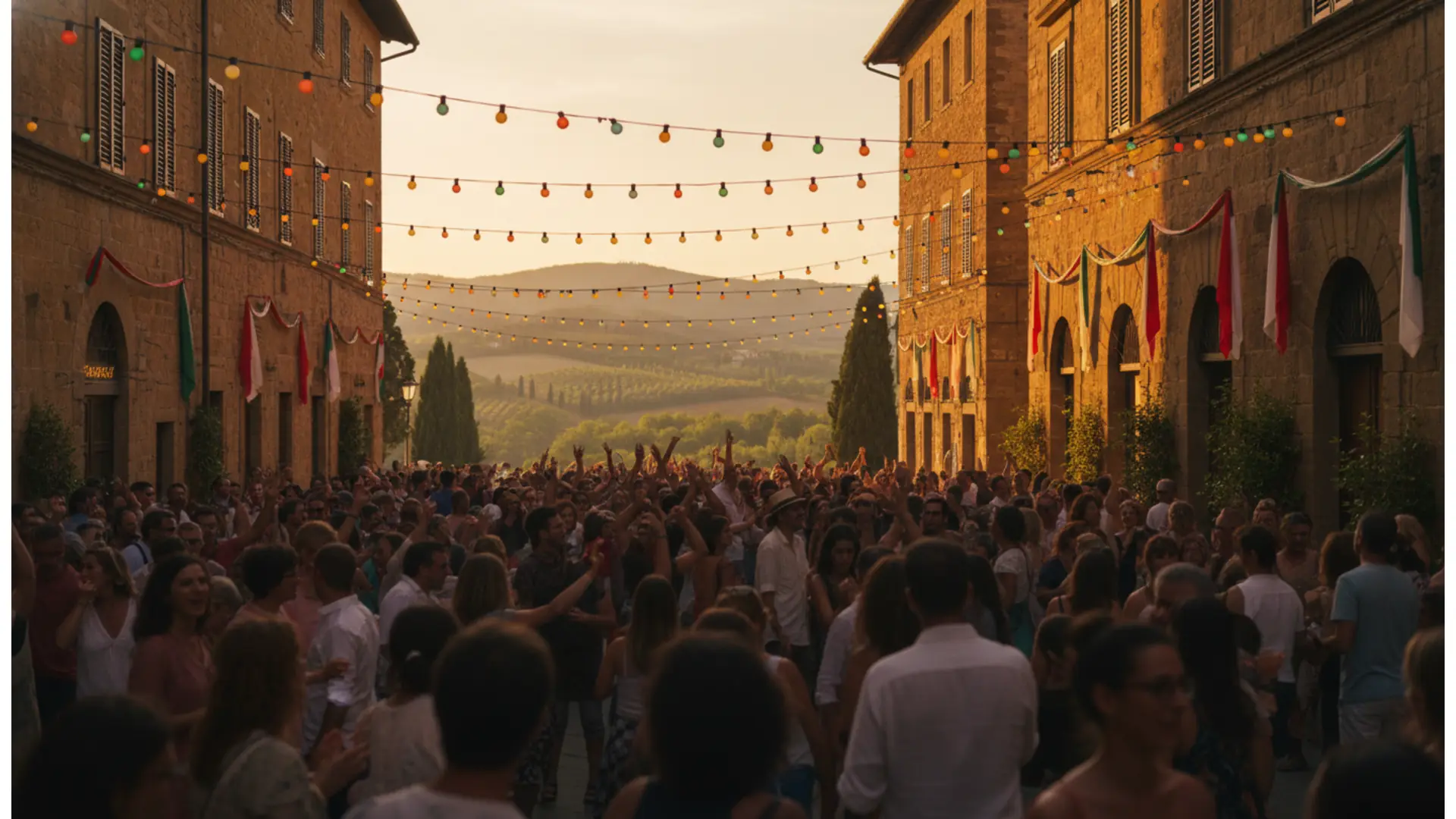
Cortili Aperti (National Day of Historic Houses - ADSI Lazio)
Once a year, the secret courtyards of Roman palaces open to the public for free
About Cortili Aperti
A widespread museum for one day only
Cortili Aperti is the Roman chapter of the National Day of Historic Houses, promoted by the Italian Historic Houses Association (ADSI). Once a year, on a Sunday in May, the families who own the great noble palaces of the City of Rome open their courtyards, loggias, monumental staircases, and gardens—usually private—to the public for free. It is a simple and direct way to understand the true fabric of the city: behind the austere facades of Via del Corso, Piazza Navona, or Corso Vittorio Emanuele lie hidden green spaces, fountains, nymphaeums, and architectural perspectives that no guidebook can show when doors are shut.
A Roman tradition since 1992
The initiative began in Rome in 1992 under the name Cortili Aperti and subsequently became the model for the National Day that now involves all Italian regions. The formula has never changed: no tickets, no barriers, and often the owners themselves or volunteers share the history of the house. The goal stated by ADSI is to make the public perceive private heritage as a living asset, which requires maintenance and care but restores identity and beauty to the community. It is no coincidence that the association defines the collection of Italian historic houses as «the largest widespread museum in the country».
What to visit in Rome
The Roman itinerary is concentrated in the Historic Center and is designed to be explored on foot, hopping from one doorway to another throughout the day. Among the residences that appear most frequently in the program:
- Palazzo Odescalchi, in Piazza dei Santi Apostoli, with its Bernini-style facade and grand courtyard;
- Palazzo Taverna, on Via di Monte Giordano, on the hill overlooking the Ponte district;
- Palazzo Torlonia, on Via Bocca di Leone, in the heart of the Tridente district;
- Palazzo Sforza Cesarini, on Corso Vittorio Emanuele II;
- Palazzo Santacroce, at Piazza Cairoli;
- Palazzo Massimo Lancellotti dè Torres, overlooking Piazza Navona;
- Palazzo Montoro, on Via di Montoro.
Visiting hours and procedures vary from one residence to another: some welcome visitors with continuous free entry, while others organize guided tours. It is always advisable to check the updated list on the ADSI website in the days leading up to the event, as the program may be subject to last-minute changes.
Beyond the Capital: the entire Lazio region
The day is not limited to Rome. Throughout the Lazio Region, and particularly in the Metropolitan City of Rome Capital and the provinces of Frosinone, Viterbo, Latina, and Rieti, dozens of villas, agricultural estates, fortresses, and castles open their doors: from the Castelli Romani, with the estates of Frascati and the villas of Rocca di Papa, to Lake Bracciano, and even the fortresses of the Ciociaria region like the Castello di Fumone. It is the perfect opportunity to plan an excursion and discover villages that usually remain off the beaten tourist path.
Tips for your visit
Expect crowds, and since the Roman residences are concentrated within a few hundred meters, it is best to start early, choose four or five stops in advance rather than trying to see them all, and be prepared for some queues in front of the most famous entrances. In many cases, the visit is limited to the courtyard and garden, not the private apartments, which remain occupied. Photography is generally allowed in open spaces, but it is always good practice to ask.
Why it is worth it
Cortili Aperti is not a spectacular show: it is a slow experience, made of silence, shade, and detail. Crossing an entrance hall in Piazza Navona to find yourself in front of an Italian-style garden, or climbing a staircase that no one uses anymore, is perhaps the most intimate way to read the stratification of Rome, from the Renaissance to the Baroque era and up to the 19th and 20th-century interventions. And the fact that all this is free, for just one day, makes it one of the most anticipated events in the Roman cultural calendar.
Cortili Aperti — edition 2026
The 2026 edition of Cortili Aperti was held on Sunday, May 24, as part of the 16th National Day of Historic Houses promoted by ADSI and dedicated to the theme «Guardians of the future. A living heritage for a shared value». For the first time, Villa Lubin, located in the Villa Borghese park and currently the seat of the National Council for Economy and Labor (CNEL), opened to the public. Another novelty was the collaboration with the Italian Touring Club: volunteers from the association accompanied visitors through selected residences, sharing anecdotes and artistic details that would otherwise be difficult to grasp. Outside Rome, the program included the Tenuta di Pietra Porzia in Frascati, the Villa del Cardinale in Rocca di Papa, the Castello Odescalchi in Bracciano, and the Castello di Fumone, among others.
Programme Cortili Aperti 2026
Palaces open in Rome - May 24, 2026
- Palazzo Massimo Lancellotti dè Torres - Piazza Navona, 114
- Palazzo Montoro - Via di Montoro, 8
- Palazzo Odescalchi - Piazza dei Santi Apostoli, 81
- Palazzo Santacroce - Piazza Cairoli, 6
- Palazzo Sforza Cesarini - Corso Vittorio Emanuele II, 282
- Palazzo Taverna - Via di Monte Giordano, 36
- Palazzo Torlonia - Via Bocca di Leone, 78
In the Lazio region
- Villa Lubin (CNEL) - Villa Borghese, Rome: first-ever opening
- Tenuta di Pietra Porzia - Frascati
- Villa del Cardinale - Rocca di Papa
- Castello Odescalchi - Bracciano
- Castello di Fumone and other residences in the provinces of Frosinone, Viterbo, Latina, and Rieti
Visiting hours varied for each residence and were published on the ADSI website in the days leading up to the event.
Highlights Cortili Aperti 2026
- First-ever public opening of Villa Lubin, seat of the CNEL in Villa Borghese park
- Guided visits by Italian Touring Club volunteers in selected residences
- Seven noble palaces in Rome's Historic Center, all within walking distance
- 2026 National Theme: «Guardians of the future. A living heritage for a shared value»
- Itinerary extended to the Castelli Romani, Lake Bracciano, and the Ciociaria region
Prices Cortili Aperti 2026
Practical information — Cortili Aperti
When
A Sunday in late May, on the occasion of the National Day of Historic Houses. Times vary according to the residence: check the official ADSI list published in the days prior.
Entry
Free. Some residences may require reservations or organize guided tour shifts.
How to get there
The Roman residences are all located in the Historic Center, which is easily accessible on foot. Metro A stops Spagna or Barberini for the Via Bocca di Leone area; buses along Corso Vittorio Emanuele II and Via del Plebiscito for Piazza Navona, Piazza Cairoli, and Piazza dei Santi Apostoli. The center is largely a ZTL (restricted traffic zone): it is better to leave your car outside and use public transport.
Contacts
ADSI - Associazione Dimore Storiche Italiane, tel. +39 06 68307426, [email protected]
Festival-goer photos
No photos yet. Share yours!
Share your photos
5 photos max, 5 MB per photo (JPG, PNG, WebP)
Noticed an error or missing information?
Help us keep this listing up to date. Every proposal is verified by our team before publication.
Festival-goer reviews
No rating yet — be the first!
No comments yet. Be the first!
Were you there?
Share your experience with the community.
Published by Valentin Contard, festival listings writer. Reviewed, corrected and approved by Christophe Contard, editor-in-chief. .
Where does it take place — Cortili Aperti
Palazzi storici del Centro storico di Roma
Piazza dei Santi Apostoli 81, 00186 Roma