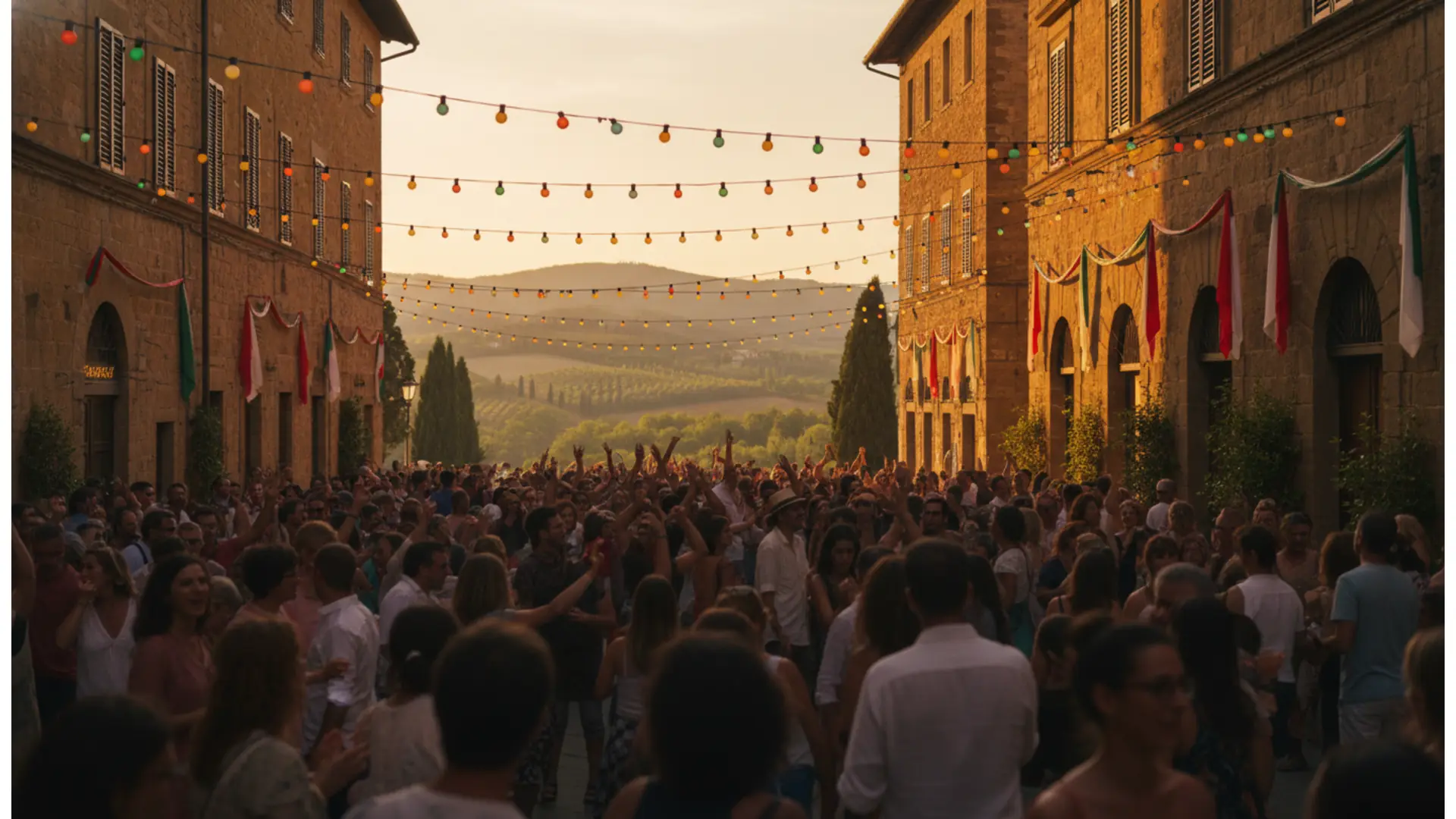
Arbëreshë Historical Pageant of Biancavilla
A re-enactment of the Greek-Albanian origins of the town on the slopes of Mount Etna
About Arbëreshë Historical Pageant
A city that tells its own story
The Arbëreshë Historical Pageant of Biancavilla, in the province of Catania, is much more than a costume parade: it is the way an entire community commemorates the founding moment of its history. The event, organized by the Associazione Rievocazioni Storiche Arbëreshë di Biancavilla in collaboration with the local municipality, is considered the only re-enactment of its kind in Eastern Sicily.
1482: The escape from Shkodër
The re-enactment brings to life the events of 1482, when a group of Albanians from Shkodër, fleeing the advance of the Turkish army, crossed the Ionian Sea under the leadership of Cesare De Masi to reach their countrymen in the Piana dei Greci (modern-day Piana degli Albanesi). The refugees stopped in an area known as Callicari, or Poggio Rosso. According to tradition, they hung a precious Byzantine icon of the Madonna dell'Elemosina on a fig tree; during the night, the branches grew around the image, preventing the exiles from continuing their journey. This sign was interpreted as a divine will to remain in that place. Count Gian Tommaso Moncada granted them the settlement, and over time, the village became known as Biancavilla.
The procession: from Villa delle Favare to Piazza Roma
The heart of the event is the long procession of participants in late-medieval attire that winds through the town streets: it starts from the charming Villa delle Favare and reaches Piazza Roma, where the arrival of the Albanian refugees and the placement of the Madonna dell'Elemosina icon on the fig tree are staged. The Basilica of Santa Maria dell'Elemosina, the town's patron, remains the spiritual reference point for the entire ritual.
A heritage of identity
The initiative stems from the desire to recover and pass on the Arbëreshë cultural heritage—the tradition of the Greek-Albanians of Sicily—which time had partially erased in Biancavilla. The spectacle and popular involvement intertwine with strong social and identity values, restoring the memory of their roots to the Etna community. Included in the patronal festivities that enliven the city between late September and early October, the re-enactment is a highly anticipated event for residents and visitors alike.
Arbëreshë Historical Pageant — edition 2026
The Arbëreshë Historical Pageant opens the festivities in honor of the patron saints of Biancavilla, scheduled between late September and early October. In 2026, participants in period costumes will once again parade from Villa delle Favare towards Piazza Roma, where the arrival of the Greek-Albanian refugees and the placement of the Madonna dell'Elemosina icon on the fig tree will be re-enacted.
The detailed program for the 2026 edition will be published by the Associazione Rievocazioni Storiche Arbëreshë di Biancavilla closer to the event.
Programme Arbëreshë Historical Pageant 2026
The detailed program for the 2026 edition will be announced by the Associazione Rievocazioni Storiche Arbëreshë di Biancavilla closer to the event. According to the traditional format, the day includes the gathering of costumed participants, the start of the procession from Villa delle Favare, the crossing of the town center, and the arrival in Piazza Roma with the final representation of the refugees' arrival and the placement of the Madonna dell'Elemosina icon.
Highlights Arbëreshë Historical Pageant 2026
- Procession in late-medieval costumes from Villa delle Favare to Piazza Roma
- Re-enactment of the 1482 arrival of Greek-Albanian refugees
- Scenic placement of the Madonna dell'Elemosina icon
Prices Arbëreshë Historical Pageant 2026
Practical information — Arbëreshë Historical Pageant
When
Between late September and early October, as part of the festivities in honor of the patron saints of Biancavilla. The re-enactment traditionally takes place in the late afternoon.
Where
Biancavilla (CT), Sicily. The procession starts from Villa delle Favare and reaches Piazza Roma, in the historic center.
How to get there
By car: Biancavilla is located on the southwestern slopes of Mount Etna and can be reached via the SS121 / SS284. By train and bus: connections are available from Catania, the provincial capital. The nearest airport is Catania-Fontanarossa.
Admission
Open-air event with public participation; the procession takes place along the city streets.
Festival-goer photos
No photos yet. Share yours!
Share your photos
5 photos max, 5 MB per photo (JPG, PNG, WebP)
Noticed an error or missing information?
Help us keep this listing up to date. Every proposal is verified by our team before publication.
Festival-goer reviews
No rating yet — be the first!
No comments yet. Be the first!
Were you there?
Share your experience with the community.
Published by Valentin Contard, festival listings writer. Reviewed, corrected and approved by Christophe Contard, editor-in-chief. .
Where does it take place — Arbëreshë Historical Pageant
Villa delle Favare - Piazza Roma