Rebibbia - Ponte Mammolo - Casal de' Pazzi Neighborhood Festival
The self-managed festival of the three neighborhoods in Rome's 4th Municipality
About Rebibbia Neighborhood Festival
A festival born from the neighborhood
The Rebibbia - Ponte Mammolo - Casal de' Pazzi Neighborhood Festival is one of the most defining events of the eastern suburbs of Rome, in the 4th Municipality of the Lazio region. This is not an event imposed from above: it is the result of the daily work of the Comitato Mammut, the CSOA La Torre, and dozens of associations, resident committees, sports groups, and solidarity organizations that bring this part of the city along Via Tiburtina to life all year round.
The festival's perimeter unites three neighborhoods historically separated by infrastructure—the railway, the Grande Raccordo Anulare, and the web of roads cutting through the area—which, for a few days, return to being a single community. The message is simple: public spaces only exist if people use them.
Two iconic locations
The festival moves between two hubs. The first is Parco Cicogna, a green space on Via Furio Cicogna reclaimed over the years by residents through collective cleaning and care days; this is where workshops, games, sports, and major evening debates are concentrated. The second is the small square on Via Giovanni Palombini, a plaza surrounded by long-closed commercial spaces: for the organizers, bringing music and people here is a way of calling for those shutters to reopen with neighborhood services.
What to expect
- Live Music: concerts by Roman bands and singer-songwriters, traditional folk songs, and evening DJ sets.
- Words and Comics: readings, book presentations, and public talks, with the recurring participation of Zerocalcare, who has made Rebibbia the setting for his comics.
- Stand-up and Comedy: performances by comedians from the Roman scene.
- Children and Families: workshops, circus acts, games, and sports activities in the afternoon.
- Health and Rights: information stands from the ASL Roma 2 departments, social and legal advice desks, and family counseling centers.
- Neighborhood Kitchen: social dinners, popular cuisine, craft beer, and self-managed food stalls.
A political festival in the most concrete sense
Each edition revolves around a theme that directly concerns those who live here: local public healthcare, the right to housing, green space maintenance, and school dropout rates. Over the years, the evening debates have hosted very diverse voices—from Nobel laureate Giorgio Parisi to local healthcare workers and teachers—always with the same approach: talking about the suburbs starting from real problems, not just headlines.
Atmosphere
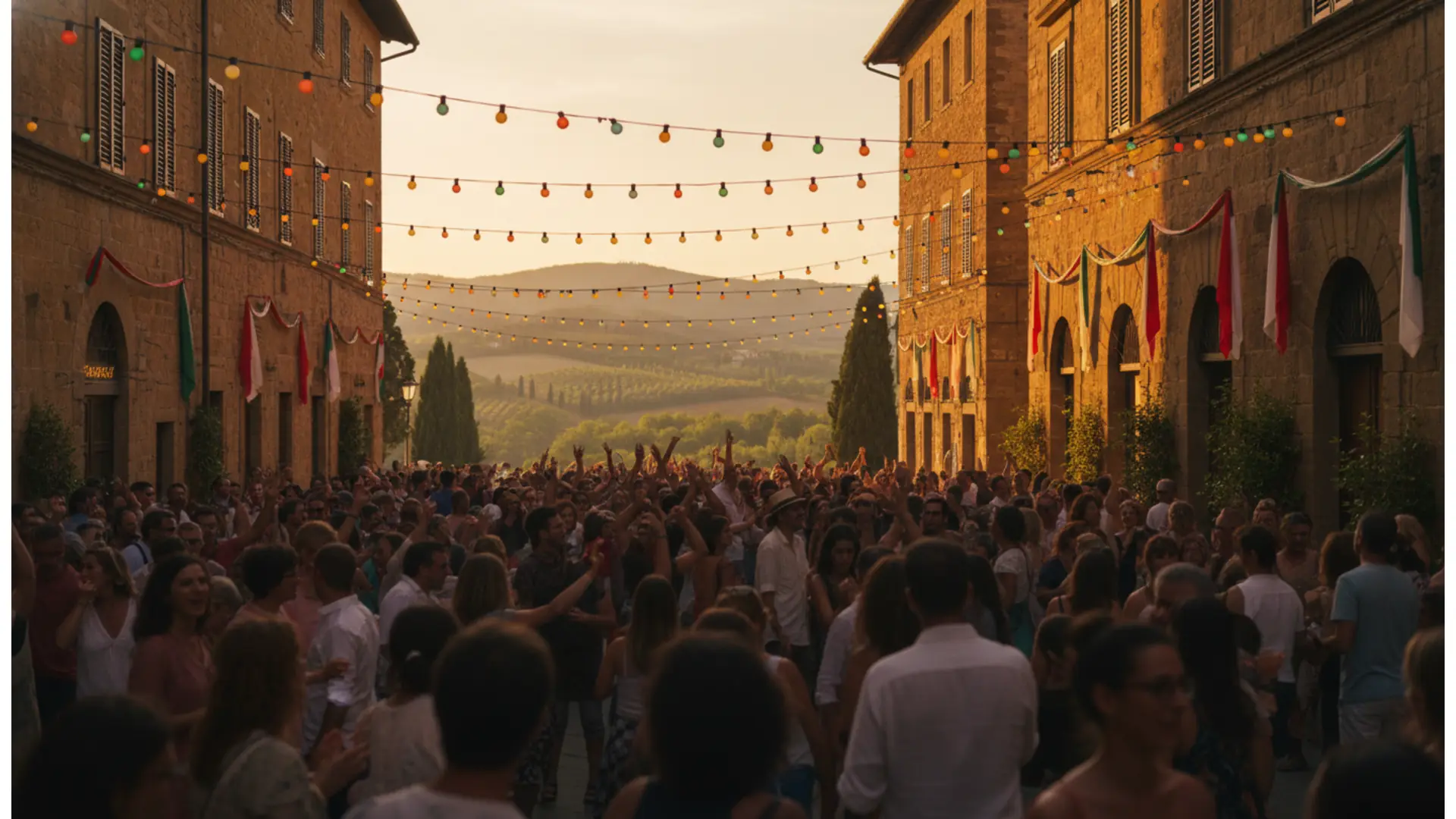
Visitors from outside will find a festival without monumental stages or intrusive sponsors: long communal tables, children running in the park, association stalls, a sound system, and plenty of locals. Admission is free, you only pay for what you eat and drink, and the proceeds go back to the organizers' social activities. It is one of the best opportunities to understand how Rome really works outside the Grande Raccordo Anulare.
When
The event traditionally takes place in June, with a main Saturday event and several lead-up evenings in the preceding weeks. Documented editions have been held since 2024, with participation growing year after year.
Rebibbia Neighborhood Festival — edition 2026
"Piazza Negozietti!", June 13, 2026
The 2026 evening chose a precise and symbolic location: the small square at Via Giovanni Palombini 15, in Rome, in front of a row of abandoned commercial spaces. The organizers' idea was to demonstrate, by occupying it for an evening with people, music, and food, that this space can once again become the heart of a neighborhood.
The meeting point was set at 7:00 PM at Parco Cicogna, with a collective walk from the green area to the square, followed by a dinner accompanied by live folk songs. From 9:00 PM, readings, a public talk, and concerts began in a single, continuous, free-entry evening.
As per tradition, the organization was handled by the Comitato Mammut together with other local community groups from Rebibbia, Casal de' Pazzi, and Ponte Mammolo, in the 4th Municipality of the Capital, in Lazio.
Programme Rebibbia Neighborhood Festival 2026
Saturday, June 13, 2026 — Via Giovanni Palombini 15 and Parco Cicogna
- 7:00 PM — Meeting at Parco Cicogna and collective walk from the park to the small square.
- Followed by — Neighborhood dinner accompanied by live folk songs.
- From 9:00 PM — Readings with Leonardo Maltese and Sofia Russotto.
- Talk with Zerocalcare and Chiara Becchimanzi, moderated by Gabriel Pirco.
- Concerts by Pulkra and Guglielmo Nodari to close the evening.
Throughout the evening: food stalls, drinks, and booths from local associations.
Highlights Rebibbia Neighborhood Festival 2026
- The talk with Zerocalcare and Chiara Becchimanzi, moderated by Gabriel Pirco.
- The collective walk at 7:00 PM from Parco Cicogna to the square on Via Palombini.
- Readings by Leonardo Maltese and Sofia Russotto.
- The final concerts by Pulkra and Guglielmo Nodari.
- The neighborhood dinner with live Roman folk songs.
Prices Rebibbia Neighborhood Festival 2026
Practical information — Rebibbia Neighborhood Festival
How to get there
Metro B, Ponte Mammolo or Rebibbia stop, then a 10-15 minute walk towards Via Giovanni Palombini. Numerous urban bus lines serve Via Tiburtina and Via Casal de' Pazzi. By car, take exit 12 of the Grande Raccordo Anulare (Tiburtina); street parking is available around Parco Cicogna, though it often gets crowded during festival evenings.
Prices
Admission is free for all initiatives. Only food and drinks are for sale at popular prices, with proceeds supporting the neighborhood's social activities.
Tips
The evenings take place outdoors: bring a light jacket, as the park area can get chilly after sunset. The event is family-friendly, with dedicated spaces for children in the afternoon. The updated program is published on the Comitato Mammut social media channels in the weeks leading up to the event.
Festival-goer photos
No photos yet. Share yours!
Share your photos
5 photos max, 5 MB per photo (JPG, PNG, WebP)
Noticed an error or missing information?
Help us keep this listing up to date. Every proposal is verified by our team before publication.
Festival-goer reviews
No rating yet — be the first!
No comments yet. Be the first!
Were you there?
Share your experience with the community.
Where does it take place — Rebibbia Neighborhood Festival
Piazza dei Negozietti di Via Palombini / Parco Cicogna
Via Giovanni Palombini 15, 00156 Roma