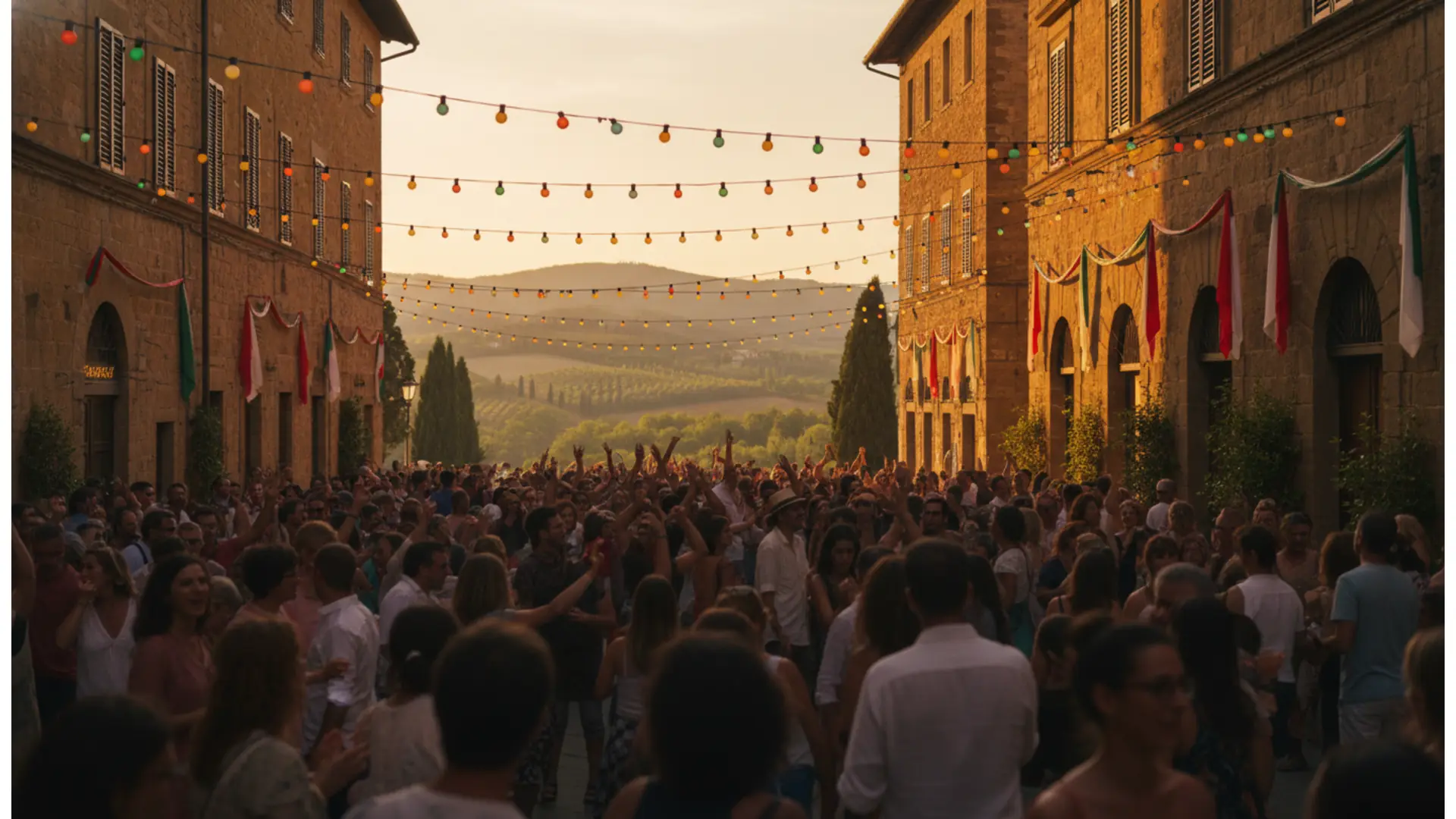
Madonna del Soccorso Festival
The Marian celebration of June 24th in the ancient village of Volcei
About Madonna del Soccorso
June 24th: When Buccino comes together
Every year on June 24th, the village of Buccino, in the province of Salerno, celebrates the Madonna del Soccorso Festival. This is not an event built for mass tourism; it is a local feast, born from devotion and grown into a fixed appointment on the community calendar. The Municipality of Buccino includes it annually in the official summer program, where this Marian recurrence opens the season alongside neighborhood festivities, musical evenings, and food festivals that animate the town until the end of August.
An ancient and widespread Marian title
The Madonna del Soccorso is one of the most widespread Marian titles in Italian popular devotion: it is found from Lombardy to Sicily, often linked to the Augustinian tradition, and everywhere it has translated into festivals, processions, and sanctuaries deeply rooted in local communities. In Buccino, the memory of monastic life is still visible in the urban fabric: at the entrance to the historic center stands the former convent of the Eremitani of Saint Augustine, now home to the National Archaeological Museum of Volcei, with its adjoining Baroque church of Saint Anthony Abbot, one of the oldest Augustinian complexes in Campania.
Buccino, the ancient Volcei
The town hosting the festival is one of the most fascinating villages in the Upper Sele-Tanagro area, at the eastern edge of the province of Salerno, bordering Basilicata. Perched at an altitude of approximately 663 meters and inhabited by just over four thousand people, Buccino preserves the legacy of ancient Volcei, a Roman municipality since the 1st century BC, beneath its streets and squares. The Urban Archaeological Park, inaugurated in 2003, allows visitors to literally walk above the ancient city, while the Norman castle dominates the town and the mother church of Santa Maria Assunta remains the primary religious landmark. It is in this setting, made of stone alleys and views over the valley, that the June 24th festival takes shape.
What to expect
As is typical of religious festivals in the Salerno hinterland, the heart of the day is liturgical and communal. The detailed program, including times and side events, is not released far in advance: it is usually announced in town in the days immediately preceding the event through the parish, the festival committee, and local social media channels. Visitors from outside the area should check schedules on-site or with the Municipality.
- A celebration concentrated on a single day, June 24th
- Setting in the historic center of Buccino, among churches, alleys, and squares
- Strong participation from the local community and families
- Free admission to all festival events
The festival within the Buccino summer
The Madonna del Soccorso is the first significant event of a busy summer. In 2026, the official municipal calendar featured, a few days earlier, the festivities in honor of Saint Vitus the Martyr in the San Vito district (June 19-21) and, on June 27th, the first evening of the Four Seasons festival in the evocative Eremitani cloister. Immediately following is the patronal feast of Mary Most Holy Immaculate, celebrated from Thursday to Monday in the first week of July, the spiritual and social heart of the Buccino year. The rest of the season is distributed between the Volcei Beer Fest, the Percoca Peach Festival, the A' la Chiazza festival in early August, and the celebrations of the Holy Cross and the Madonna del Carmine at the end of the month.
Why it is worth attending
For those visiting inland Campania, a day like this is an opportunity to see a town in its most authentic dimension, far from the crowded routes of the coast. The Soccorso festival does not promise spectacle, but it offers something rarer: the rhythm of a community that recognizes itself in its own rituals. Nearby, the archaeological museum, the urban park, and the castle provide enough material to build a full day, between Roman archaeology, the Norman Middle Ages, and contemporary devotion.
Madonna del Soccorso — edition 2026
The June 24, 2026 celebration
In the official 2026 summer program presented by the Municipality of Buccino, June 24th was the date of the Madonna del Soccorso Festival: a day dedicated to Marian devotion, experienced by the community in the historic center of the village, in the province of Salerno.
The recurrence fell in a particularly busy June for the town. From June 19 to 21, the San Vito district was the center of festivities in honor of Saint Vitus the Martyr, with musical evenings; on Saturday, June 27th, the Eremitani cloister hosted the first evening of the Four Seasons festival. Immediately after, from July 2 to 6, the patronal festivities in honor of Mary Most Holy Immaculate took place, the heart of the Buccino summer.
The detailed hourly program for June 24th was not released to the press: as is the case for many religious festivals in the Campanian hinterland, information was communicated locally through the parish and the festival committee.
Programme Madonna del Soccorso 2026
Highlights Madonna del Soccorso 2026
Prices Madonna del Soccorso 2026
Practical information — Madonna del Soccorso
How to get there
By car: from the A2 Mediterranean Motorway, take the exit for Sicignano degli Alburni and continue on the Sicignano-Potenza motorway link to the Buccino exit; the town is about 9 kilometers from the toll booth. Alternatively, you can use the SS 19 ter. By train: the reference station is Buccino-San Gregorio Magno on the Salerno-Potenza line, with road transport connections to the center. By bus: bus lines with daily connections on the Buccino-Eboli-Salerno route. By plane: Salerno-Costa d'Amalfi airport, or alternatively Naples-Capodichino.
Parking and access
On festival days, traffic in the historic center may be restricted: it is advisable to leave your car in the lower part of the town and walk up. The village is hilly and paved with stone, so comfortable shoes are recommended.
Costs
Participation in the celebrations is free; no tickets are required.
Tips
Buccino is located at an altitude of over 600 meters: even at the end of June, evenings can be cool, so it is best to bring warmer clothing. It is worth combining the festival with a visit to the National Archaeological Museum of Volcei and the Urban Archaeological Park. For updated schedules and details, it is advisable to consult the channels of the Municipality of Buccino and the parish in the days leading up to the event.
Festival-goer photos
No photos yet. Share yours!
Share your photos
5 photos max, 5 MB per photo (JPG, PNG, WebP)
Noticed an error or missing information?
Help us keep this listing up to date. Every proposal is verified by our team before publication.
Festival-goer reviews
No rating yet — be the first!
No comments yet. Be the first!
Were you there?
Share your experience with the community.
Published by Valentin Contard, festival listings writer. Reviewed, corrected and approved by Christophe Contard, editor-in-chief. .
Where does it take place — Madonna del Soccorso
Centro storico di Buccino