Koinòs Festival
On the paths of Saint Nilus: two days of history, art, and spirituality at the Abbey of Santa Cecilia in Castinatelli di Futani
About Koinòs
A festival that brings the Cilento region back to the year 1000
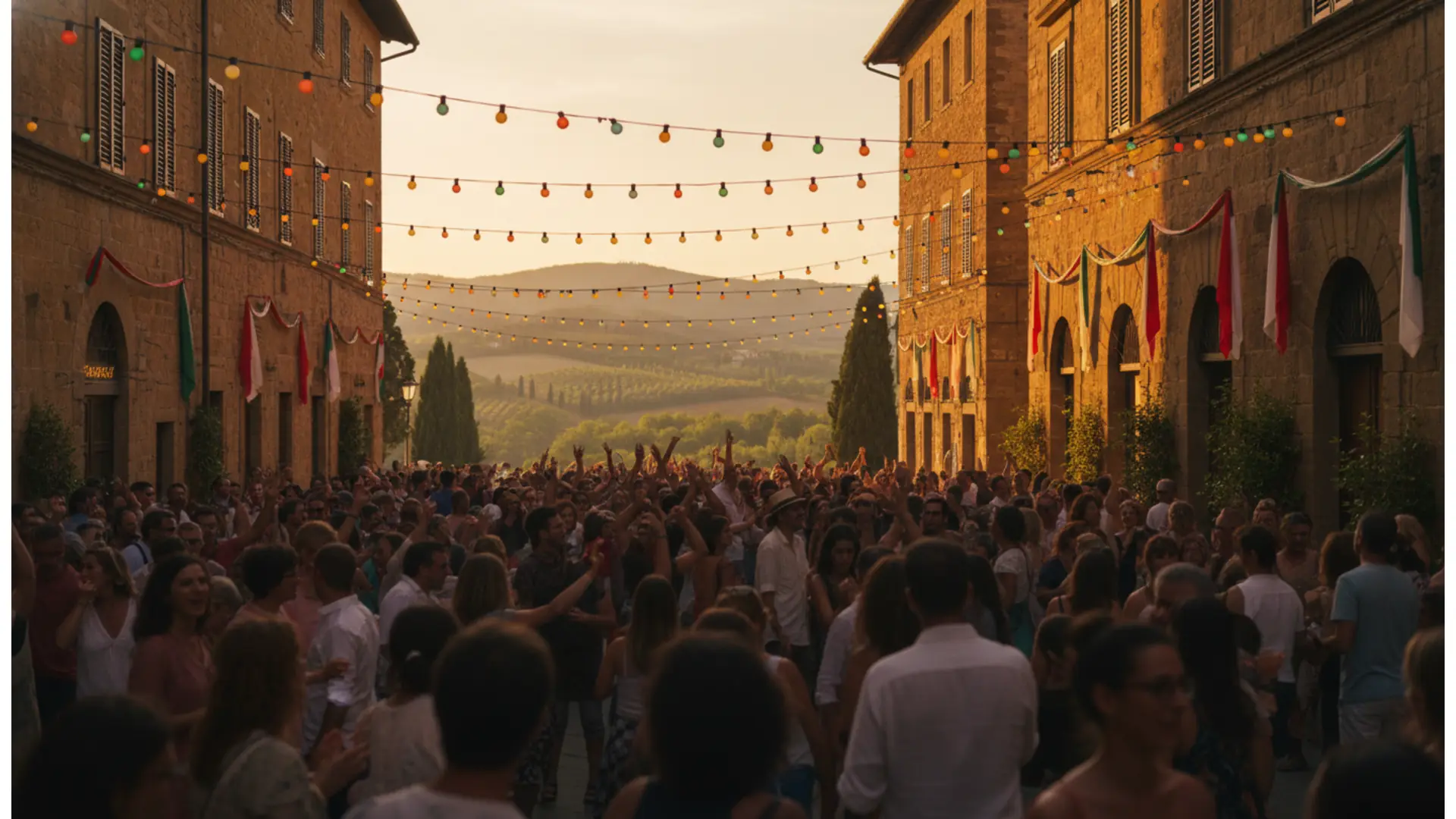
The Koinòs Festival takes place in Castinatelli, a small hamlet in the Municipality of Futani, in the province of Salerno, nestled in the heart of the Cilento, Vallo di Diano and Alburni National Park. For two days in mid-July, this Cilento village is transformed into a 10th-century settlement surrounding the evocative Abbey of Santa Cecilia, a landmark of the territory now immersed in silence and ancient olive trees. The event is not designed as a simple costume re-enactment, but as a journey of memory and spirituality where the landscape becomes a narrative and history turns into an experience to be explored slowly, on foot.
The meaning of the name
The title refers to the ancient Greek term koinós (κοινός), meaning "common" or "shared." It is a word that encapsulates the essence of the Basilian monks' communal life: community, prayer, work, and the transmission of knowledge. This serves as the guiding theme of the festival, dedicated to the Byzantine culture of the Italo-Greek monks and the figure of Saint Nilus of Rossano, the pilgrim monk who, according to tradition, crossed these lands. The concept was developed by professor and maestro Mauro Navarra, artistic director of the Artisti Cilentani Associati theater and music company, who oversees the festival's artistic direction.
What to see and do
Around the abbey, a medieval village comes to life, inhabited by performers and actors in costume who guide visitors through the monastic life, daily work, and culture of the Basilian monks. The program alternates between performances, academic study, and conviviality:
- the "At the Dawn of Santa Cecilia" historical pageant, an evocative itinerary following the footsteps of Saint Nilus and his companions;
- theatrical performances in the natural theater of the woods and olive groves, including a drama dedicated to Saint Nilus of Rossano directed by Alina Di Polito;
- live music featuring a classical harp concert by maestro Giuseppe Romano and ancient/medieval repertoires by the groups Emian and Kiepò, using instruments such as the colascione, Renaissance guitars, ciaramella, friscarulo, tamburo battente, and zampogna;
- a scholarly talk on Italo-Greek monasticism in Byzantine Cilento;
- demonstration workshops on medieval crafts and trades, alongside herbal medicine workshops using herbs and elderflowers gathered in the Park;
- moments of meditation and digital detox to rediscover a slower relationship with time and nature;
- the Taberna del Monaco, offering traditional dishes inspired by Basilian cuisine and local Cilento flavors.
The Abbey of Santa Cecilia
The complex of Santa Cecilia degli Eremiti stands just outside Castinatelli and was built starting in 1022. For centuries, it served as a place of worship and prayer, as well as a weekly market, school, and pharmacy for the surrounding communities, before falling into abandonment and becoming a ruin. Today, traces of the cloister and water collection wells remain in a landscape of great charm at the foot of Mount Gelbison. It is this layered memory—Longobard, Benedictine, and Italo-Greek—that makes the site the natural stage for the festival.
A community-born event
The Koinòs Festival is promoted by the Castinatelli community in collaboration with the Artisti Cilentani Associati association, the LiberArts creative residency, and the Futani municipal administration, with the support of the Campania Region and local associations. It is a community project that aims to promote little-known heritage while combating the depopulation of inland Campania, demonstrating that culture can become an opportunity for connection and sustainable economy for a small mountain village.
Why attend
Those who arrive in Castinatelli will find a side of Cilento far from the seaside crowds: stone villages, olive groves, paths connecting Castinatelli to the Eremiti area via the ancient abbey, and a community that shares its story without filters. The festival is an opportunity to combine performance, history, and hiking, just a short distance from the Cilento coast and the archaeological sites of Velia and Paestum, and to explore a lesser-known chapter of Southern Italian history: the Greek monks who brought crops, books, and a culture based on peace and collaboration to these lands.
Koinòs — edition 2026
Koinòs Festival 2026: the first edition
The event debuted on Saturday, July 18 and Sunday, July 19, 2026, around the Abbey of Santa Cecilia in Castinatelli di Futani, within the Cilento National Park. Promoted by the Castinatelli community with the Artisti Cilentani Associati association, LiberArts, and the municipal administration led by Mayor Dario Trivelli, with the support of the Campania Region, it offered a journey dedicated to the Byzantine culture of the Italo-Greek monks and the figure of Saint Nilus of Rossano.
The village was transformed into an 11th-century settlement: performers and actors in costume guided visitors through the daily life and work of the Basilian monks, while the "At the Dawn of Santa Cecilia" historical pageant retraced the steps of Saint Nilus and his companions. Highlights included a talk on Italo-Greek monasticism in Byzantine Cilento, a classical harp concert by maestro Giuseppe Romano, ancient music by the groups Emian and Kiepò, a theatrical drama on Saint Nilus directed by Alina Di Polito, medieval craft and herbal workshops using elderberry from the Park, meditation sessions dedicated to digital detox, and the Taberna del Monaco.
Programme Koinòs 2026
Highlights Koinòs 2026
Prices Koinòs 2026
Practical information — Koinòs
How to get there
Castinatelli is a hamlet of Futani, in the inland Cilento region, located at an altitude of about 431 meters at the foot of Mount Gelbison. By car, it can be reached from the SS18 road with a detour towards Vallo della Lucania, followed by provincial roads leading up to Futani. The most convenient train station is Vallo della Lucania-Castelnuovo, on the Salerno-Reggio Calabria line, about twenty kilometers away; from there, a car or local bus service is required. Nearest airports: Salerno-Costa d'Amalfi and Naples-Capodichino.
Admission
The organizers have not released an official price list for the event. To learn about access methods, potential reservations for workshops and guided tours, and updated schedules, it is recommended to check the artisticilentani.com website and the social media channels of the Artisti Cilentani Associati association and the Municipality of Futani.
Where to stay
Accommodation in Futani and nearby towns consists mainly of small B&Bs, holiday homes, and agritourisms. Many visitors choose to stay on the Cilento coast, between Palinuro, Pisciotta, and Ascea, reaching the village in the evening.
Tips
The path around the abbey is on unpaved ground: comfortable shoes, water, and a light jacket for the evening are recommended, as temperatures in the hills drop even in mid-summer. It is worth combining your visit with the trail that connects Castinatelli to the Eremiti area and a stop in the historic center of Futani.
Festival-goer photos
No photos yet. Share yours!
Share your photos
5 photos max, 5 MB per photo (JPG, PNG, WebP)
Noticed an error or missing information?
Help us keep this listing up to date. Every proposal is verified by our team before publication.
Festival-goer reviews
No rating yet — be the first!
No comments yet. Be the first!
Were you there?
Share your experience with the community.
Published by Valentin Contard, festival listings writer. Reviewed, corrected and approved by Christophe Contard, editor-in-chief. .
Where does it take place — Koinòs
Abbazia di Santa Cecilia e borgo di Castinatelli
Abbazia di Santa Cecilia, frazione Castinatelli, 84050 Futani