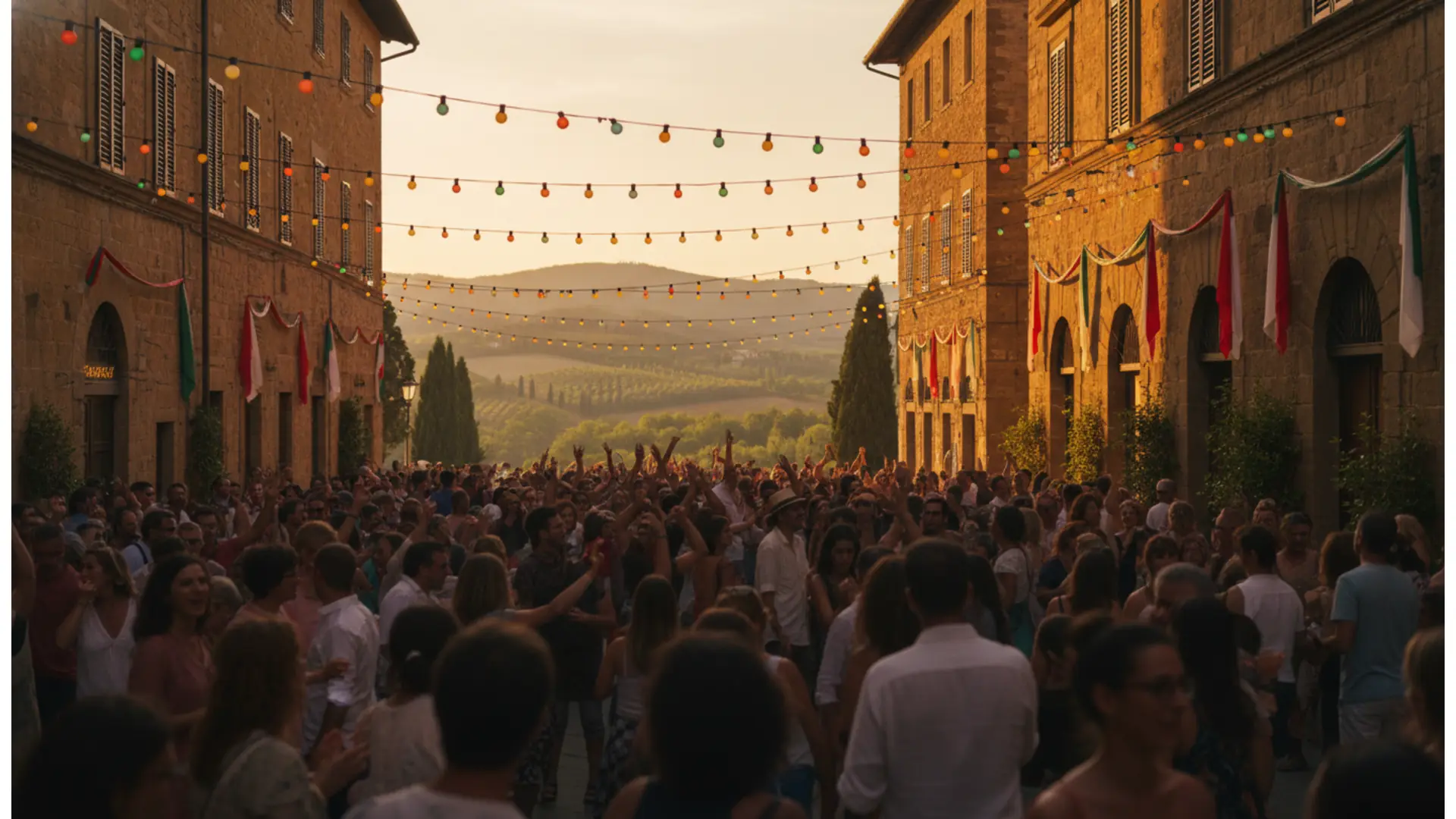
June 4th - Anniversary of the Liberation of Rome (Ceremony at Porta San Paolo)
The civic ceremony of Rome Capital held at the city's historic sites, from Porta San Paolo to La Storta
About June 4th - Liberation of Rome
June 4, 1944: Rome is free again
For Rome, June 4th is a date of civic significance even before it is symbolic. On that day in 1944, following nine months of German occupation that began on September 11, 1943, the first Allied units entered the city, and Rome became the first European capital liberated from Nazi-Fascism. Since then, the Municipality of Rome, in the Lazio Region, has celebrated the anniversary every year with an institutional ceremony. Rather than a festive street event, it is a journey of shared memory through the places where the Roman Resistance left its mark.
Porta San Paolo, where it all began
The heart of the commemoration is Porta San Paolo, located by the Aurelian Walls, just a stone's throw from the Pyramid of Cestius. Here, between September 9 and 10, 1943, Roman soldiers and civilians attempted to block the German troops advancing from Via Ostiense: this clash is considered the birth of the Resistance in Rome. In the morning, the Mayor of Rome Capital lays a laurel wreath at the memorial for Italian and foreign soldiers and civilians, in the presence of city authorities, veterans' associations, partisan groups, and the ANPI.
An itinerary through the sites of memory
The day continues with an official tour that crosses the city and its various districts. Recurring stops include:
- Martyrs of Forte Bravetta Park (Via di Bravetta 739), the site of executions during the occupation;
- Historical Museum of the Liberation on Via Tasso, the former prison of the German security police, now a national museum of memory;
- Garibaldino Ossuary Mausoleum on the Janiculum Hill, which links the 1944 Resistance to the defense of the Roman Republic of 1849;
- Commonwealth War Cemetery in Garbatella, where Allied soldiers who fell for the city's liberation rest;
- La Storta and La Giustiniana, with a tribute at the stele on Via Antonio Labranca in memory of the fourteen political prisoners killed along the Via Cassia by retreating Nazi troops, including the trade unionist Bruno Buozzi.
A memory spread throughout the city
Alongside the main ceremony, local districts, schools, the ANPI, and territorial associations organize flower-laying events, readings, meetings with witnesses, and guided tours. The Roman celebrations are now firmly supported by the "Museum of the Resistance" network, which connects Porta San Paolo, the San Saba district, and the Janiculum. Meanwhile, the city's museums offer exhibitions, itineraries, and educational activities dedicated to the history of the occupation and the liberation of the Capital during this period.
Why it is worth attending
For those visiting Rome in early June, attending the June 4th ceremony offers a perspective of the city beyond the typical tourist experience: instead of the Forums or the Colosseum, you encounter the walls, plaques, and courtyards that tell a recent and still-vivid chapter of its history. It is a brief, sober, and free event, open to all, which pairs well with a visit to the Historical Museum of the Liberation or the Ardeatine Caves, just a few kilometers from the center. It is an opportunity to understand how Rome, a millennial city, also preserves the memory of the 20th century.
June 4th - Liberation of Rome — edition 2026
82nd Anniversary of the Liberation of Rome
The 2026 edition of the civic ceremony took place on Thursday, June 4, following the established schedule: an institutional tribute at Porta San Paolo in the early morning, with a laurel wreath laid at the memorial for Italian and foreign soldiers and civilians, attended by partisan and veterans' associations.
Throughout the day, celebrations extended to other sites of Roman memory: the Martyrs of Forte Bravetta Park, the Historical Museum of the Liberation on Via Tasso, the Garibaldino Ossuary Mausoleum on the Janiculum, and the Commonwealth War Cemetery. In La Giustiniana, in front of the stele on Via Antonio Labranca, the 15th District, together with the ANPI of the Martyrs of La Storta and Isola Farnese, remembered the fourteen political prisoners massacred in 1944, including Bruno Buozzi, with the participation of students from the Bruno Buozzi Institute of La Storta and the victims' families. A second floral tribute was laid at the stele on Via Cassia at the corner of Via Giulio Galli.
Programme June 4th - Liberation of Rome 2026
Daily Program
- Morning - Porta San Paolo (Aurelian Walls side, Piazzale Ostiense): laying of the laurel wreath at the war memorial, institutional ceremony of Rome Capital.
- Martyrs of Forte Bravetta Park (Via di Bravetta 739): commemorative ceremony with wreath-laying.
- Historical Museum of the Liberation, Via Tasso: tribute at the former Nazi prison, special openings and visits.
- Garibaldino Ossuary Mausoleum (Janiculum) and Commonwealth War Cemetery: tributes to the fallen of the Resistance and Allied soldiers.
- La Giustiniana - Via Antonio Labranca stele: 15th District ceremony in memory of the Martyrs of La Storta, with ANPI, schools, institutions, and victims' families; floral tribute also at the stele on Via Cassia corner of Via Giulio Galli.
Highlights June 4th - Liberation of Rome 2026
- The laying of the laurel wreath at Porta San Paolo, where the Roman Resistance was born on September 9-10, 1943.
- The institutional itinerary through Forte Bravetta, Via Tasso, the Janiculum, and the Commonwealth Cemetery.
- The remembrance of the Martyrs of La Storta in La Giustiniana, with the participation of students and the ANPI.
- The initiatives of the Museum of the Resistance network between Porta San Paolo, San Saba, and the Janiculum.
Prices June 4th - Liberation of Rome 2026
Practical information — June 4th - Liberation of Rome
Location
Porta San Paolo, Aurelian Walls side, Piazzale Ostiense - 00153 Rome. Subsequent stops take place in various city districts (Forte Bravetta, Via Tasso, Janiculum, La Storta).
How to get there
Metro B, Piramide stop (a few meters from the monument); Roma Ostiense station 200 meters away for regional trains and the Roma-Lido line. Numerous bus lines pass through Piazzale Ostiense. Public transport is recommended: the area is restricted to traffic during the ceremony.
Costs
Public ceremony, free of charge, no reservation required. The Historical Museum of the Liberation on Via Tasso has free admission.
Tips
The wreath-laying takes place early in the morning: arrive at least twenty minutes in advance. The exact times for individual stops are published in the days prior on the official website of Rome Capital.
Festival-goer photos
No photos yet. Share yours!
Share your photos
5 photos max, 5 MB per photo (JPG, PNG, WebP)
Noticed an error or missing information?
Help us keep this listing up to date. Every proposal is verified by our team before publication.
Festival-goer reviews
No rating yet — be the first!
No comments yet. Be the first!
Were you there?
Share your experience with the community.
Published by Valentin Contard, festival listings writer. Reviewed, corrected and approved by Christophe Contard, editor-in-chief. .
Where does it take place — June 4th - Liberation of Rome
Porta San Paolo (lato Mura Aureliane) - Piramide Cestia
Piazzale Ostiense, 00153 Roma