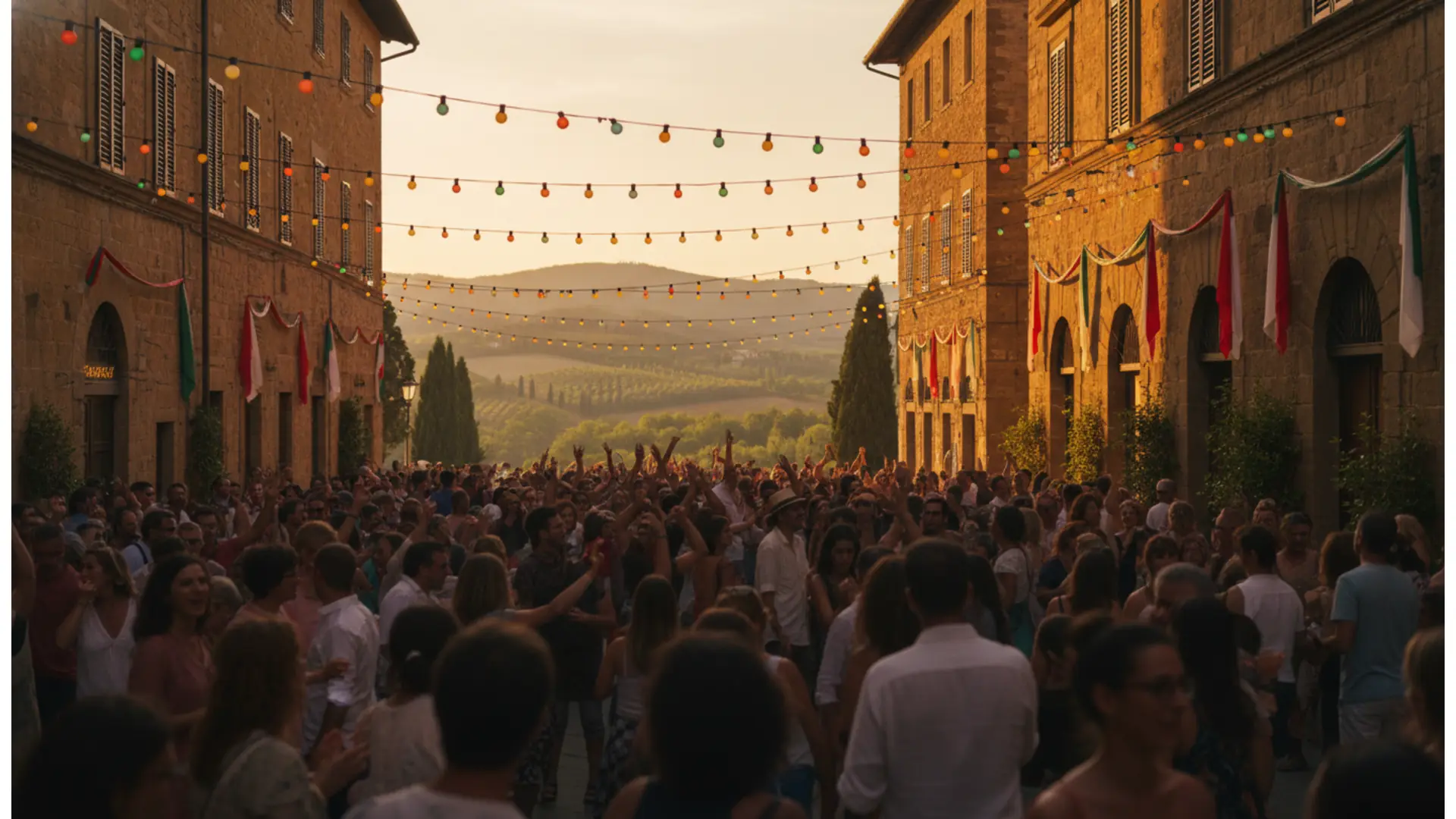
Italic Peoples Festival
Three days in Rieti discovering the peoples who inhabited Italy before Rome
About Italic Peoples
A festival telling the story of Italy before Rome
The Italic Peoples Festival was born in Rieti, in the heart of the Sabina region, as the first national event entirely dedicated to the peoples who inhabited the peninsula before the rise of Roman civilization. Sabines, Samnites, Umbrians, Marsi, Aequi, Volsci, Hernici, Piceni, Latins, Etruscans, and the peoples of Magna Graecia return to the spotlight in a choral narrative that combines archaeological research, mythical memory, and contemporary reflection.
The festival was conceived by Federico Fioravanti, the festival director, in collaboration with the Arché APS association. The event is part of a cultural enhancement project for the province of Rieti, in northern Lazio, funded by the National Complementary Plan – Next Appennino and supported by the Fondazione Varrone Cassa di Risparmio di Rieti, with the collaboration of the Municipality of Rieti.
The Sacred Spring, the guiding theme of the first edition
The theme chosen for the inaugural edition is Ver Sacrum, the « Sacred Spring »: an ancestral rite where entire generations of young people left their homelands in search of new territories, guided by a sacred animal. It is a foundation myth that explains the birth of many Italic peoples, which the festival reinterprets as a metaphor for migration, belonging, and shared roots. It is no coincidence that the Rieti area, with Lake Cotilia considered by the ancients as the Umbilicus Italiae, is one of the symbolic places of this history.
Author lectures, exhibitions, and performances
The heart of the festival is the Multipurpose Hall of the Civic Archaeological Museum, where free, popular-style history lectures by leading archaeologists and historians are held. The evenings move to the Flavio Vespasiano Theatre, the city's 19th-century jewel, for events aimed at a wider audience.
- Author lectures at the Archaeological Museum, morning and afternoon, featuring scholars such as Filippo Coarelli, Adriano La Regina, Andrea Carandini, Valentino Nizzo, Alessandro Guidi, and Giovanni Brizzi
- Evenings at the Flavio Vespasiano Theatre at 9:15 PM, with nationally renowned guests
- Exhibition « Wearing History. Before Rome: the sign of the sword, the weight of the shield », an immersive journey through the panoplies of ancient warriors, hosted at the Archaeological Museum
- « Secrets and Inventions » educational workshops, curated by the Legio XXX re-enactment group, open all day
- Book fair with national publishers specializing in archaeology and ancient history
- Storytelling with music dedicated to the foundation myth of Rome
Rieti, capital of the Sabina region
Hosting a festival on Italic peoples in Rieti is no random choice. The Sabina capital preserves evidence of millennia of settlement around the Rieti lakes and the Velino Valley, and its Civic Archaeological Museum holds artifacts documenting the long history of pre-Roman communities. The city, with its historic center clustered around Piazza Vittorio Emanuele II, the Bishop's Palace, and the Roman bridges, offers visitors an ideal setting to combine culture, walks, and local gastronomy.
A wide audience, a popular approach
The festival is aimed at both archaeology enthusiasts, families, and schools: the lectures are designed to be accessible even to those without specialized training, while the educational workshops and labs allow younger visitors to get hands-on with ancient weapons, textiles, and everyday objects. The event is intended to be an annual appointment, with the ambition of becoming a national reference point for the dissemination of Italic history.
Why it is worth visiting
In an increasingly crowded landscape of cultural festivals, the Italic Peoples Festival occupies a truly original space: that of a plural and ancient Italy, often overshadowed in school curricula by the story of Rome alone. Three days in May, in a city an hour from the capital, are enough to change your perspective on the origins of the peninsula.
Italic Peoples — edition 2026
The first edition: the Sacred Spring
From May 8 to 10, 2026, Rieti hosted the first edition of the Italic Peoples Festival, dedicated to Ver Sacrum, the rite of the « Sacred Spring » through which entire generations of young Italics set off in search of new lands. Three days of lectures, performances, and meetings explored the entire mosaic of pre-Roman peoples, from the Sabines to the Etruscans.
Lectures at the Archaeological Museum
The Multipurpose Hall of the Civic Archaeological Museum hosted a tight schedule of free lectures. On Friday the 8th, after the inauguration with Mayor Daniele Sinibaldi and director Federico Fioravanti, Filippo Coarelli spoke on « Lake Cotilia, Umbilicus Italiae », Roberto Marinelli on « The Sabine Atlantis », Alessandro Jaia and Carlo Virili on the millennia of life around the Rieti lakes, and Augusto Ancillotti on the Umbrians.
Saturday the 9th was the busiest day: Francesca Lezzi on the Aequi, Nicola Mastronardi on Ver Sacrum, Domenico Germano with « The Path of the Fathers », Adriano La Regina on the Samnites, Paola Santoro on the Sabines of the Tiber, Gioal Canestrelli on the Marsi, Sandra Gatti on the Volsci and Hernici, and Alessandro Naso on the origin of the Piceni. On Sunday the 10th, the narrative concluded with Simone Nardelli, Alessandro Guidi, Valentino Nizzo, Loredana Cappelletti, Giovanni Brizzi, Giusto Traina, and the final dialogue between Andrea Carandini and Nicolò Squartini on the Valley of the Flavians.
Evenings, exhibition, and activities
At the Flavio Vespasiano Theatre, at 9:15 PM, Stefano Mancuso took the stage with « The Tribe of Trees » (May 8) and Dario Fabbri with « Peoples and Empires, from the ancient world to the contemporary age » (May 9). On May 8, « The Tale of Romulus » also debuted, a narrative with music by Natalia Magni, and the exhibition « Wearing History. Before Rome: the sign of the sword, the weight of the shield » was inaugurated, open until January 6, 2027. Throughout the festival, the « Secrets and Inventions » educational workshops by Legio XXX and the book fair accompanied the public from 10:00 AM to 7:30 PM.
Programme Italic Peoples 2026
Highlights Italic Peoples 2026
Prices Italic Peoples 2026
Practical information — Italic Peoples
How to get there
Rieti can be reached by car via the Salaria (SS4) road, about an hour and a half from Rome and Terni. The Civic Archaeological Museum and the Flavio Vespasiano Theatre are both located in the historic center, just a few minutes' walk from each other. The Rieti train station is served by the Terni–L'Aquila–Sulmona line; numerous buses connect Rieti to Rome Tiburtina daily.
Admission and tickets
Author lectures at the Civic Archaeological Museum have free admission. For the evenings at the Flavio Vespasiano Theatre, a ticket is required, which can be purchased online at Liveticket.it and at authorized retailers. The book fair is open every day from 10:00 AM to 7:30 PM with free access.
Tips
The most anticipated lectures fill the Multipurpose Hall quickly: it is advisable to arrive a bit early. For the theater evenings, advance ticket purchase is recommended. The historic center of Rieti offers numerous trattorias where you can taste traditional Sabina dishes, from DOP olive oil to stringozzi pasta.
Information
Updated program and ticket office on the official website festivalpopolitalici.it.
Festival-goer photos
No photos yet. Share yours!
Share your photos
5 photos max, 5 MB per photo (JPG, PNG, WebP)
Noticed an error or missing information?
Help us keep this listing up to date. Every proposal is verified by our team before publication.
Festival-goer reviews
No rating yet — be the first!
No comments yet. Be the first!
Were you there?
Share your experience with the community.
Published by Valentin Contard, festival listings writer. Reviewed, corrected and approved by Christophe Contard, editor-in-chief. .
Where does it take place — Italic Peoples
Museo Civico Archeologico di Rieti e Teatro Flavio Vespasiano
Via Sant'Anna 4, 02100 Rieti