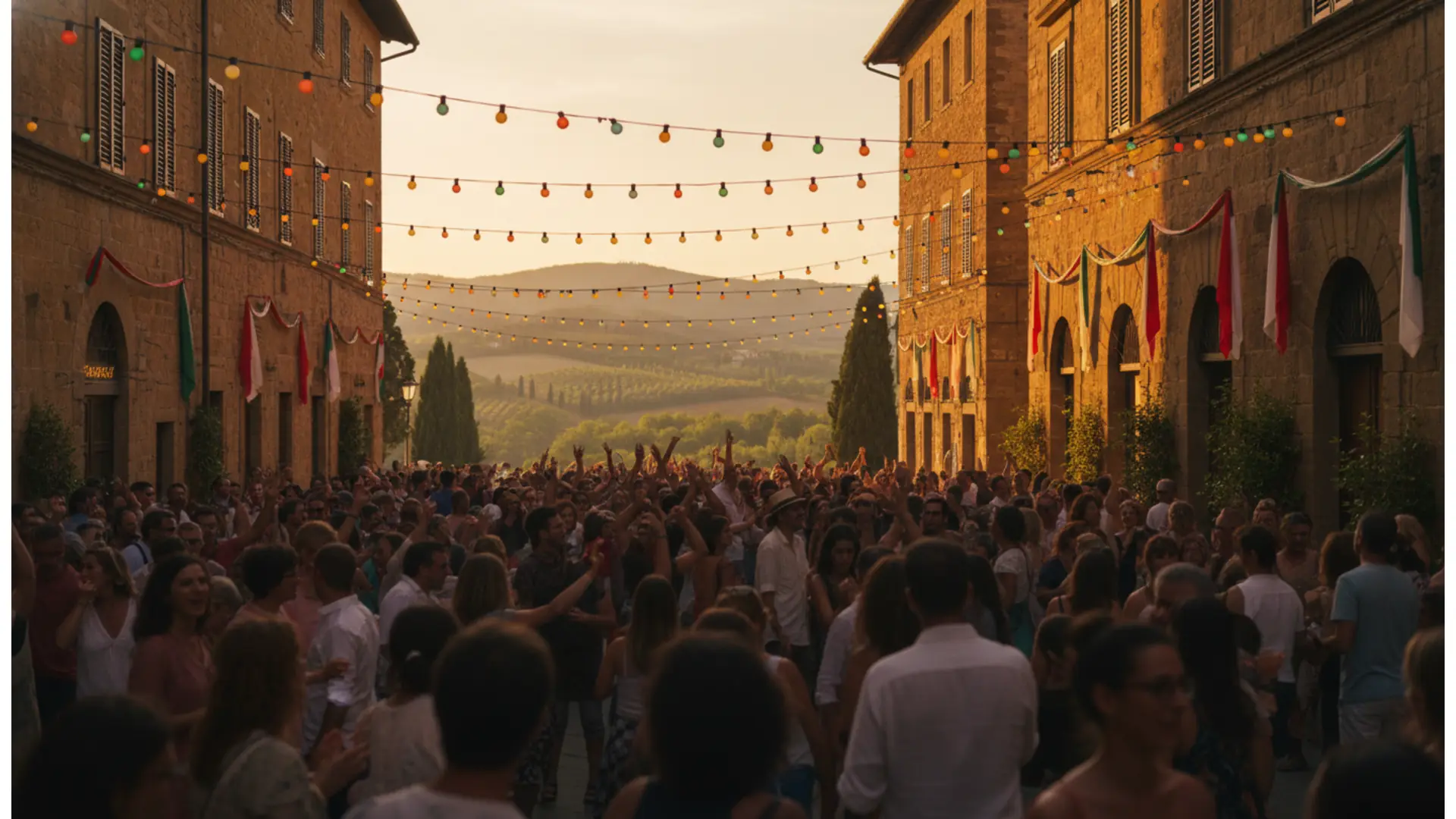
Frecciarossa Italian Olympic and Paralympic Fencing Championships "Rome 2026"
The national foil, sabre, and épée titles on the Terrazza del Pincio, featuring Olympic and Paralympic fencing
About Rome 2026 Fencing Championships
Fencing returns to Rome after a decade
The Frecciarossa Olympic and Paralympic Fencing Championships "Rome 2026" brought the annual national title competition back to the capital after a ten-year absence. Organized by the Italian Fencing Federation with the support of Roma Capitale, this Roman edition was designed as a showcase for the sport: not held in a closed arena, but on one of the city's most iconic terraces, open to the public and the cameras.
The Terrazza del Pincio as a stage
The Terrazza del Pincio, overlooking Piazza del Popolo and the rooftops of Rome, hosted all the final stages of the Olympic championships from May 30 to June 4. The pistes were set up outdoors, with gold-medal bouts scheduled for the evening, when the light over the city shifts and the view is at its most spectacular. The qualifying rounds, youth categories, and the entire Paralympic program took place at the Fiera di Roma, which served as the technical headquarters for the event.
A program across three weapons
The schedule followed a classic progression, one weapon at a time: first foil (May 30-31), then sabre (June 1-2), and finally épée (June 3-4), with individual competitions followed by team events. On June 3, the event coincided with the 117th anniversary of the Federation, founded on June 3, 1909, celebrated at the Pincio with a historical fencing exhibition. The final days, from June 4 to 6, were dedicated to Paralympic and visually impaired fencing, with the men's category A foil final held on the Pincio pistes.
The stars of the championships
- Individual Foil: First national title for Filippo Macchi, who defeated Tommaso Marini in an all-Fiamme Oro final; Alice Volpi triumphed in the women's category.
- Team Sabre: Victories decided on the final touch, 45-44, for the Fiamme Oro Roma women's team and the Centro Sportivo Carabinieri men's team.
- Individual Épée: Valerio Cuomo reclaimed the national title by beating Alexandre Camargo 15-12, while Alberta Santuccio secured her first individual Italian title by overcoming Olympic champion Rossella Fiamingo 15-5.
- Team Épée: A double victory for the Fiamme Oro on the final night of competition at the Pincio.
- Paralympic: The men's category A foil title went to Emanuele Lambertini.
Record-breaking numbers
The Federation described this as a record-breaking edition: approximately 1,300 athletes on the piste, including over 1,100 in Olympic fencing across cadet, youth, and senior levels, 142 in Paralympic fencing, and 50 in the women's épée for visually impaired athletes—a historical milestone for that discipline. In total, 44 Italian titles were awarded, with fifteen Olympic medalists and four Paralympic medalists in attendance. The thirteen final sessions drew around 10,000 spectators, while Rai provided eight days of live coverage and over twenty hours of television programming, with the first six evenings from the Pincio aired in prime time.
An event within the city
The value of this initiative for the City of Rome and the Lazio region went beyond sports: the Federation estimated an economic impact of approximately 1.5 million euros over the ten-day event. Above all, the choice of the Pincio turned fencing into an urban event—free and accessible—within the pedestrian perimeter of Villa Borghese, just a stone's throw from the Spanish Steps and the Tridente. For those who had never seen a bout live, the combination of the sharp sound of blades, live commentary, and the panorama of the capital served as the best possible introduction to one of Italy's most successful sports.
Rome 2026 Fencing Championships — edition 2026
A record-breaking Roman edition
From May 28 to June 6, 2026, Italian fencing made Rome its capital for ten days. The formula chosen by the Italian Fencing Federation separated the technical events, hosted at the Fiera di Roma, from the final stages, which were held outdoors on the Terrazza del Pincio: a setup that allowed the competition to coexist with the city's panorama.
The final tally includes approximately 1,300 total athletes, 44 Italian titles awarded across Olympic, Paralympic, and visually impaired fencing, fifteen Olympic medalists on the piste, and about 10,000 spectators across thirteen final sessions, followed by over twenty hours of live television coverage. The record participation of visually impaired athletes in women's épée, with fifty competitors, was one of the most highlighted statistics by the organizers.
Programme Rome 2026 Fencing Championships 2026
Final stages — Terrazza del Pincio (8:00 PM)
- Saturday, May 30: Men's and women's individual foil, semifinals and finals (qualifiers from 10:15 AM at Fiera di Roma).
- Sunday, May 31: Men's and women's team foil, gold-medal bouts.
- Monday, June 1: Individual sabre, semifinals and finals.
- Tuesday, June 2: Team sabre, gold-medal finals from 7:00 PM.
- Wednesday, June 3: Individual épée, semifinals and finals, with the celebration of the 117th anniversary of the Federation and a historical fencing exhibition.
- Thursday, June 4: Men's and women's team épée and the men's Paralympic category A foil final.
Fiera di Roma
- May 28-29: Youth and cadet foil championships.
- May 30-31: Youth and cadet sabre.
- June 1-2: Youth and cadet épée.
- June 4-6: Paralympic and visually impaired fencing, all categories.
All sessions generally took place between 9:00 AM and 9:00 PM, with qualifiers in the morning at the Fiera and finals in the evening at the Pincio.
Highlights Rome 2026 Fencing Championships 2026
- Filippo Macchi wins his first individual foil title, beating Tommaso Marini 15-7; Alice Volpi wins the women's title.
- Team sabre decided on the final touch: 45-44 for Fiamme Oro Roma (women) and Centro Sportivo Carabinieri (men).
- Valerio Cuomo returns as Italian épée champion (15-12 over Alexandre Camargo); Alberta Santuccio wins her first individual national title, beating Rossella Fiamingo 15-5.
- Double victory for Fiamme Oro in team épée on the final night at the Pincio.
- Emanuele Lambertini is the Paralympic foil category A champion, with the final held at the Pincio.
- Farewell to the piste for Francesco Bonsanto and Sofia Ciaraglia, who received a standing ovation.
Prices Rome 2026 Fencing Championships 2026
Practical information — Rome 2026 Fencing Championships
Location
The finals were held at the Terrazza del Pincio, Piazzale Napoleone I, Rome (Villa Borghese). Qualifying rounds, youth categories, and Paralympic fencing took place at the Fiera di Roma, via Portuense 1645-1647.
How to get there
For the Pincio: Metro A, Flaminio or Spagna stations, both a few minutes' walk away; alternatively, buses to Piazza del Popolo. The area is pedestrianized; driving is not recommended. For the Fiera di Roma: FL1 regional train to the Fiera di Roma station, or take exit 30 of the Grande Raccordo Anulare.
Admission
Free entry to all sessions, both at the Pincio and the Fiera di Roma, subject to capacity.
Tips
Evening finals at the Pincio start around 8:00 PM; it is advisable to arrive well in advance to secure a seat in the stands. Those unable to attend can follow the matches live on Rai Sport and, for youth categories, on the Assalto TV platform.
Festival-goer photos
No photos yet. Share yours!
Share your photos
5 photos max, 5 MB per photo (JPG, PNG, WebP)
Noticed an error or missing information?
Help us keep this listing up to date. Every proposal is verified by our team before publication.
Festival-goer reviews
No rating yet — be the first!
No comments yet. Be the first!
Were you there?
Share your experience with the community.
Published by Valentin Contard, festival listings writer. Reviewed, corrected and approved by Christophe Contard, editor-in-chief. .
Where does it take place — Rome 2026 Fencing Championships
Terrazza del Pincio
Piazzale Napoleone I, 00187 Roma