FateCinema
The open-air film laboratory that turns a Matese village into a shared movie set
About FateCinema
A village turned into a film set
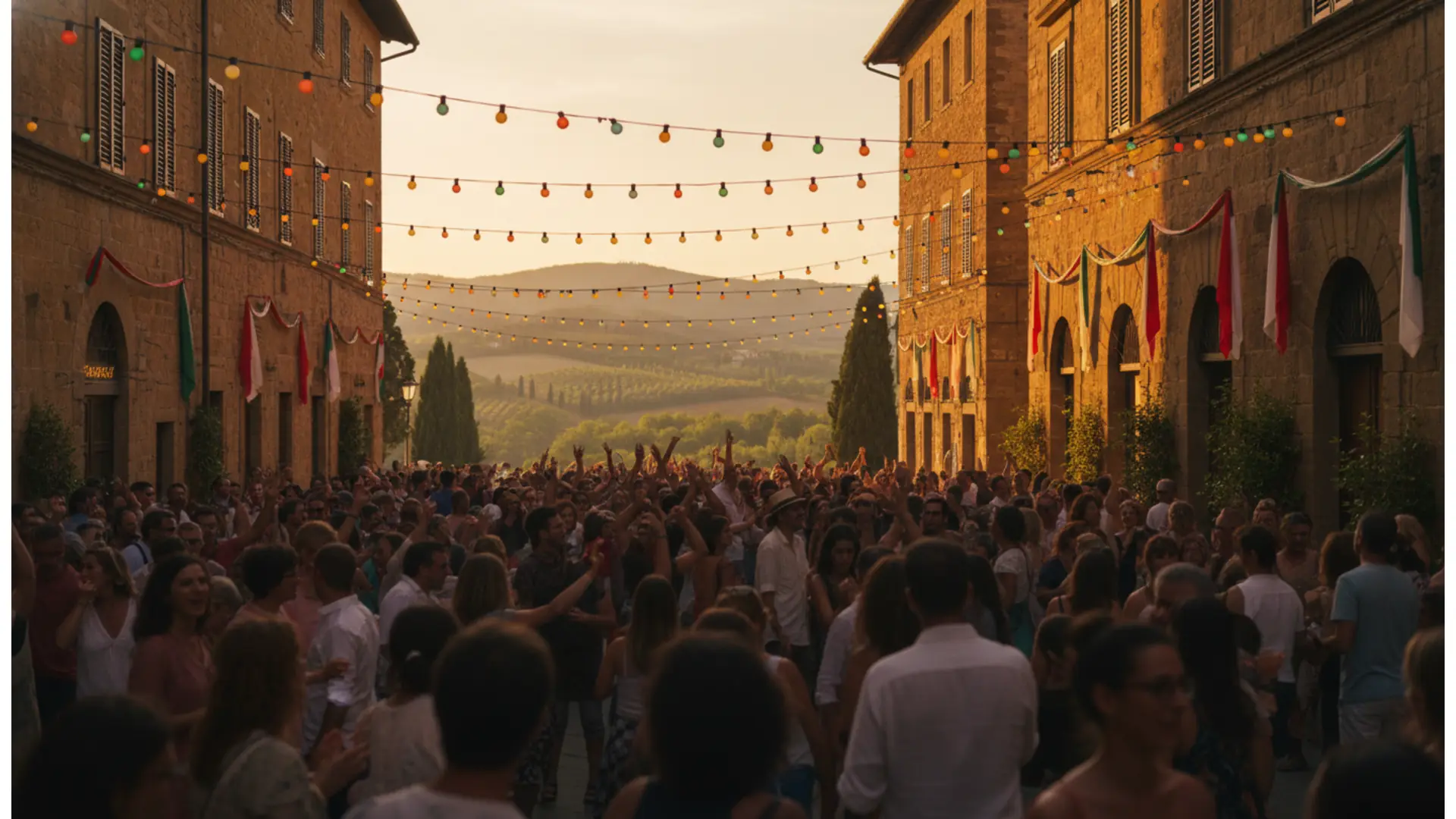
FateCinema is neither a film review nor a red-carpet festival: it is an open-air film laboratory where an entire village places itself at the disposal of filmmakers. For one week, San Potito Sannitico, a village in the Alto Casertano region at the foot of the Matese massif in the province of Caserta (Campania), opens its alleys, courtyards, fountains, and homes to selected directors, who are hosted here to create a short film in just a few days.
The unique aspect lies in the pact with the community: the inhabitants are not mere spectators but actors, extras, and collaborators. Children, adults, and the elderly find themselves in front of the camera, often for the first time, and end up discovering themselves as unexpected performers during the final screenings. The result is an archive of short films that tell the story of the territory from within, through the external gaze of authors arriving from different countries.
How the laboratory works
The mechanism is that of a demanding and fun film marathon. Ten adult directors of any nationality are chosen by an internal committee based on a previously produced short film submitted via an online platform. Once they arrive in the village, they receive a surprise element drawn by lot during the opening night: a creative constraint equal for everyone that must appear in the work.
- Maximum short film duration: 10 minutes.
- Time available for writing, filming, and editing: five days.
- Delivery in digital format by the deadline set by the organization.
- Public screening of all works and awards ceremony in the final days.
There is no compensation for the directors: the association provides accommodation, while travel and local transport remain at the participants' expense. This is a choice consistent with the project's spirit, which is that of a collective residency rather than a professional competition.
Who organizes: FateLAB and the C:L.A.C.
Behind FateCinema is FateLAB, a non-profit association born from the initiative of a diverse group of residents who have been building a space for exchange between artists, citizens, and the territory in San Potito Sannitico for years. The stated goal is to regenerate the area through art and culture, countering the marginalization and depopulation that affect the small towns of the southern Apennines.
The headquarters is the C:L.A.C. (Cupole: Laboratori Arte Contemporanea), housed in the municipal structure of the Cupole on Via Pozzo. It hosts two art printing labs equipped for screen printing and engraving, an archaeological lab dedicated to the history of the Volturno valley and the Matese, a specialized library with over 15,000 volumes on medieval history, art, architecture, and archaeology, and a 218-seat auditorium set up with recycled materials, where the final screenings are held.
Twenty years of art in a Matese village
FateCinema was born in 2015 and is part of a twenty-year cultural journey that has made San Potito Sannitico a case study among Italian villages. The FATE Festival, dedicated to urban art, has brought Italian and international muralists to paint the village facades over the years, transforming it into an open-air museum; alongside it, events like Cinemadamare and cinema under the stars evenings have flourished.
The awards: two residencies between Matese and Gran Canaria
The laboratory concludes with the assignment of two awards, both designed as work opportunities rather than trophies:
- Technical Jury Award: a one-month artistic residency at the La Regenta art center in Las Palmas de Gran Canaria, in the Canary Islands.
- Audience Award: a one-month residency in San Potito Sannitico, shared with an artist selected by La Regenta itself.
The bond with the Canarian institution gives the project a concrete international dimension.
Why it is worth attending
For visitors, FateCinema is a rare opportunity to see cinema in the making: crews shoot in the streets, anyone can stop to watch and, often, end up in the frame. The final evenings, with short films shot just days earlier in places everyone recognizes, are the moment the village looks at itself in the mirror. A different way to visit the Matese, between excursions on the plateau, Caserta gastronomy, and a community that has chosen art as a tool of resistance.
FateCinema — edition 2026
The 6th edition: “Fate Comunità”
After the last edition in 2019, FateCinema returns to San Potito Sannitico from August 24 to 31, 2026 for its sixth edition, promoted by the FateLAB association. The chosen theme is “Fate Comunità”, a statement of intent that summarizes the laboratory's formula: cinema as a tool to bring a village together.
Ten adult directors of any nationality are selected by an internal committee based on a previously produced short film. Upon arriving in the Caserta municipality, they receive a surprise element drawn by lot during the opening night—a creative constraint common to all works—and from that moment, they have five days to shoot and edit a short film of up to ten minutes with the collaboration of the inhabitants. The organization provides accommodation; travel and local transport remain at the participants' expense, and they receive no compensation.
The logistical heart of the edition is the C:L.A.C., on Via Pozzo, with its 218-seat auditorium built from recycled materials: this is where the opening, screenings, and final awards ceremony are held.
Programme FateCinema 2026
Monday, August 24, 2026 — Opening
- 9:00 PM: Opening night at the C:L.A.C. with the presentation of the ten selected directors.
- Drawing of the surprise element, the creative constraint that must appear in all short films.
Tuesday, August 25 to Friday, August 28, 2026 — Filming
- Casting and auditions open to the inhabitants of San Potito Sannitico of all ages.
- Filming throughout the streets, courtyards, and iconic locations of the village, with residents as actors and extras.
- Editing of the short films in the C:L.A.C. spaces.
Saturday, August 29, 2026 — Delivery and Screenings
- 12:00 PM: Deadline for the delivery of short films (maximum duration 10 minutes, .mp4 file in h.264).
- In the evening: Public screening of all short films made during the week in the C:L.A.C. auditorium.
- Audience voting.
Sunday, August 30, 2026 — Awards Ceremony
- In the evening: Awards ceremony with the assignment of the Technical Jury Award and the Audience Award.
Monday, August 31, 2026 — Closing
- Final day of the laboratory and farewells to the community.
Highlights FateCinema 2026
- Sixth edition of the laboratory, back on the calendar after the 2019 edition.
- 2026 Theme: “Fate Comunità”.
- Ten international directors hosted in the village for a week.
- Five days to write, shoot, and edit a short film of up to 10 minutes.
- Surprise element drawn on opening night, a creative constraint for all works.
- Inhabitants of all ages as protagonists, acting as actors and extras.
- Screenings and awards ceremony in the 218-seat C:L.A.C. auditorium.
- Technical Jury Award: one-month artistic residency at the La Regenta art center in Las Palmas de Gran Canaria (March 2027).
- Audience Award: one-month residency in San Potito Sannitico (May 2027), shared with an artist chosen by La Regenta.
Prices FateCinema 2026
Practical information — FateCinema
How to get there
San Potito Sannitico is located in the Alto Casertano area, at the foot of the Matese. By car, you can arrive from the A1 Milan-Naples motorway (Caianello motorway (Caianello exit) or from the SS372 Telesina road. The nearest train station is Piedimonte Matese, about 3 km away, connected to major cities. The reference airports are Naples Capodichino (about 90 km) and Rome (about 200 km). The organization notes that a car is the most convenient means of transport, but offers support for travel upon request.
Where it takes place
Filming takes place throughout the village; the nerve center is the C:L.A.C. at Via Pozzo 3, with the 218-seat auditorium where the opening night, screenings, and awards ceremony are held.
Participating as a director
- Online application with your own short film, evaluated by an internal committee.
- Requirement: legal age, no nationality limit.
- Accommodation offered by the organization; travel and local transport at the participant's expense; no compensation is provided.
- In case of equal merit, preference is given to those who have never participated in previous editions.
Contacts
- Website: fatelab.it
- Laboratory email: [email protected]
- Association email: [email protected]
- Facebook: FateLab | San Potito Sannitico – Instagram: @fate_lab
Tips
August is the ideal month to combine the laboratory with a holiday in the Matese: the Matese lake, the villages of Castello del Matese and San Gregorio Matese, and the historic center of Piedimonte Matese are all just a few kilometers away. Don't miss a walk among the murals of the FATE Festival that decorate the village facades.
Festival-goer photos
No photos yet. Share yours!
Share your photos
5 photos max, 5 MB per photo (JPG, PNG, WebP)
Noticed an error or missing information?
Help us keep this listing up to date. Every proposal is verified by our team before publication.
Festival-goer reviews
No rating yet — be the first!
No comments yet. Be the first!
Were you there?
Share your experience with the community.
Published by Valentin Contard, festival listings writer. Reviewed, corrected and approved by Christophe Contard, editor-in-chief. .
Where does it take place — FateCinema
C:L.A.C. – Cupole: Laboratori Arte Contemporanea
Via Pozzo 3, 81016 San Potito Sannitico