Dancescreen in the Land
Contemporary dance, screendance, and archaeology across Rome, the Appian Way, and Bracciano
About Dancescreen in the Land
A festival that makes the landscape dance
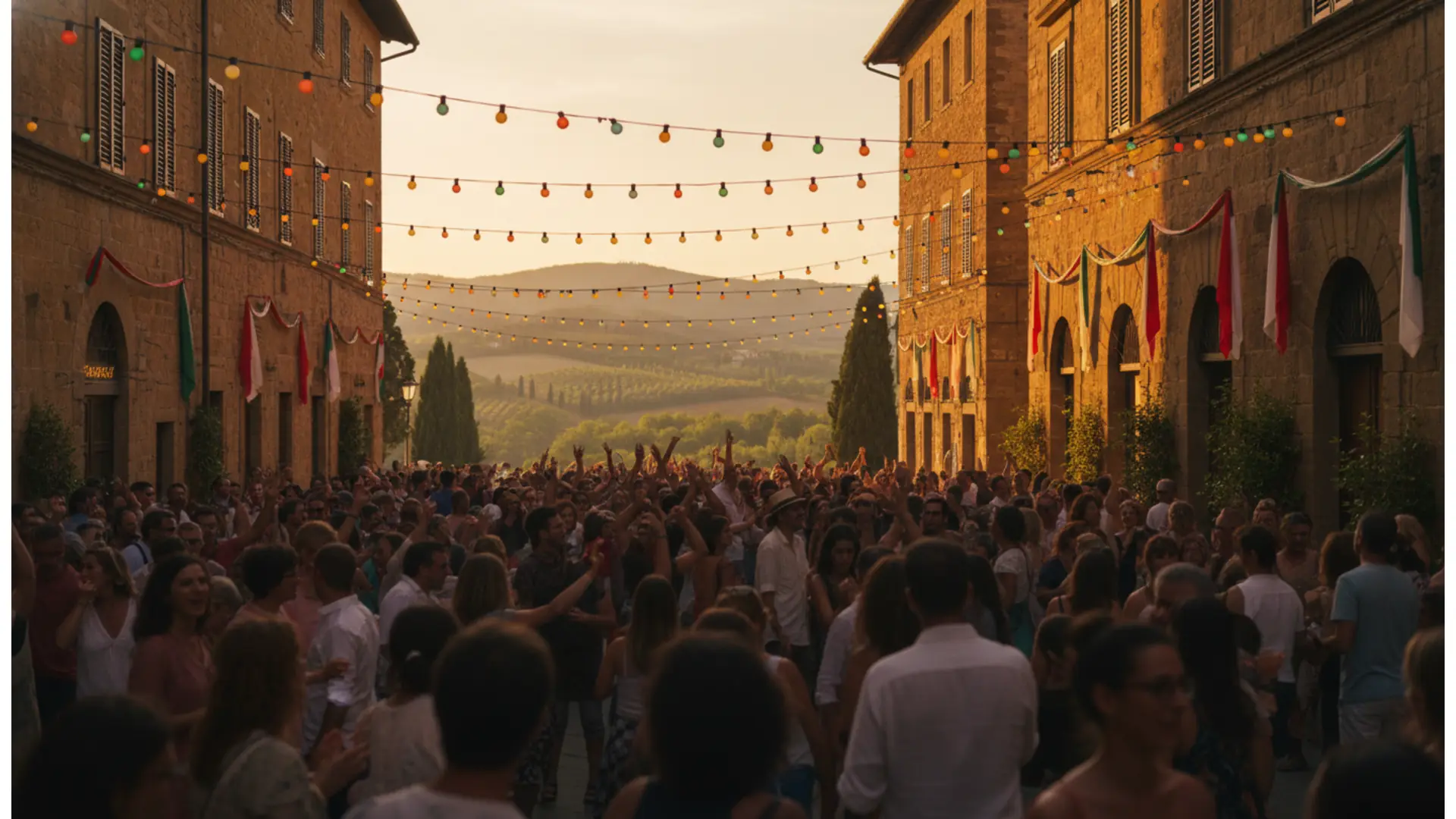
Dancescreen in the Land is one of the most original offerings on the dance scene in the Municipality of Rome and the wider Lazio region. Born from the work of the Associazione Canova 22 and supported by the Ministry of Culture as part of a three-year project, the festival does more than just bring contemporary dance to the stage: it brings it into the landscape, into excavations, historic villages, and repurposed industrial spaces. The body thus becomes a tool to reinterpret the historical stratification of the Roman territory.
Three territories, one unique journey
The festival unfolds across three complementary hubs, all within the Metropolitan City of Rome Capital.
- Bracciano — the Borgo di Acqua Paola hosts the festival's residential phase, with a creative retreat immersed in the greenery of the lake district.
- Appian Way Archaeological Park — performances take place among the monuments of the ancient consular road, often preceded by archaeological walks led by an archaeologist, allowing the spectator to enter the performance already immersed in the site's narrative.
- Rome city — the Fornace del Canova, an ancient brick kiln transformed into a cultural space on Via Antonio Canova, together with the Teatro Ruskaja and Teatro Vascello, hosts the section dedicated to the great lineages of international dance.
Dance, video, and memory
The very name of the festival evokes screendance: alongside live shows, there are screenings, installations, immersive exhibitions, and interactive works where movement generates image and sound. Over the years, the program has paid homage to central figures of 20th-century dance — from Pina Bausch to Lindsay Kemp — putting them in dialogue with emerging Italian companies and the latest digital research.
Training and research
A substantial part of the project is dedicated to transmission. Workshops, labs, and residencies allow professional dancers and students to work with performers from international companies; the public showings are almost always free and represent one of the most authentic moments of the festival. The Geografie del Corpo project, created with MP3 Dance Project, articulates this dimension through practice, talks, and performances.
Who it is for
Despite its research-oriented roots, Dancescreen in the Land is not just for industry insiders. The formula combining an archaeological visit at sunset with an open-air evening show makes it accessible even to those who do not regularly attend contemporary dance events, and it is one of the most evocative ways to experience the Appian Way in a different light than the daytime tourist rush. Capacity is limited, and booking is highly recommended.
When to go
The festival occupies the tail end of the Roman summer and extends into late autumn: a period when evening temperatures make outdoor events pleasant, and the grazing light on the monuments of the Appian Way provides a scenic backdrop that is hard to beat. The October program in Rome moves indoors to the Fornace and partner theaters.
Dancescreen in the Land — edition 2026
« Respiro al Centro »: the fifth edition
The 2026 edition of Dancescreen in the Land confirms the itinerant structure that has made the Associazione Canova 22 festival recognizable, spreading two months of programming across three territories of the Metropolitan City of Rome Capital. The guiding thread chosen this year is breath, understood as a primary gesture that links the dancer's body to the environment that hosts it.
The journey opens at the end of August in the greenery of Bracciano, continues in September among the monuments of the Appian Way, and concludes in October in the Roman spaces of the Fornace del Canova, Teatro Ruskaja, and Teatro Vascello, where the festival focuses on the lineages of international contemporary dance and the transmission of great choreographic languages.
Programme Dancescreen in the Land 2026
Bracciano — Borgo di Acqua Paola (August 27-30)
The festival opens with Creation in the Land, an immersive creative retreat dedicated to the relationship between dance and landscape, led by performers from the Hofesh Shechter Company Attila Rónai, Justine Gouache, and Oscar Jinghu Li, with an artistic residency entrusted to choreographer Filippo Buonamassa and the ResExtensa company. The public showing is scheduled for August 30.
- L'Altro — Moreno Guadalupi / ResExtensa (contemporary dance and house)
- Odissea – Naufragi dell'Anima — Luna Dance Theater
- Echoes of the King — Lunatics collective (urban dance)
- August 30: performance by the Bracciano Polyphonic Choir with pianist Andrea Bosso
Appian Way Archaeological Park (September)
Site-specific performances, happenings, and participatory practices among the monuments of the ancient consular road. Evening shows are preceded by guided archaeological walks curated by archaeologist Lavinia Venturi.
- Zero•Point•Seven — MP3 Dance Project
- Luci e Ombre — National Academy of Dance
- Lust Duet — Artemis Danza (a reinterpretation of Othello)
- Happening, Again! — Gabriella Stazio / Movimento Danza, on the legacy of the Judson Dance Theater
- Suggestioni Shakespeariane — Ricky Bonavita / Excursus
- Acqua Madre — ResExtensa
Rome — Fornace del Canova, Teatro Ruskaja, Teatro Vascello (September-October)
The heart of the Roman section is Geografie del Corpo, an international training and research project promoted by Canova22 with MP3 Dance Project, articulated through workshops, performances, talks, and public showings. Guided by Attila Rónai, Pau Aran Gimeno, Michele Pogliani, and Riccardo Meneghini, participants explore the practices of Hofesh Shechter, Pina Bausch, Carolyn Carlson, and Lucinda Childs.
- Street Tale — ARB Dance Company
- Burden — Attila Rónai
- Seeking the Truth — Pau Aran Gimeno
- Etude 18 — Michele Pogliani
- The Seventh Man — Riccardo Meneghini
- Speechless — Heung Won Lee
- Glass/Études — MP3 Dance Project, on the universe of Philip Glass in collaboration with Lucinda Childs
Closing
Collodi – L'Ombra e la Grazia, a new production by Canova22 / ResExtensa / MP3 Dance Project, premiered in 2026, joins the program at the Fornace del Canova as a natural conclusion to the journey dedicated to cultural legacies: a reinterpretation of Pinocchio focused on disobedience and transformation, in the year of the Collodi bicentenary.
Highlights Dancescreen in the Land 2026
- Creation in the Land in Bracciano with performers from the Hofesh Shechter Company and public showing on August 30
- Archaeological walks at sunset on the Appian Way before evening shows
- Geografie del Corpo: workshops and performances on the legacies of Pina Bausch, Carolyn Carlson, Lucinda Childs, and Hofesh Shechter
- Glass/Études by MP3 Dance Project, dedicated to the universe of Philip Glass
- The closing production Collodi – L'Ombra e la Grazia at the Fornace del Canova
Prices Dancescreen in the Land 2026
Practical information — Dancescreen in the Land
How to get there
Appian Way Archaeological Park: ATAC bus 118 and 218 from Metro B station Circo Massimo or San Giovanni; limited parking is available along the Via Appia Antica, which is closed to private traffic on weekends. Fornace del Canova: Via Antonio Canova 22, Campo Marzio district, a few minutes' walk from Metro A station Flaminio or Spagna. Bracciano: FL3 regional train from Rome Ostiense/Valle Aurelia, about one hour; by car via Cassia bis until the exit for Bracciano.
Tickets
Affordable entry with limited capacity: in recent editions, single tickets were approximately 12 euros full price, 10 euros reduced, and 8 euros for students. Some workshop showings and participatory activities are free. Booking is recommended as spots fill up quickly.
Tips
For events on the Appian Way, wear comfortable shoes: the Roman paving stones and dirt paths are not suitable for elegant footwear. Bring a light sweater for the evenings in late September and October. Those participating in the afternoon archaeological walks should bring water and a hat during the still-warm days of late August.
Information
Associazione Canova 22 — canova22.com — [email protected]
Festival-goer photos
No photos yet. Share yours!
Share your photos
5 photos max, 5 MB per photo (JPG, PNG, WebP)
Noticed an error or missing information?
Help us keep this listing up to date. Every proposal is verified by our team before publication.
Festival-goer reviews
No rating yet — be the first!
No comments yet. Be the first!
Were you there?
Share your experience with the community.
Published by Valentin Contard, festival listings writer. Reviewed, corrected and approved by Christophe Contard, editor-in-chief. .
Where does it take place — Dancescreen in the Land
Fornace del Canova / Parco Archeologico dell'Appia Antica
Via Antonio Canova 22, 00179 Roma