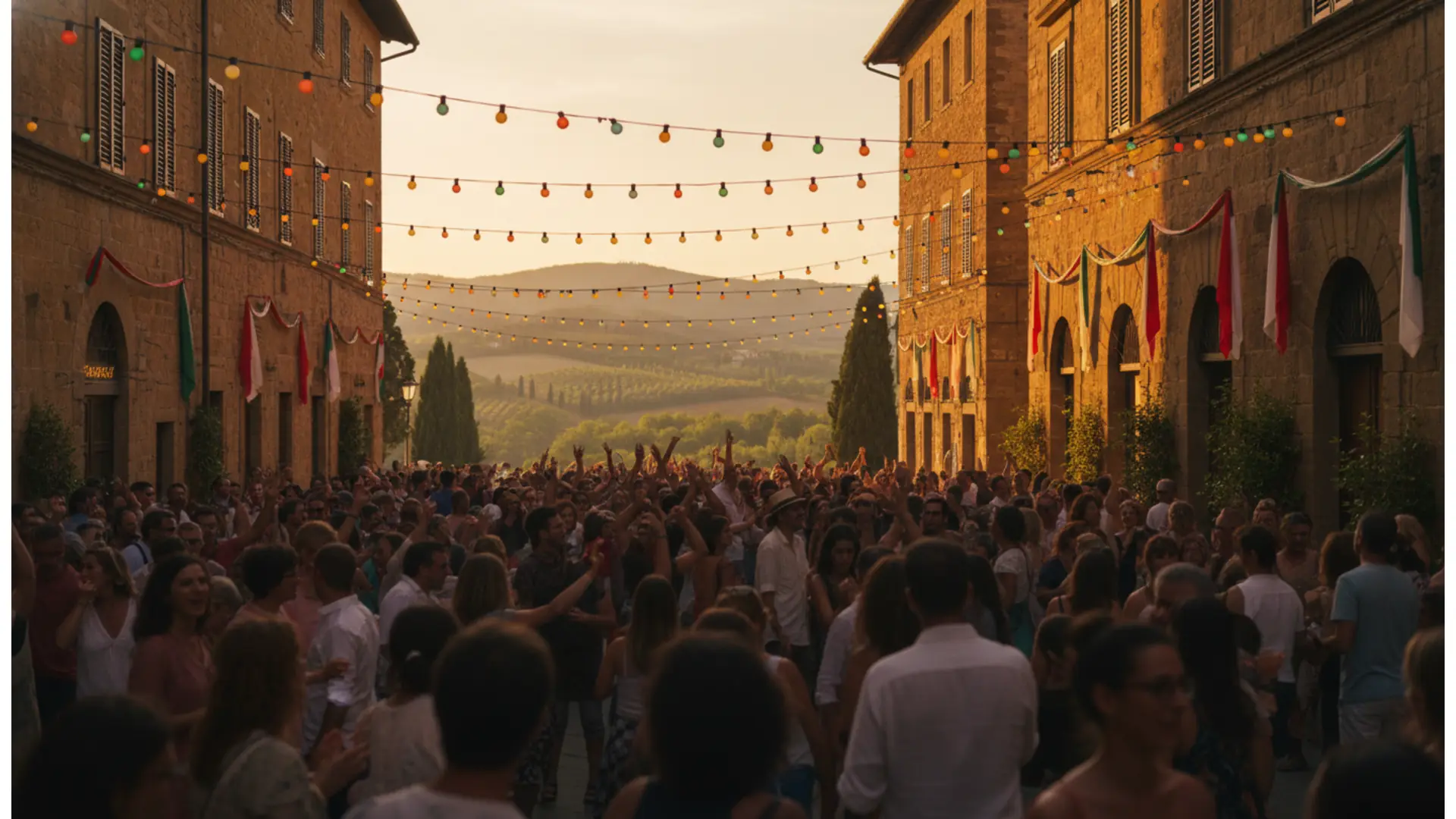
Corpus Domini in Amalfi
Solemn Pontifical Mass and Eucharistic procession in the Cathedral of Saint Andrew
About Corpus Domini Amalfi
Corpus Domini in the heart of the ancient Maritime Republic
In Amalfi, in the province of Salerno, the solemnity of Corpus Domini is one of the most attended events in the city's religious calendar. Everything revolves around the Cathedral of Saint Andrew the Apostle, the Duomo that dominates Piazza Duomo with its monumental staircase and Arab-Norman facade: a symbolic place for the Amalfi community, guardian of the patron saint's relics. The date changes every year as it is tied to the movable liturgical calendar—falling about sixty days after Easter—but the structure of the rite remains unchanged: first the Pontifical Mass in the cathedral, then the Eucharistic procession along the streets of the historic center.
The solemn Pontifical Mass in the Cathedral
The central moment is the solemn Pontifical Mass presided over by the Archbishop of the Archdiocese of Amalfi-Cava de' Tirreni, Monsignor Orazio Soricelli. In the late afternoon, the aisles of the Duomo fill with the faithful, and the celebration takes place in an atmosphere of total recollection and profound spirituality, marked by liturgical chants and the Liturgy of the Word dedicated to the Eucharistic mystery. It is not just a parish rite: the presence of the Archbishop gives the evening a diocesan dimension that unites Amalfi with the rest of the Coast.
The Eucharistic procession through the streets of Amalfi
At the end of the Mass, the community's fervor spills out of the church and embraces the urban fabric. The monstrance with the Blessed Sacrament is carried in procession under a canopy, accompanied by the clergy and a long procession of the faithful, with the first lights of evening as a backdrop. The procession winds through the alleys and squares of the Amalfi historic center—a maze of staircases, arches, and shops descending toward the sea—concluding with the Eucharistic blessing of the city.
In the tradition of the Amalfi Coast parishes, the passage of the monstrance is carefully prepared: windows and balconies are decorated with drapes and embroidered linens, while children who have recently received their First Communion scatter rose petals and flowers along the path. It is an image that perfectly captures the relationship between devotion and daily life in this corner of Campania.
An ancient feast: from the miracle of Bolsena to today
The solemnity of Corpus Domini originated in the 13th century, rooted in two episodes: the mystical visions of Juliana of Liège, who called for a liturgical feast dedicated to the Blessed Sacrament, and the Eucharistic miracle of Bolsena in 1263. Pope Urban IV established it in 1264 with the bull Transiturus de hoc mundo, setting it for the Thursday after the solemnity of the Most Holy Trinity, and entrusted Saint Thomas Aquinas with composing the liturgical texts, including the famous Pange lingua. In Amalfi, this legacy was grafted onto an already strong local religious tradition centered on the cult of Saint Andrew.
What to expect if you attend
- An authentically local celebration, not an event staged for tourists: the tone is sober and devotional.
- The Amalfi Duomo on one of its most intense days, with the cathedral open and crowded with the faithful.
- The evening procession, the most evocative moment, with the city coming to a standstill as the Blessed Sacrament passes.
- No tickets: participation is free and open to both residents and visitors.
Amalfi in June: a month of feasts
Corpus Domini effectively opens the most religious month of the Amalfi calendar. A few weeks later, on June 27th, the city celebrates the summer feast of its patron saint, Saint Andrew the Apostle, with a Pontifical Mass in the cathedral, the festive ringing of bells, the procession of the statue through the streets of the center, and the famous race up the Duomo steps. Those visiting Amalfi during this period will find a city where the spiritual and civic dimensions constantly overlap, within a landscape—the UNESCO-listed Amalfi Coast—that amplifies every rite.
Corpus Domini Amalfi — edition 2026
The 6:30 PM Pontifical Mass
Faith, tradition, and a sense of community merged in Amalfi for the 2026 solemnity of Corpus Domini. The ancient Maritime Republic gathered in its symbolic place, the Cathedral of Saint Andrew, where at 6:30 PM the faithful filled the aisles for the solemn Pontifical Mass presided over by the Archbishop of the Archdiocese of Amalfi-Cava de' Tirreni, Monsignor Orazio Soricelli. The celebration took place in an atmosphere of total recollection and profound spirituality.
The Eucharistic procession
At 7:30 PM, with the first lights of the evening, the traditional Eucharistic procession began: the Blessed Sacrament was carried out of the Duomo and accompanied along the streets of the Amalfi historic center, where the community's fervor spilled out of the church to embrace the city's urban fabric.
Programme Corpus Domini Amalfi 2026
- 6:30 PM — Cathedral of Saint Andrew: solemn Pontifical Mass presided over by Archbishop Mons. Orazio Soricelli
- 7:30 PM — Eucharistic procession through the streets of Amalfi's historic center, with the Blessed Sacrament carried in procession
- At the end of the procession: Eucharistic blessing of the city
Highlights Corpus Domini Amalfi 2026
- The solemn Pontifical Mass by Archbishop Mons. Orazio Soricelli in the Cathedral of Saint Andrew
- The evening Eucharistic procession along the alleys and squares of the historic center
- The Amalfi Duomo crowded with the faithful, in an atmosphere of recollection and spirituality
- The choral participation of the Amalfi community, between devotion and civic identity
Prices Corpus Domini Amalfi 2026
Practical information — Corpus Domini Amalfi
How to get there
Amalfi can be reached by car along the SS163 Amalfitana, a spectacular but narrow road that is very busy in the summer months: it is better to use the paid parking lots at the entrance to the town or, even better, public transport. SITA Sud buses connect Amalfi with Salerno, Sorrento, and other villages on the Coast. Alternatively, ferries and hydrofoils from Salerno, Positano, and Sorrento arrive at the port of Amalfi, just a few steps from Piazza Duomo. The most convenient train station is Salerno; the reference airport is Naples-Capodichino.
Where it takes place
Cathedral of Saint Andrew the Apostle, Piazza Duomo, 84011 Amalfi (SA). The procession involves the streets of the historic center: during the evening hours of the celebration, temporary restrictions on pedestrian and vehicular traffic are to be expected.
Admission and costs
Participation is free and open to all, both for the Mass and the procession. No reservation required.
Tips
Arrive at the cathedral at least twenty minutes early to find a seat; wear clothing respectful of a place of worship (shoulders and knees covered); wear comfortable shoes to follow the procession along sloping staircases and alleys. The date varies each year: check the times on the channels of the Archdiocese of Amalfi-Cava de' Tirreni or the Cathedral parish in the days leading up to the event.
Festival-goer photos
No photos yet. Share yours!
Share your photos
5 photos max, 5 MB per photo (JPG, PNG, WebP)
Noticed an error or missing information?
Help us keep this listing up to date. Every proposal is verified by our team before publication.
Festival-goer reviews
No rating yet — be the first!
No comments yet. Be the first!
Were you there?
Share your experience with the community.
Published by Valentin Contard, festival listings writer. Reviewed, corrected and approved by Christophe Contard, editor-in-chief. .
Where does it take place — Corpus Domini Amalfi
Cattedrale di Sant'Andrea Apostolo (Duomo di Amalfi)
Piazza Duomo 1, 84011 Amalfi