Bocchignano Medieval Living Nativity - Legenda Aurea
The traveling medieval nativity scene in the heart of Sabina
About Bocchignano Living Nativity
A walking nativity in the heart of Sabina
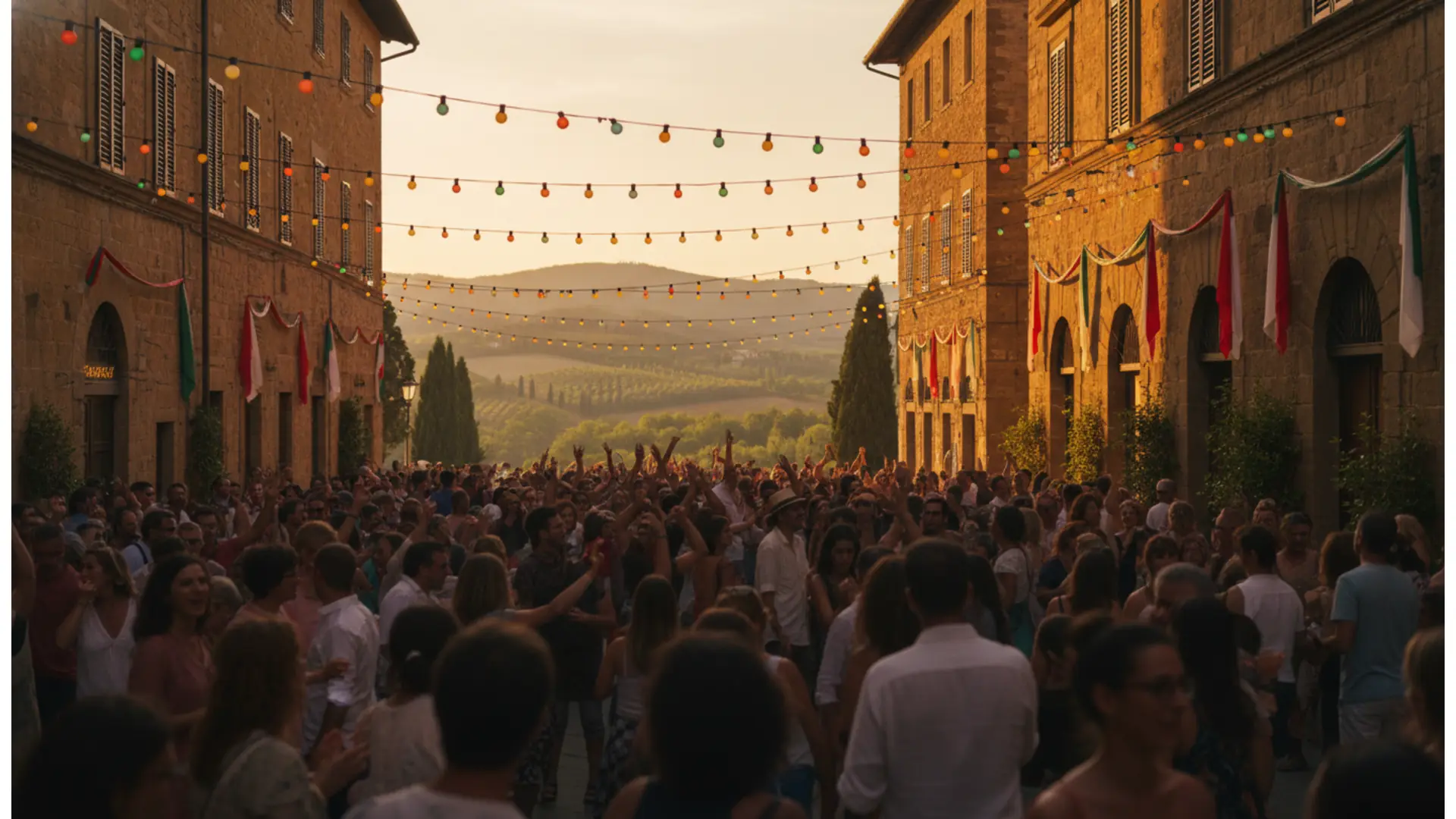
The Bocchignano Medieval Living Nativity is not a static scene to be observed from afar: it is a journey you walk through. Visitors enter the village, part of the municipality of Montopoli di Sabina (Rieti province, Lazio), and follow step-by-step the journey of Joseph and Mary toward Bethlehem, guided through the streets, squares, and characteristic alleys of the ancient Sabina castle. The walls, stairways, and stone arches serve as a natural backdrop: no stage sets are needed, as the village itself is the nativity scene.
The Legenda Aurea and the Cardinal Ispano
The most recent edition of the event draws inspiration from the nativity story found in the Legenda Aurea by Jacopo da Varagine, a seminal text of 13th-century Christian tradition, and the 1343 visit of the Cardinal Ispano to the castle of Bocchignano. This blend creates a re-enactment that bridges the religious and the historical: the birth of Jesus told as an event of humility and poverty—the highest expression of Christian love—alongside a portrait of a medieval Sabina community with its trades, costumes, and hierarchies.
In past years, the guiding theme was the poem La notte santa by Guido Gozzano, reflecting a setup that is never identical, but re-imagined each year by the village volunteers.
Greccio is just a step away
Bocchignano is located a short distance from Greccio, where Saint Francis of Assisi created the first nativity scene in history in 1223. The organizers explicitly place their re-enactment within this horizon: a century after the Franciscan experience, in these same Rieti lands, popular devotion continues to take the form of a living representation. For those visiting Sabina during the Christmas period, the Bocchignano nativity is a key piece of a broader itinerary touching upon some of the foundational sites of the Italian nativity tradition.
What to see along the route
- The traveling procession of Joseph and Mary through the historic center, with stops and living tableaux.
- Performers in medieval attire: commoners, artisans, shepherds, nobles, and prelates, all volunteers from the local community.
- Ancient workshops and crafts reconstructed within the village spaces.
- Guided tour of the village preceding the performance, dedicated to the history of the castle and its walls.
- The Nativity as the final tableau of the journey, at nightfall.
A village, a community
The event is organized by the Bocchignano Social Promotion Association and relies entirely on the work of residents: hand-sewn costumes, sets prepared over previous months, and dozens of performers of all ages. This, even more than the scenery, is what strikes those arriving for the first time: an entire village that chooses to tell its story during the days between Christmas and Epiphany.
When to go
Dates traditionally fall between December 26th and the first days of January, with annual variations. In recent years, performances have been held on Boxing Day and a second date around Epiphany. The performance takes place in the late afternoon, so the route concludes when the village is illuminated only by the event's lighting. It is advisable to check the exact dates on the association's channels before traveling.
Around Bocchignano
The Rieti Sabina, with its ancient olive groves and perched villages, deserves a visit that goes beyond the evening of the nativity: the Sabina DOP extra virgin olive oil, the abbeys, and the ridge towns form a landscape still little touched by mass tourism, less than an hour from Rome.
Bocchignano Living Nativity — edition 2026
A renewed edition
For the 2025-2026 edition, organizers changed the narrative thread of the performance, moving from the Gozzano poem of previous years to the nativity story of the Legenda Aurea by Jacopo da Varagine, a 13th-century text, combined with the historical episode of the Cardinal Ispano's visit to the castle of Bocchignano in 1343.
The main theme was a birth occurring in humility and poverty, presented as the highest expression of sharing Christian love. The association also dedicated the performance to a reflection on the innocent victims of ongoing conflicts, with the hope for a renewed world.
The route
The two evenings followed the established formula: a guided tour of the village in the afternoon, followed by the start of the traveling nativity along the streets, squares, and alleys of the historic center, tracing Joseph and Mary's journey to Bethlehem. As always, the entire performance was carried out by volunteers from the Bocchignano Social Promotion Association.
Programme Bocchignano Living Nativity 2026
Friday, December 26, 2025
- Afternoon: guided tour of the medieval village of Bocchignano
- Following: start of the traveling living nativity along the historic center
- Final nativity tableau
Sunday, January 4, 2026
- Same formula: guided tour of the village, then traveling performance in the late afternoon
The times indicated by sources for this edition place the guided tour in the late afternoon and the start of the performance about an hour later. The route takes place entirely outdoors in the historic center.
Highlights Bocchignano Living Nativity 2026
- Setup inspired by the Legenda Aurea of Jacopo da Varagine
- Re-enactment of the Cardinal Ispano's visit to the castle (1343)
- Traveling route through the alleys and squares of the medieval village
- Dozens of costumed performers, all community volunteers
- A few kilometers from Greccio, where the first nativity scene was born
Prices Bocchignano Living Nativity 2026
Practical information — Bocchignano Living Nativity
How to get there
By car from Rome: A1 motorway heading north, exit at Fiano Romano, then take the SS4 Salaria road to the junction for Montopoli di Sabina; from there, continue to the hamlet of Bocchignano (about 50 km from the Grande Raccordo Anulare). By train: Poggio Mirteto station on the FL1 Rome-Orte line, then connection by bus or taxi.
Parking and access
The historic center is pedestrianized with narrow paths: park in designated areas outside the village and proceed on foot. The route includes inclines, stairs, and uneven paving: comfortable shoes and heavy winter clothing are recommended, as the show takes place entirely outdoors at nightfall.
Times and admission
In recent editions, a guided tour of the village has preceded the performance by about an hour, with the traveling nativity starting in the late afternoon. For updated times and potential admission procedures, please refer to the Bocchignano Facebook page and the Municipality of Montopoli di Sabina.
Information
Municipality of Montopoli di Sabina, Piazza Comunale 2, 02034 Montopoli di Sabina (RI). Organization: Bocchignano Social Promotion Association.
Festival-goer photos
No photos yet. Share yours!
Share your photos
5 photos max, 5 MB per photo (JPG, PNG, WebP)
Noticed an error or missing information?
Help us keep this listing up to date. Every proposal is verified by our team before publication.
Festival-goer reviews
No rating yet — be the first!
No comments yet. Be the first!
Were you there?
Share your experience with the community.
Published by Valentin Contard, festival listings writer. Reviewed, corrected and approved by Christophe Contard, editor-in-chief. .
Where does it take place — Bocchignano Living Nativity
Borgo medievale di Bocchignano
Centro storico di Bocchignano, 02034 Montopoli di Sabina (fraz. Bocchignano)