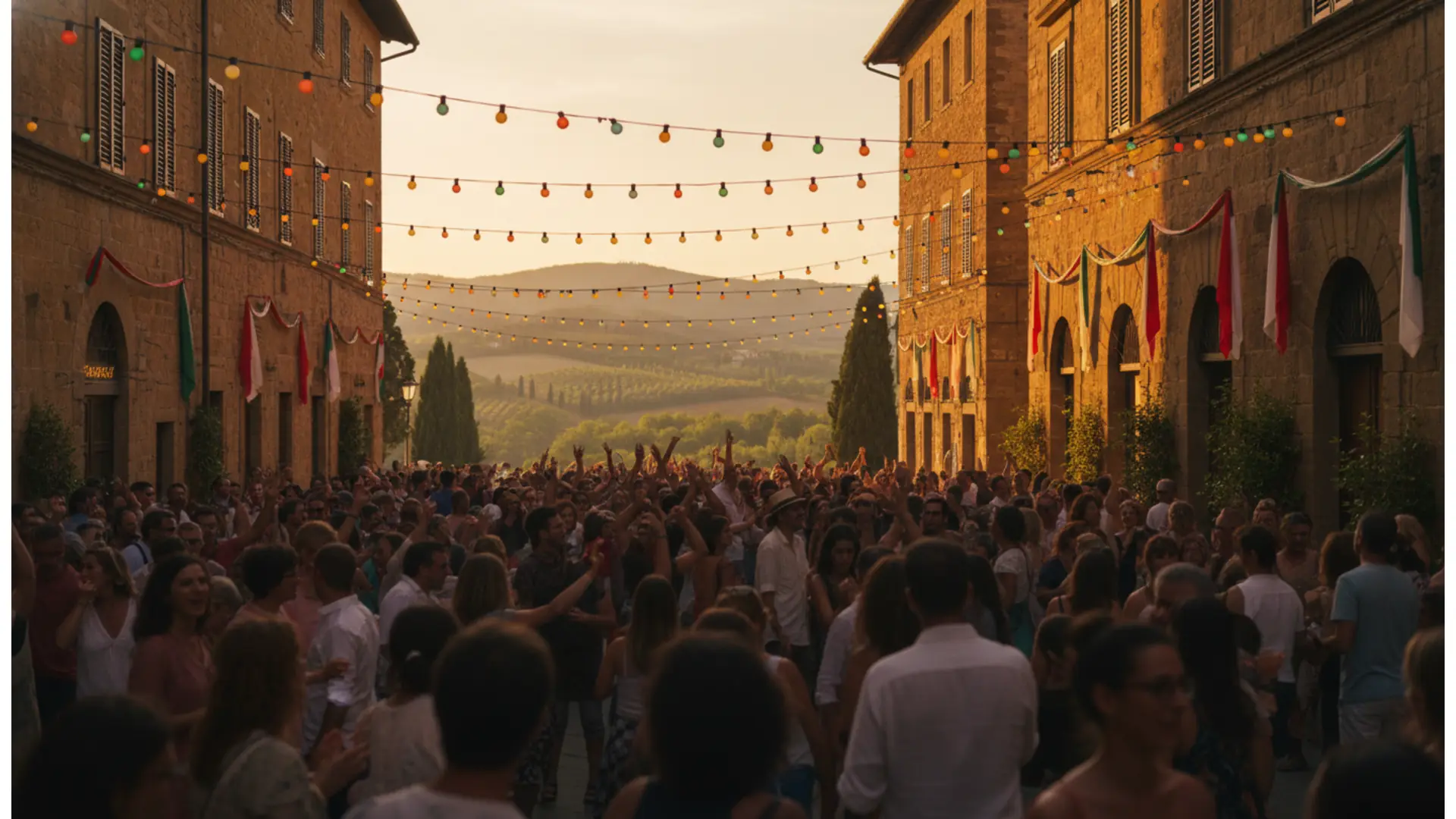
Art for Earth Festival – Peripheral Dialogues
Arts exploring sustainability, from the suburbs of Rome
About AFE Festival Rome
A festival that puts art at the service of the environment
Art for Earth Festival is the event conceived and produced by Jobel, a creative organization active for twenty-five years in the enhancement of cultural, social, and environmental heritage through artistic languages. The festival stems from a simple conviction: scientific data alone is not enough to change behavior, while a performance, a show, or a workshop can bring people closer to the issues of the climate crisis in a direct and memorable way. Hence the project's structure, built around four keywords — information, training, communication, and synergies — and around the idea that every local action has a global impact, and vice versa.
From its first steps in the province to the capital
The first edition took place in 2023 between Terni and Rieti, with the support of the Ministry of the Environment and Energy Security: three days of free events consisting of debates, workshops, and performances, from meetings on conscious eating to activities designed for children and adolescents. In subsequent years, the project took root in the Lazio region and expanded its scope to Rome, where it took on the subtitle Peripheral Dialogues. The Roman chapter was selected and funded as part of the Roma Creativa 365 public notice by Roma Capitale, with the maximum contribution provided by the section: a recognition that allowed for continuity and structure in the city's programming.
The suburbs as a place for dialogue
The title Peripheral Dialogues is not just a formal phrase. The project takes place in Municipio VII, the area that includes the neighborhoods of Cinecittà, Don Bosco, Tuscolano, and Appio Claudio, and chooses to work outside the historic center, in proximity spaces where the audience is not the usual one found in large cultural venues. The goal is to build a reasoned exchange between citizens, artists, and participants, bringing environmental reflection into the places of daily life: civic centers, community spaces, gardens, and neighborhood squares. The suburbs are not portrayed as a problem, but as a laboratory of already existing sustainable practices.
A multidisciplinary program
The festival's artistic proposal crosses multiple languages, without hierarchy between genres:
- contemporary dance and site-specific performances;
- civic and narrative theater;
- live music and sound installations;
- design, applied arts, and creative reuse of materials;
- conferences and meetings with researchers and communicators;
- workshops for families, schools, and young adults.
The target audience is broad, with particular attention to the sixteen to fifty age group, and participation is traditionally free, a choice consistent with the project's educational vocation.
Rome, Lazio, and a growing network
The festival now operates on a double territorial track: Rome and Rieti, two very different realities of the same region, whose connection is an integral part of the discourse. On one hand, the metropolis and its suburbs; on the other, the Sabine capital and its direct relationship with the Apennine landscape. Bringing the two contexts into dialogue allows for addressing the environmental issue without rhetoric, alternating between urban and rural perspectives. For those living in Lazio and following the themes of ecological transition with interest, the late November appointment represents one of the few occasions where contemporary art, scientific research, and civic engagement truly meet on the same stage.
Why it is worth attending
Art for Earth Festival is not a series of themed shows, but a journey built so that the spectator leaves with a few more questions and, possibly, some habits to reconsider. It is a festival that can be experienced in one evening or followed for its entire duration, suitable both for those looking for a different night out in the city and for those working in the world of sustainability who are looking for new tools to talk about it.
AFE Festival Rome — edition 2026
Art for Earth Festival 2026
The new edition of the festival organized by Jobel is spread over ten days, from November 20 to 29, 2026, with events between Rome and Rieti. It is the longest edition held to date and confirms the project's roots in the Lazio region.
In the capital, the Peripheral Dialogues strand continues to work on Municipio VII, between Cinecittà and Don Bosco, with a program that intertwines contemporary dance, theater, music, design, and moments of scientific dissemination. The structure remains that of previous editions: free activities, strong involvement of local associations, and attention to young audiences.
The detailed calendar of individual appointments has not yet been released at the time of writing this sheet: it will be published by the organization on official channels in the weeks preceding the opening.
Programme AFE Festival Rome 2026
Highlights AFE Festival Rome 2026
Prices AFE Festival Rome 2026
Practical information — AFE Festival Rome
How to get there
Rome's Municipio VII is served by Metro Line A (Cinecittà, Subaugusta, Giulio Agricola, Numidio Quadrato stops) and numerous urban bus lines. Those arriving by train can get off at Roma Termini and continue with Metro A. Rome Ciampino Airport is a few kilometers from the area.
Admission and reservations
The festival's activities are traditionally free of charge; for workshops and meetings with limited seating, reservations may be required. It is advisable to check the procedures on Jobel's official channels before each appointment.
Tips
The festival takes place at the end of November: clothing suitable for cool evenings is useful, especially for performances hosted in outdoor spaces or unheated venues. The spaces used are generally accessible to people with disabilities.
Information
Organization: Jobel A.P.S. — contacts and updated program at jobel.art and afefestival.it.
Festival-goer photos
No photos yet. Share yours!
Share your photos
5 photos max, 5 MB per photo (JPG, PNG, WebP)
Noticed an error or missing information?
Help us keep this listing up to date. Every proposal is verified by our team before publication.
Festival-goer reviews
No rating yet — be the first!
No comments yet. Be the first!
Were you there?
Share your experience with the community.
Published by Valentin Contard, festival listings writer. Reviewed, corrected and approved by Christophe Contard, editor-in-chief. .
Where does it take place — AFE Festival Rome
Municipio VII (area Cinecittà/Don Bosco)